Business
Ration Card ePoS Machine 2026: How Digital Ration Distribution Works, Benefits and e-KYC Process
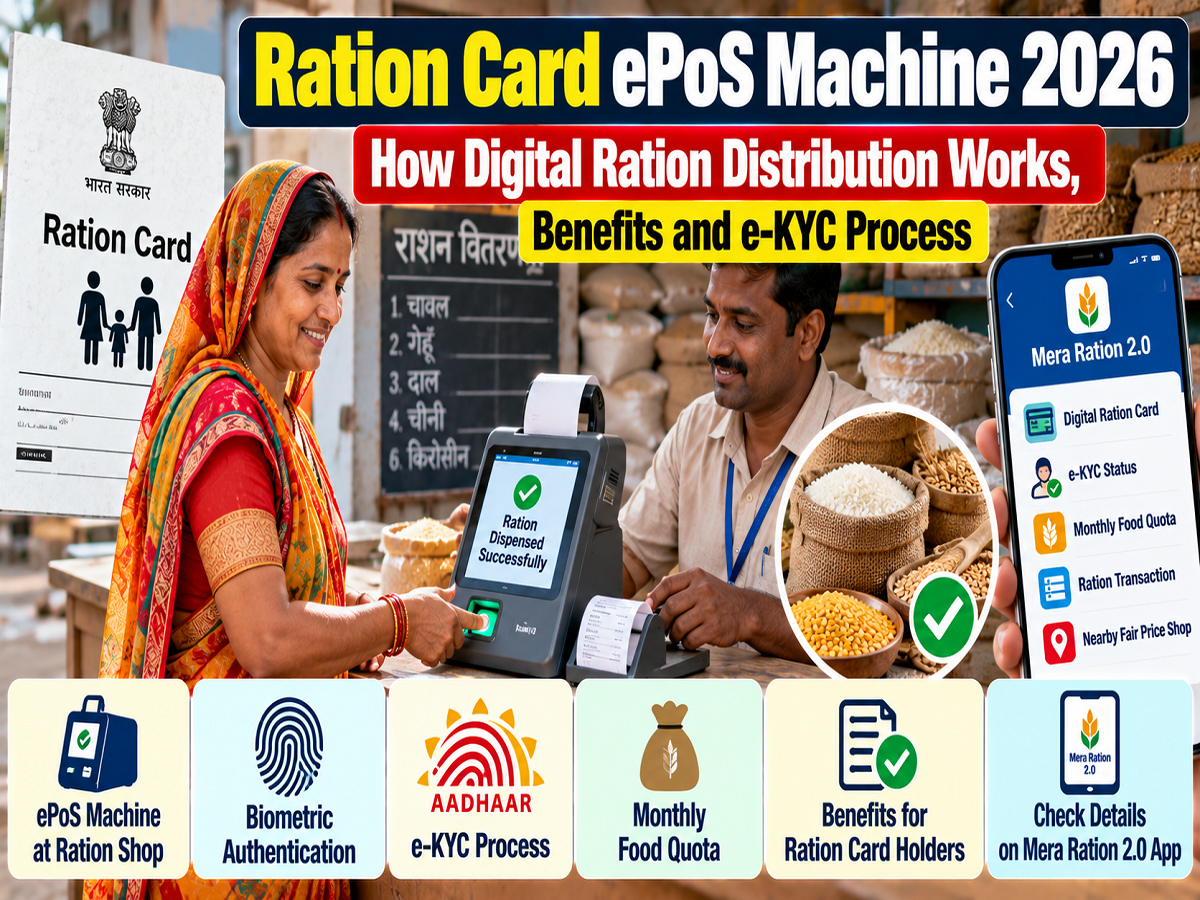
Ration Card Update 2026: Millions of eligible households across India depend on the Public Distribution System (PDS) to receive essential food grains through government-authorised ration shops. To improve transparency and reduce irregularities in the distribution process, electronic Point of Sale (ePoS) machines are used at Fair Price Shops (FPS).
These devices help ration dealers verify beneficiary details, record food grain distribution and maintain digital transaction information.
The Department of Food and Public Distribution has promoted the digitisation of the ration distribution system to improve accountability and ensure that benefits reach eligible households.
An ePoS machine is an important part of this digital infrastructure. In many locations, it can also support Aadhaar-based authentication and ration card e-KYC procedures.
However, the services available through ePoS machines may differ depending on the state, connectivity, technical arrangements and applicable government instructions.
Here is a detailed explanation of how ePoS machines work, their benefits, the ration collection process and the steps beneficiaries can follow for e-KYC.
What Is an ePoS Machine at a Ration Shop?
ePoS stands for Electronic Point of Sale.
It is a digital device installed at authorised ration shops to help process and record ration distribution transactions.
The machine connects the ration dealer's distribution activities with the relevant government database or state PDS system.
When an eligible beneficiary visits a ration shop, the dealer can use the ePoS device to retrieve the applicable ration card details and process the transaction.
Depending on the system in use, identity verification may be carried out through Aadhaar-based biometric authentication or another approved method.
After the ration is issued, the transaction is recorded electronically.
This digital record helps government authorities monitor distribution and identify discrepancies.
Ration Card ePoS Machine 2026: Important Details
| Particulars | Details |
|---|---|
| Device Name | Electronic Point of Sale (ePoS) |
| Used At | Government-Authorised Fair Price Shops |
| Main Purpose | Digital Ration Distribution |
| Beneficiaries | Eligible PDS and NFSA Ration Card Holders |
| Key Functions | Beneficiary Verification and Transaction Recording |
| Identity Verification | Approved Authentication Methods |
| e-KYC Support | Available Where Enabled |
| Digital Distribution Records | Yes |
| Receipt Facility | Depends on Device and State System |
| Responsible Authorities | State Food Departments and Relevant Central Agencies |
| Official Information | State PDS Portals and Department of Food and Public Distribution |
Why Are ePoS Machines Used in Ration Shops?
Traditional ration distribution systems relied heavily on manual registers and paper-based records.
Although such records served an administrative purpose, they could create difficulties in monitoring stock movements and confirming individual transactions.
The introduction of electronic devices has helped modernise the process.
An ePoS machine can record the identity of the beneficiary, the quantity of food grains distributed and the date of the transaction.
This information can be used to reconcile distribution records with available stock and beneficiary entitlements.
The objective is to improve transparency and reduce the possibility of duplicate or incorrect entries.
However, technology alone does not eliminate every problem. Effective monitoring, grievance redressal and proper implementation remain essential.
How Does an ePoS Machine Work?
The process generally involves several steps.
Step 1: Beneficiary Visits the Ration Shop
An eligible ration card holder visits an authorised Fair Price Shop to collect the food grains allocated under the applicable scheme.
The beneficiary may need to provide ration card details or another accepted identification method.
Step 2: Dealer Retrieves the Ration Card Details
The ration dealer enters or retrieves the relevant beneficiary information through the ePoS device.
The machine accesses the information available in the connected PDS system.
Step 3: Identity Verification
The beneficiary's identity is verified using the authentication procedure applicable in that state.
This may include biometric authentication or another approved verification method.
Step 4: Entitlement Is Displayed
The system may display the food grain entitlement associated with the ration card.
The dealer can then determine the quantity available for distribution.
Step 5: Food Grains Are Distributed
The ration dealer provides the eligible quantity of food grains to the beneficiary.
Customers should verify the quantity received.
Step 6: Transaction Is Recorded
The ePoS machine records the transaction electronically.
Where supported, the beneficiary may also receive a printed receipt or digital confirmation.
What Are the Main Benefits of ePoS Machines?
The use of ePoS devices can improve the ration distribution system in several ways.
1. Improved Beneficiary Identification
Electronic verification helps confirm that food grains are being issued against an eligible ration card.
This can reduce the risk of unauthorised transactions.
2. Digital Distribution Records
Instead of relying only on handwritten registers, ration shops can maintain electronic records of transactions.
These records may include the quantity distributed and the date of collection.
3. Better Transparency
Digital records make it easier for authorities to compare allocated stock with recorded distribution.
This can support inspections and monitoring.
4. Reduced Risk of Duplicate Transactions
Electronic systems can help identify whether an entitlement has already been used for the relevant distribution period.
This reduces the scope for repeated claims against the same allocation.
5. Support for e-KYC
In states where the functionality is enabled, ePoS devices may support identity verification and ration card e-KYC.
6. Transaction Receipts
Some ePoS systems provide receipts or transaction confirmations.
These can help beneficiaries check the recorded quantity of food grains distributed.
Can Ration Card e-KYC Be Completed Through an ePoS Machine?
Yes, ration card e-KYC may be completed through an ePoS device where the state government has enabled the facility.
e-KYC stands for electronic Know Your Customer.
Its purpose is to verify beneficiary identity and help maintain accurate ration card records.
The process may involve Aadhaar-linked information and an approved authentication method.
However, the exact procedure, required documents and deadlines vary by state.
Beneficiaries should follow the instructions issued by their state food department rather than assuming that the same process applies throughout India.
How to Complete Ration Card e-KYC at a Ration Shop
Where ePoS-based e-KYC is available, beneficiaries can generally follow these steps:
- Visit an authorised ration shop: Contact the Fair Price Shop linked to your ration card or another location authorised for e-KYC.
- Ask about e-KYC availability: Inform the ration dealer that you want to complete the required identity verification.
- Provide your ration card details: Keep your ration card number and any identification documents required under the state procedure.
- Complete the prescribed verification: Follow the instructions provided through the ePoS device and the authorised dealer.
- Verify the information: Ensure that the relevant family member's details are correctly recorded.
- Request confirmation: Ask whether the e-KYC has been successfully submitted or completed.
- Check the status if necessary: Use the applicable state PDS portal or official support channel to confirm the result.
Beneficiaries should not share sensitive information with unauthorised persons.
Is Aadhaar Biometric Authentication Mandatory in Every Case?
Aadhaar-based authentication is used in many PDS systems, but beneficiaries should not assume that a fingerprint scan is the only permitted method of verification.
Authentication failures can occur because of technical problems, connectivity issues or biometric mismatches.
Government rules and applicable instructions provide for alternative arrangements in eligible circumstances.
Genuine beneficiaries should not be denied their entitled food grains solely because biometric authentication fails.
If a fingerprint scan does not work, the beneficiary should ask the ration dealer or food department about the approved alternative procedure.
The availability and implementation of such alternatives may vary by state.
What Happens if the ePoS Machine Is Not Working?
An ePoS device may occasionally stop functioning because of poor internet connectivity, power problems or technical errors.
Such problems can delay authentication and distribution.
Beneficiaries should ask the dealer about the applicable contingency procedure.
State authorities may provide alternative methods for recording transactions or distributing food grains during technical disruptions.
The dealer should follow the official instructions rather than independently refusing legitimate entitlements.
If a problem remains unresolved, beneficiaries can contact the relevant food department or grievance redressal authority.
How Much Free Ration Can Eligible Households Receive?
The quantity of food grains depends on the ration card category and applicable scheme.
Under the National Food Security Act (NFSA), two important categories are Priority Households (PHH) and Antyodaya Anna Yojana (AAY).
NFSA Food Grain Entitlements
| Ration Card Category | Standard Entitlement |
|---|---|
| Priority Household (PHH) | 5 kg per eligible person per month |
| Antyodaya Anna Yojana (AAY) | 35 kg per eligible household per month |
Eligible NFSA beneficiaries receive food grains free of cost under the applicable central government arrangements.
State governments may also provide additional commodities or benefits under separate schemes.
Beneficiaries should check the exact quantity and items available under their ration card category.
Does the ePoS Machine Support One Nation One Ration Card?
The One Nation One Ration Card (ONORC) initiative allows eligible beneficiaries to access their NFSA food grain entitlements through supported Fair Price Shops outside their home location.
ePoS infrastructure plays an important role in enabling such portability.
For example, an eligible worker who moves to another state may be able to obtain food grains from a participating ration shop without transferring the original ration card.
The transaction is processed through the interoperable PDS system using the applicable authentication procedure.
This facility is especially useful for migrant workers and families who temporarily relocate for employment.
Can Beneficiaries Check Their Ration Distribution History?
In many states, digital PDS systems allow beneficiaries to view ration card information and distribution records.
Depending on the available services, users may be able to check previous transactions, monthly entitlements and other details.
The Mera Ration application and relevant state food department portals may provide access to certain beneficiary services.
However, the information available can differ by location and system integration.
Beneficiaries should use official applications and government websites to avoid misleading information.
What Should You Do if the Ration Dealer Gives Less Food Grain?
If a ration dealer provides less than the entitled quantity, beneficiaries should first verify the allocation recorded against their ration card.
Where available, they can check the transaction receipt or digital distribution record.
If the discrepancy remains, a complaint can be submitted to the appropriate state food department or grievance redressal authority.
It is useful to keep the ration card number, transaction date and details of the quantity received.
Customers should avoid signing or confirming inaccurate distribution records.
How to Find Official Ration Card Information
Beneficiaries can access government information through the following official portals:
National Food Security Portal: https://nfsa.gov.in/
Department of Food and Public Distribution: https://dfpd.gov.in/
State food department websites may provide additional services such as ration card status, Fair Price Shop details, grievance registration and distribution records.
Final Word
Electronic Point of Sale machines have become an important part of India's digital ration distribution infrastructure.
They help authorised ration shops verify beneficiary information, record transactions and improve transparency in the Public Distribution System.
In states where the facility is enabled, ePoS machines may also support ration card e-KYC.
However, beneficiaries should understand that authentication procedures and available services can differ across states.
Ration card holders should verify their monthly entitlement, check distribution records where available and report any irregularities to the appropriate authorities.
Disclaimer: ePoS functionality, e-KYC procedures and authentication alternatives depend on applicable government instructions and state-level implementation. Beneficiaries should confirm current requirements with their state food department or authorised ration dealer.