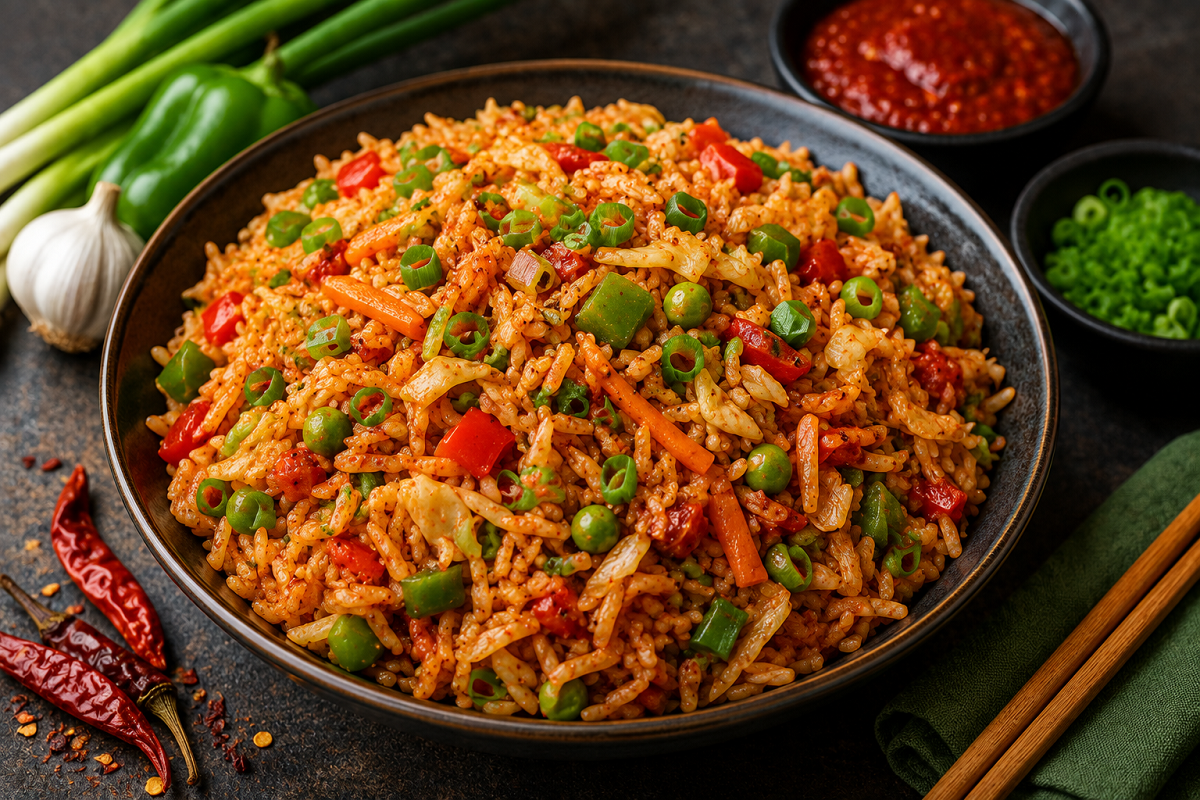
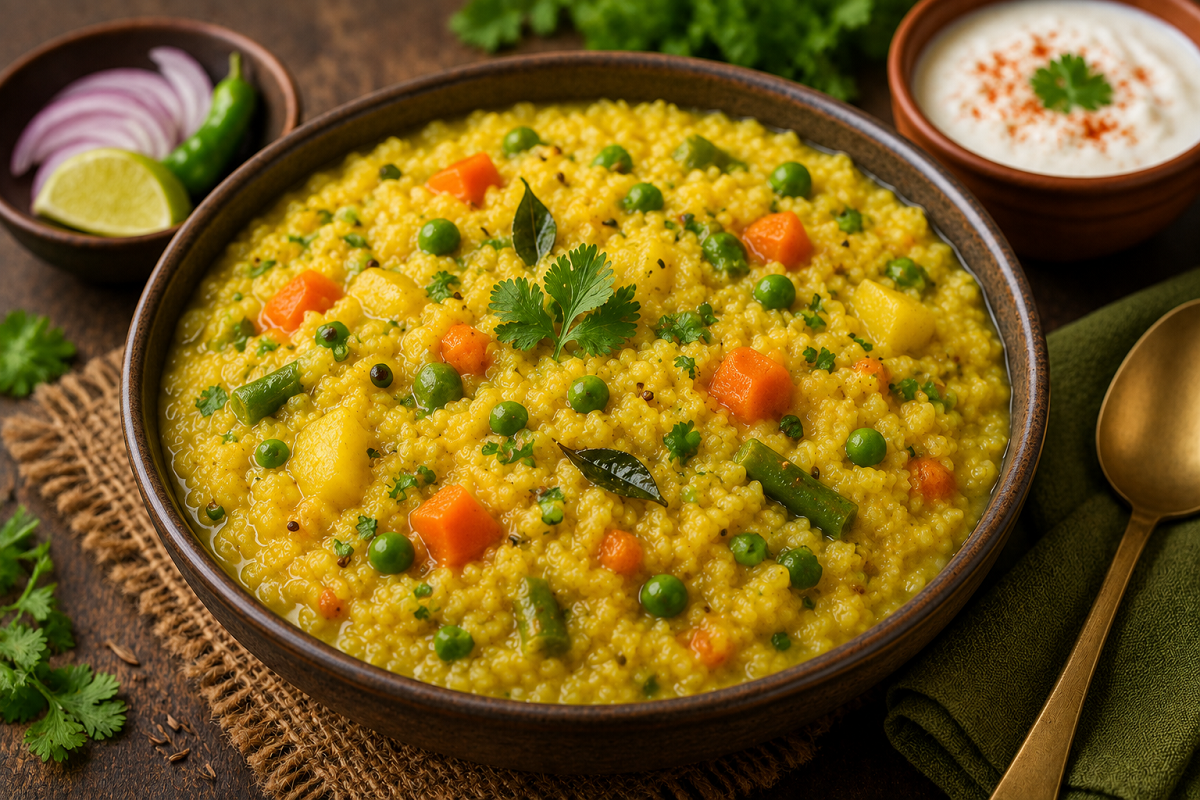
When you want something warm, comforting and easy to prepare, vegetable khichdi is one of the simplest meals you can make at home. Prepared with rice, lentils, vegetables and mild spices, this one-pot dish requires minimal effort while delivering plenty of flavour.
The biggest advantage of one-pot veg khichdi is convenience. Instead of preparing rice, dal and vegetables separately, everything cooks together in a pressure cooker. This not only saves time but also reduces the number of utensils you need to clean afterwards.
Whether you need a quick lunch, a simple dinner or a comforting meal after a tiring day, this easy one-pot vegetable khichdi recipe can be a useful addition to your regular menu.
Ingredients for One-Pot Vegetable Khichdi
For approximately 3 to 4 servings, you will need:
- ½ cup rice
- ½ cup yellow moong dal
- 1 small potato, chopped
- 1 small carrot, chopped
- ½ cup green peas
- ½ cup chopped cauliflower
- ¼ cup chopped French beans
- 1 medium tomato, chopped
- 1 to 2 green chillies, finely chopped
- 1 teaspoon grated or finely chopped ginger
- 2 tablespoons desi ghee
- 1 teaspoon cumin seeds
- A pinch of asafoetida (hing)
- ½ teaspoon turmeric powder
- ¼ teaspoon garam masala, optional
- Salt according to taste
- 3½ to 4 cups water
- Fresh coriander for garnishing
The vegetables are flexible. You can use whatever seasonal vegetables are available at home.
Prepare the Rice and Dal First
Take equal quantities of rice and moong dal and rinse them thoroughly under running water until the water becomes relatively clear.
You can soak the rice and dal for around 15 to 20 minutes before cooking. Soaking is optional, but it may help them cook more evenly and quickly.
Drain the excess water before adding them to the pressure cooker.
Step 1: Prepare the Tempering
Place a pressure cooker over medium heat and add about two tablespoons of desi ghee.
Once the ghee becomes warm, add cumin seeds and allow them to crackle. Next, add a small pinch of hing.
Now add finely chopped ginger and green chilli. Sauté briefly until the ginger becomes aromatic.
This simple tempering provides much of the characteristic flavour of homemade khichdi.
Step 2: Add the Vegetables
Add the chopped potatoes, carrots, cauliflower, beans and green peas to the cooker.
Stir everything together and sauté for about 2 minutes.
Next, add the chopped tomato and cook briefly until it starts becoming slightly soft.
You do not need to completely cook the vegetables at this stage because they will continue cooking under pressure.
Step 3: Add Rice, Dal and Spices
Add the washed and drained rice and moong dal to the vegetables.
Now add turmeric powder and salt according to taste. If you prefer a slightly stronger flavour, you can also add a small amount of garam masala.
Mix everything gently so the spices coat the rice, dal and vegetables evenly.
Step 4: Add Water
Pour approximately 3½ to 4 cups of water into the pressure cooker.
The amount of water can be adjusted depending on your preferred consistency. If you enjoy thick khichdi, use slightly less water. For a softer and more porridge-like texture, add a little more.
Remember that khichdi tends to become thicker as it cools, so keeping it slightly loose immediately after cooking often works well.
Step 5: Pressure Cook the Khichdi
Close the pressure cooker with its lid and cook over medium heat.
Allow approximately 2 to 3 whistles, depending on your cooker and the type of rice and dal being used.
Turn off the heat and allow the pressure to release naturally before opening the lid.
Once opened, gently mix the khichdi. If it appears thicker than you prefer, add a little hot water and stir until you reach the desired consistency.
Add Ghee for Extra Flavour
A small spoonful of desi ghee added after cooking can enhance both the aroma and taste of khichdi.
Finish with freshly chopped coriander leaves before serving.
Those who prefer a little heat can also add freshly ground black pepper or a small amount of chilli powder.
How to Make Khichdi Taste Even Better
The beauty of khichdi is that you can easily customise it.
For a richer flavour, increase the quantity of vegetables or add a little extra ghee. If you prefer stronger spices, ginger, black pepper, garam masala or green chillies can be adjusted according to taste.
For a milder version, skip the green chilli and garam masala and keep the seasoning limited to cumin, hing, turmeric and salt.
You can also experiment with other vegetables such as spinach, bottle gourd, sweet corn or pumpkin.
What to Serve With Vegetable Khichdi
A steaming bowl of veg khichdi tastes delicious on its own, but traditional accompaniments can make the meal even more satisfying.
Serve it with plain curd or raita, roasted papad, pickle and a spoonful of desi ghee. A simple cucumber and onion salad can also add freshness and crunch.
If you prefer something slightly more elaborate, pair the khichdi with mint raita or lightly seasoned vegetables.
Why One-Pot Khichdi Is Convenient
One-pot khichdi is particularly useful on busy days because almost the entire meal is prepared in a single cooker.
Rice provides carbohydrates, lentils contribute protein and vegetables add fibre along with a variety of nutrients. The exact nutritional value, of course, depends on the ingredients and quantities used.
Another advantage is flexibility. You don't need a fixed selection of vegetables. Carrots, peas, beans, cauliflower, potatoes and other vegetables can be added according to availability.
Quick Tips for Perfect Veg Khichdi
Rinse the rice and dal properly before cooking and cut the vegetables into similar-sized pieces so they cook evenly. Adjust the quantity of water according to the texture you prefer, and let the pressure release naturally before opening the cooker.
Most importantly, don't worry if the khichdi becomes thick after sitting for a while. Simply add a little hot water, mix well and warm it again.
With rice, moong dal, colourful vegetables and a simple ghee tempering, this easy one-pot veg khichdi offers a comforting homemade meal without requiring much preparation. Serve it hot with curd, pickle and papad for a simple yet satisfying lunch or dinner.