Bhindi, or okra, is one of the most commonly prepared vegetables in Indian households. From simple dry bhindi to stuffed and masala versions, it can be cooked in several ways. But if your regular bhindi recipe has started feeling repetitive, adding a small twist can completely change its flavour.
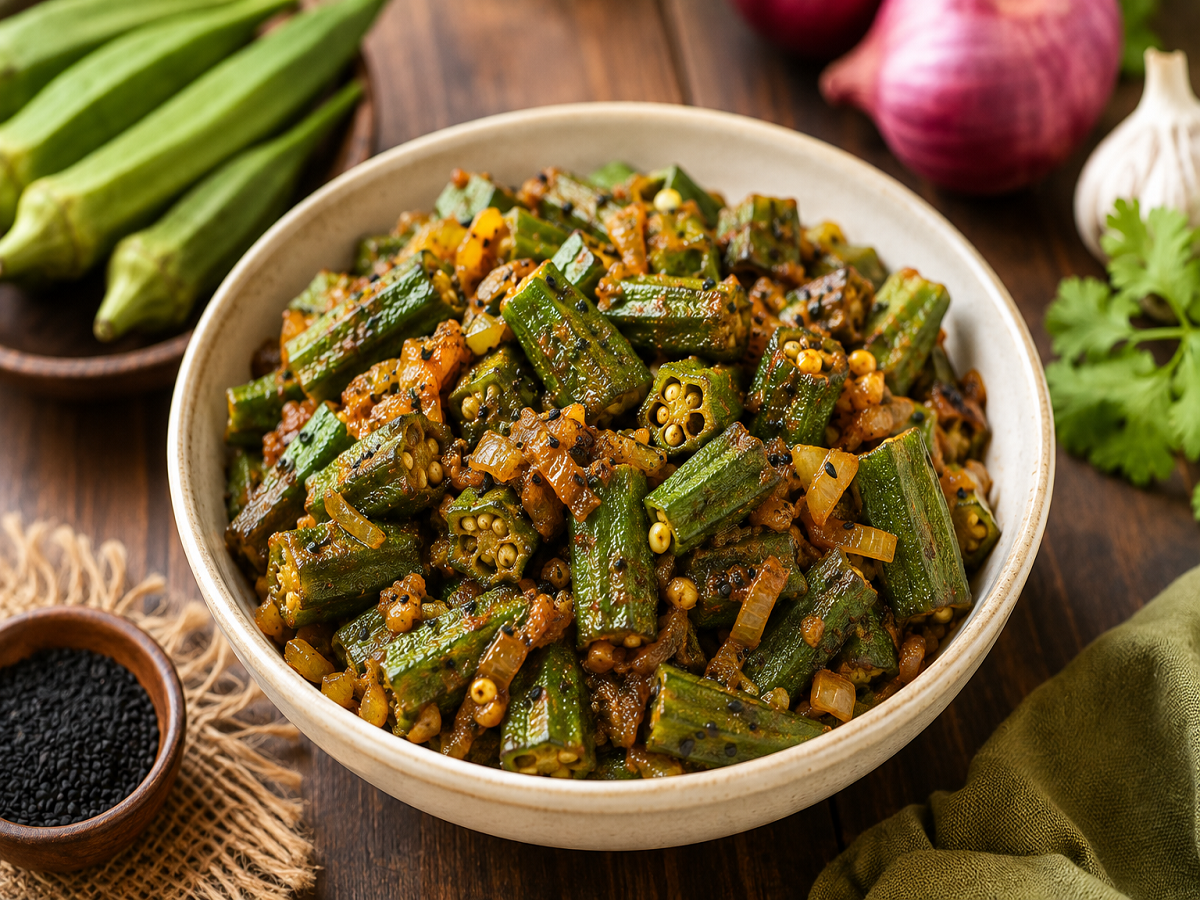
Kalonji Bhindi Masala is an easy option for days when you want something spicy, tangy and aromatic without spending too much time in the kitchen. Kalonji adds a distinctive flavour, while green chillies and amchur give the dish its spicy and slightly sour finish.
The recipe requires only basic Indian spices and can be paired with roti, paratha or dal-rice. It is also a convenient dry vegetable preparation for lunch boxes.
Ingredients for Kalonji Bhindi Masala
For approximately 3 to 4 servings, you can use:
- 500 grams fresh bhindi (okra)
- 2 tablespoons mustard oil or cooking oil
- 1 teaspoon kalonji (nigella seeds)
- 2 green chillies, finely chopped
- ½ teaspoon turmeric powder
- 1 teaspoon coriander powder
- ½ teaspoon red chilli powder
- 1 teaspoon amchur (dry mango powder)
- Salt according to taste
The quantity of chilli and amchur can be adjusted according to your preferred level of heat and tanginess.
Start by Preparing the Bhindi Properly
One of the biggest challenges while cooking okra is its sticky or slimy texture. Proper preparation can help reduce this considerably.
Wash the bhindi thoroughly under running water and then spread it on a clean kitchen towel. Allow it to dry completely or wipe each piece carefully.
Avoid chopping wet bhindi. Moisture can increase its sliminess during cooking.
Once completely dry, remove the ends and cut the bhindi into medium-sized pieces. Try to keep the pieces roughly similar in size so that they cook evenly.
Step 1: Heat the Oil and Add Kalonji
Place a heavy-bottomed kadai or pan over medium heat and add about two tablespoons of mustard oil.
If using mustard oil, heat it properly before slightly lowering the flame. If you prefer a neutral cooking oil, that can also be used.
Add the kalonji to the hot oil and allow the seeds to sizzle briefly. Be careful not to burn them.
The kalonji-infused oil forms the flavour base of this simple bhindi preparation.
Step 2: Add Green Chillies and Bhindi
Once the kalonji starts releasing its aroma, add the chopped green chillies.
Stir briefly and immediately add the chopped bhindi.
Mix everything gently so that the oil and kalonji coat the pieces evenly.
Cook the bhindi over medium heat without covering the pan initially. Keeping the pan uncovered helps excess moisture escape and can prevent the vegetable from becoming overly sticky.
Stir occasionally rather than continuously.
Step 3: Add the Spices
Once the bhindi begins to soften and most of its visible stickiness has reduced, add turmeric powder, coriander powder and red chilli powder.
Add salt according to taste and mix carefully.
Continue cooking over low to medium heat until the bhindi becomes tender and develops lightly roasted edges.
Avoid adding water because this is intended to be a dry preparation.
Step 4: Add Amchur at the End
When the bhindi is completely cooked, add the amchur powder.
Mix everything well and cook for another minute before switching off the heat.
Adding amchur toward the end gives the dish a fresh, tangy finish without overpowering the flavour of the kalonji.
Taste before serving and adjust the salt, chilli or amchur if required.
How to Keep Bhindi From Becoming Sticky
The secret to better dry bhindi starts before it reaches the pan.
Make sure the vegetable is completely dry before chopping. Avoid adding water while cooking and keep the pan uncovered during the initial stage.
Another useful trick is to avoid overcrowding the pan. If a large quantity of bhindi is packed into a small kadai, moisture may become trapped and the vegetable can turn softer and stickier.
A broad pan provides more surface area and helps the moisture evaporate faster.
Why Kalonji Makes This Recipe Different
Kalonji, also known as nigella seed, has a distinctive earthy, slightly bitter and aromatic flavour.
Only a small quantity is required because its taste can become quite noticeable.
When added to hot oil at the beginning of cooking, kalonji gives an aromatic base to the otherwise familiar bhindi preparation. Combined with green chillies and dry mango powder, it creates a flavour that is different from standard everyday bhindi masala.
What to Serve With Kalonji Bhindi
Kalonji Bhindi Masala works especially well with simple Indian meals.
Serve it hot with roti, chapati or paratha and a bowl of curd. It can also be paired with dal, steamed rice and salad for a complete lunch or dinner.
Because this is a relatively dry preparation, it is also suitable for an office or school lunch box. Pair it with paratha or roti for an easy meal that does not require a separate gravy.
Make It Spicier or More Tangy
This recipe can easily be customised.
For additional heat, increase the quantity of green chilli or add slightly more red chilli powder. If you enjoy stronger tangy flavours, add a little extra amchur after tasting the finished dish.
A small amount of roasted cumin powder can also be added toward the end for another layer of flavour.
However, avoid using too many spices because the distinctive taste of kalonji should remain noticeable.
Quick Kalonji Bhindi for Busy Days
The biggest advantage of this recipe is its simplicity. There is no complicated gravy, lengthy marination or extensive preparation.
Once the bhindi has been washed and dried, the remaining cooking process can be completed using everyday spices found in most Indian kitchens.
The combination of roasted bhindi, aromatic kalonji, spicy green chillies and tangy amchur transforms an everyday vegetable into a flavour-packed side dish.
So, the next time regular bhindi feels a little boring, try this quick Kalonji Bhindi Masala. Serve it with hot rotis or parathas, and you have a simple yet satisfying homemade meal ready to enjoy.