Indian cuisine is famous worldwide, but the dishes commonly served in restaurants represent only a fraction of what people actually eat across the country. Butter chicken, biryani, dosa, paneer tikka, naan and samosas may dominate menus, yet India's culinary identity extends far beyond these familiar favourites.
Travel through smaller towns and villages and the picture changes dramatically. Recipes are shaped by climate, locally grown grains, seasonal vegetables, tribal traditions and cooking techniques handed down through generations. Some dishes remain so closely connected to their regions that finding them elsewhere can be difficult.
Here are 10 lesser-known Indian dishes that may not appear on most mainstream restaurant menus but offer a fascinating glimpse into India's regional food traditions.
1. Eri Polu – Assam
Assamese cuisine includes several foods that may surprise people unfamiliar with the region's traditional diets.
Eri polu is associated with Assam's eri silk culture and involves silkworm pupae, which are consumed by some communities after silk production.
The preparation can vary, with local spices and ingredients used to create the dish. It reflects a food tradition where locally available resources have historically played an important role.
Because of its highly regional nature and unusual primary ingredient, eri polu is rarely encountered in conventional Indian restaurants outside the Northeast.
2. Ragi Mudde – Karnataka
Ragi mudde demonstrates how a remarkably simple preparation can become central to a regional food culture.
Made primarily from finger millet flour and water, the cooked mixture is shaped into soft balls. Rather than being chewed like bread, small portions are traditionally eaten with accompaniments such as sambar, saaru or other gravies.
Ragi has long been an important grain in parts of Karnataka because it works well with local agricultural conditions and provides a practical everyday staple.
Although millet foods have recently gained nationwide attention, authentic ragi mudde remains much easier to find in Karnataka homes and traditional eateries than on mainstream restaurant menus.
3. Bhutte Ka Kees – Madhya Pradesh
One of Madhya Pradesh's distinctive regional preparations is bhutte ka kees.
Fresh corn is grated and cooked with spices and other ingredients until it develops a soft, rich texture. Depending on the preparation, milk may also be used to add creaminess.
The dish is particularly associated with Indore and is a good example of how a familiar ingredient can take an entirely different form in regional Indian cooking.
Despite Indore's celebrated street-food culture, bhutte ka kees remains considerably less familiar nationally than poha, kachori or samosa.
4. Chaprah – Chhattisgarh
Chhattisgarh's tribal food traditions contain ingredients rarely encountered in mainstream urban restaurants.
One striking example is chaprah, traditionally associated with red ants and their eggs.
The ingredients are ground with spices and other flavourings to produce a pungent chutney known for its distinctive taste.
For the communities that traditionally prepare it, this isn't an exotic novelty but part of an established food culture based on ingredients naturally available in the surrounding environment.
Its unusual ingredients naturally make authentic chaprah uncommon on standard restaurant menus.
5. Siddu – Himachal Pradesh
Anyone travelling through Himachal Pradesh may encounter siddu, although it remains relatively unknown in many other parts of India.
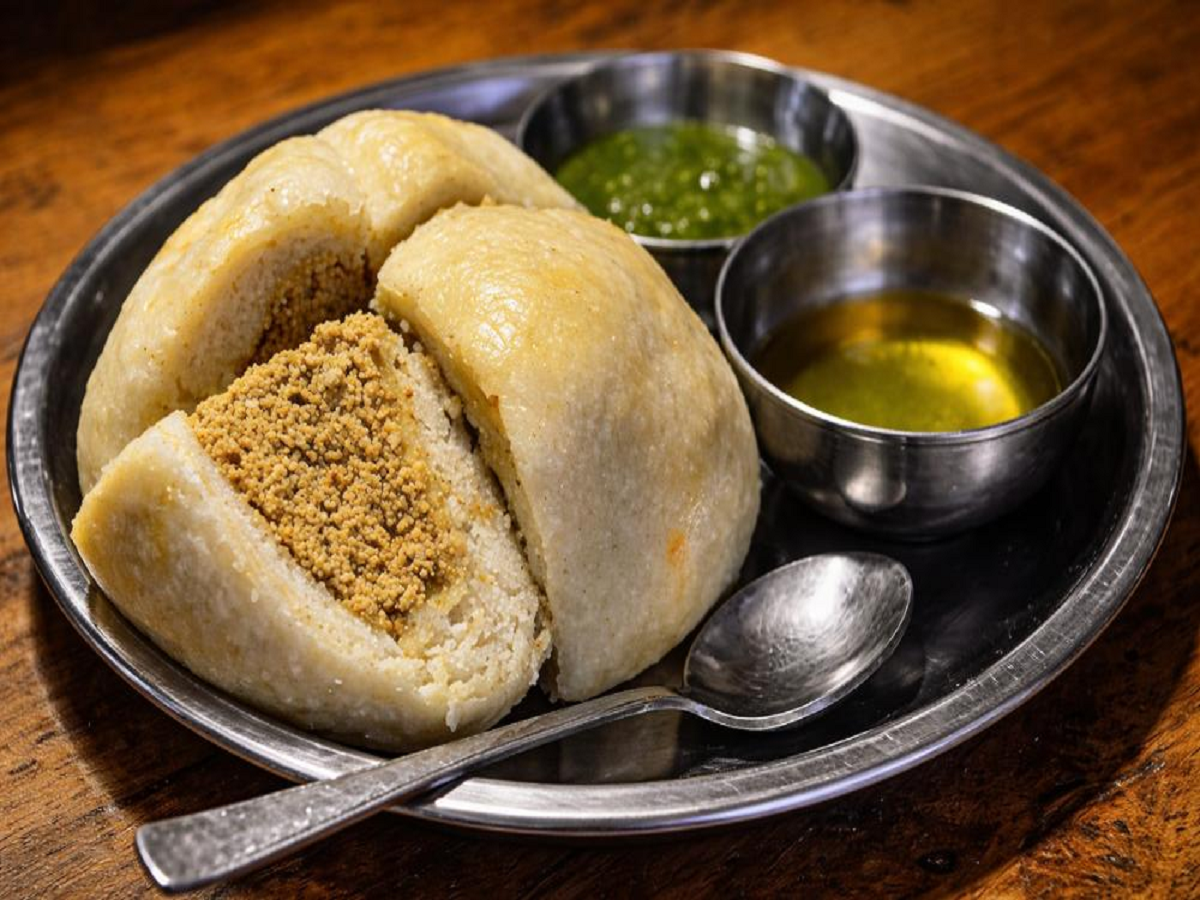
Siddu is essentially a steamed wheat-based preparation. The dough is fermented and can be filled with different ingredients before being steamed.
It is often served warm with ghee, dal or other regional accompaniments.
Steaming gives siddu a distinctive soft texture and makes it very different from the tandoori and griddle-cooked breads more commonly associated with North Indian restaurants.
6. Chhurpi – Himalayan Regions
Chhurpi is a traditional cheese associated with Himalayan communities, particularly across areas such as Sikkim and Arunachal Pradesh as well as neighbouring Himalayan regions.
It can exist in different forms, including softer varieties used in cooking and extremely hard versions that can be chewed slowly.
Its preparation developed around mountain lifestyles where preserving dairy products was particularly useful.
Chhurpi illustrates an often-overlooked fact about Indian food: the country has numerous indigenous cheese-making traditions beyond paneer.
Yet it remains uncommon on the menus of conventional Indian restaurants.
7. Bafauri – Chhattisgarh
For anyone who loves pakoras but wants to explore something different, bafauri is worth knowing.
This Chhattisgarhi preparation typically uses chana dal as its foundation. The dal is combined with spices and shaped into small portions before being steamed rather than deep-fried.
The cooking method makes bafauri noticeably different from many better-known Indian snacks.
Despite being made with ingredients available across much of India, it remains strongly associated with its regional culinary roots and isn't widely offered by mainstream restaurant chains.
8. Doh Khlieh – Meghalaya
Meghalaya's Khasi cuisine has a character quite different from the stereotypical image of Indian food dominated by thick gravies and extensive spice blends.
Doh khlieh is an excellent example.
Traditionally associated with Khasi cuisine, it is a pork-based preparation typically combined with ingredients such as onions and chillies.
Its relatively straightforward composition allows the central ingredients to remain prominent rather than being covered by a heavy sauce.
Outside Meghalaya and specialist Northeastern restaurants, however, authentic versions can be difficult to find.
9. Dal Pitha – Eastern India
Dumplings exist in many Indian culinary traditions, although they rarely receive the same nationwide attention as momos.
Dal pitha is one such traditional preparation, particularly associated with Bihar and neighbouring eastern regions.
A rice-flour covering is generally filled with a seasoned lentil mixture and then cooked, often by steaming.
The result demonstrates how staple ingredients such as rice and pulses can be transformed into something very different from conventional dal-chawal.
It is still strongly associated with home cooking, which partly explains why it remains less visible on commercial menus.
10. Patrode – Western and Southern India
Colocasia leaves form the foundation of several closely related regional preparations across western and southern India.
One version, commonly known as patrode or pathrode, involves coating colocasia leaves with a seasoned mixture, layering and rolling them, and then steaming the rolls before slicing them.
Related preparations exist under different names and with regional variations, including Gujarati patra.
The dish is a perfect illustration of India's ability to turn leafy ingredients into elaborate snacks or meal accompaniments.
Why Don't These Dishes Appear Everywhere?
The absence of these foods from mainstream restaurants isn't necessarily a reflection of their quality.
Some depend heavily on regional or seasonal ingredients. Others involve preparation techniques that take considerable time and may not suit high-volume commercial kitchens.
There is also the question of familiarity.
Restaurants naturally tend to sell foods customers already recognise. A tourist may confidently order butter chicken but hesitate when confronted with chaprah, bafauri or eri polu.
That commercial reality can cause a small selection of dishes to represent an extraordinarily diverse cuisine.
India's Real Food Diversity Often Lives Outside Restaurants
Perhaps the most interesting lesson from these dishes is that restaurant menus don't necessarily provide a complete picture of how India eats.
Home kitchens preserve recipes that rarely become commercial products. Tribal communities use forest ingredients almost invisible to urban consumers. Mountain regions have developed preservation and fermentation techniques suited to their environments, while farming communities continue to cook with grains that have been local staples for generations.
Even familiar ingredients can change dramatically across state borders. Corn becomes bhutte ka kees in Madhya Pradesh, finger millet becomes ragi mudde in Karnataka, and chana dal can become steamed bafauri in Chhattisgarh.
The Bottom Line
India's culinary landscape extends far beyond the familiar dishes appearing on standard restaurant menus.
Eri polu, ragi mudde, bhutte ka kees, chaprah, siddu, chhurpi, bafauri, doh khlieh, dal pitha and patrode showcase completely different ingredients, techniques and regional traditions.
Some may eventually become more widely available as travellers and diners become increasingly curious about regional Indian food. Others may remain closely connected to the communities that created them.
Either way, exploring these dishes reveals something important: some of India's most interesting food isn't necessarily found in famous restaurants—it is still being cooked in homes, villages and local kitchens.