Technology
Cyber Security Alert 2026: Government Warns Investors Against Fake Schemes Promising Guaranteed High Returns
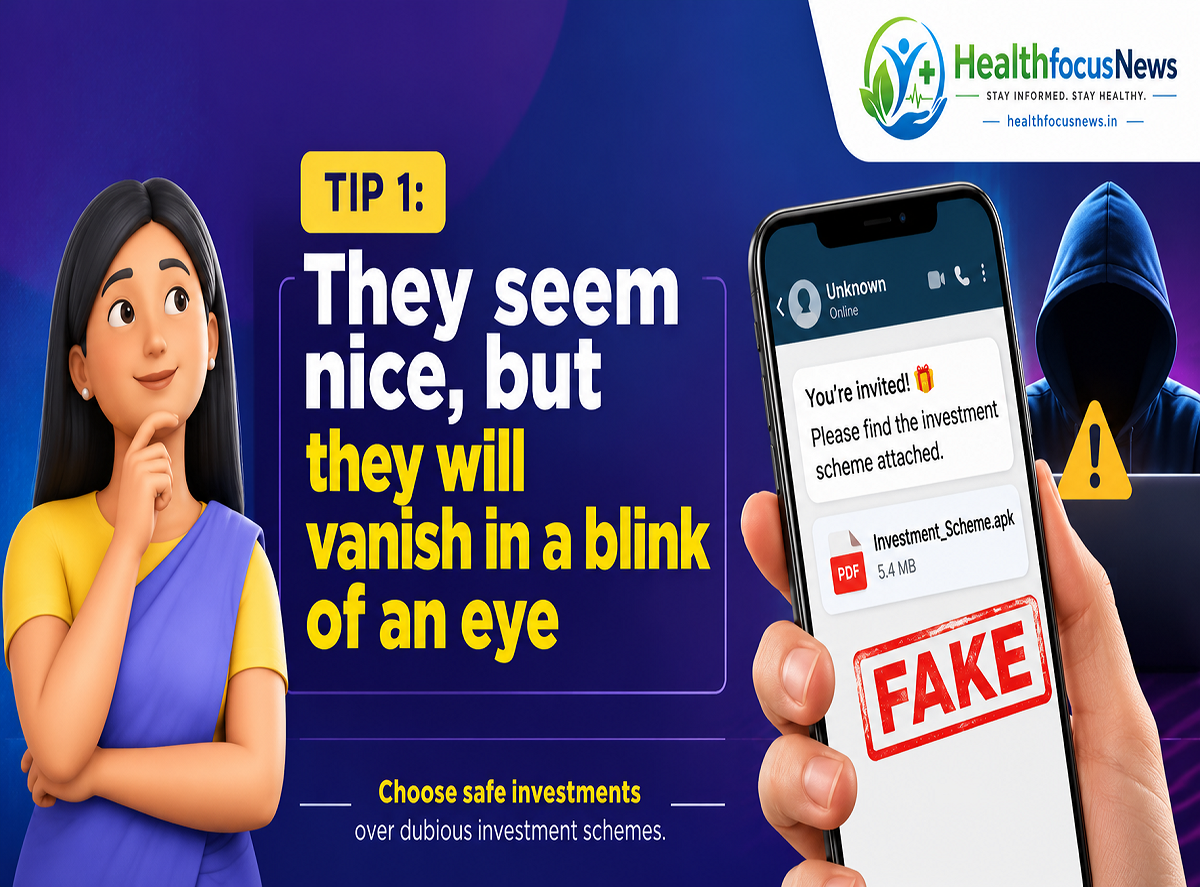
Cyber Security Awareness 2026: People planning to invest their savings have been advised to remain cautious about suspicious investment schemes that promise guaranteed or unusually high returns. As part of National Cyber Security Awareness Month and Special Campaign 6.0, a government awareness message has urged citizens to make informed financial decisions and avoid falling for misleading investment offers.
The campaign highlights a common method used by financial fraudsters: attracting investors with promises of quick profits, risk-free earnings and assured returns.
The awareness initiative also references the Department of Financial Services (DFS), the Department of Administrative Reforms and Public Grievances (DARPG), and CyberDost, the cyber safety awareness initiative associated with the Ministry of Home Affairs.
Government Warns Against Suspicious Investment Offers
The latest awareness message encourages people to invest carefully and protect their financial future.
It warns against questionable schemes that advertise attractive returns without clearly explaining the risks involved.
Fraudsters often use social media platforms, messaging applications, websites and unsolicited phone calls to promote such offers.
Some scammers may impersonate investment advisers, financial institutions or well-known companies to make their schemes appear legitimate.
They may also display fabricated profit statements, fake testimonials and misleading advertisements to persuade people to deposit money.
The government's message reminds investors that financial security requires careful decision-making rather than trusting promises of unusually high profits.
Why Are Guaranteed High Returns a Warning Sign?
Every investment carries some degree of risk, although the nature and level of risk vary across products.
Certain regulated savings products may offer stated or guaranteed returns under specified terms. Therefore, the word guaranteed alone does not automatically indicate fraud.
However, an investment offer becomes suspicious when it promises unusually high returns with little or no risk, particularly when the promoter cannot provide credible documentation.
For example, a scheme claiming that an investor can double their money within a few weeks should be examined carefully.
Fraudsters may use such promises to create excitement and discourage investors from asking important questions.
Investors should verify the organisation, understand the product and review the terms before transferring funds.
Common Investment Scams People Should Know About
Cybercriminals use several methods to target individuals looking for investment opportunities.
1. Fake Stock Market Trading Groups
Scammers may create WhatsApp or Telegram groups claiming to provide exclusive stock market recommendations.
Members may receive screenshots showing impressive profits or messages from fake participants praising the investment strategy.
Victims are sometimes directed to fraudulent trading applications or websites where their supposed profits are displayed but cannot be withdrawn.
2. Guaranteed Monthly Income Schemes
Some fraudulent operators promise fixed monthly returns that are significantly higher than those available through conventional financial products.
They may initially make small payments to build trust before encouraging larger investments.
The scheme may eventually stop making payments, leaving investors unable to recover their money.
3. Fake Cryptocurrency Investment Platforms
Fraudsters may advertise cryptocurrency trading opportunities with guaranteed profits.
Victims may be asked to deposit money into unfamiliar applications or digital wallets.
The displayed account balance may increase artificially, even though no genuine investment has taken place.
4. Impersonation of Financial Experts
Scammers sometimes misuse the names, photographs or identities of recognised financial professionals.
They may claim to represent a registered investment advisory firm or financial institution.
Investors should independently verify such claims using official contact information rather than relying on links supplied by the promoter.
Five Warning Signs of a Fake Investment Scheme
| Warning sign | Why it should raise concern |
|---|---|
| Unusually high guaranteed returns | The promised profit may be unrealistic or misleading |
| Pressure to invest immediately | Scammers may try to prevent proper verification |
| Requests to transfer money to personal accounts | Funds may not be going to a legitimate investment provider |
| No verifiable registration or documentation | The operator may not be authorised to offer the product |
| Difficulty withdrawing money | The platform may be displaying fictitious investment balances |
These signs do not prove fraud individually, but they are reasons to investigate before making a payment.
How to Check Whether an Investment Platform Is Genuine
Before investing, consumers should verify whether the organisation is authorised to provide the relevant financial service.
For securities market investments, investors can consult the Securities and Exchange Board of India's official resources at SEBI official website.
For banking-related products, consumers can review information from the Reserve Bank of India at RBI official website.
Investors should also examine the company's official website, product documentation and applicable regulatory disclosures.
A professional-looking website, social media verification badge or celebrity photograph is not sufficient proof of legitimacy.
If an investment opportunity is received through an unsolicited message, it is safer to independently locate the organisation's official contact details.
What Should You Do If You Have Already Sent Money?
People who suspect that they have transferred money to a fraudulent investment platform should act quickly.
The first step is to contact the bank or payment service provider and report the suspicious transaction.
Victims should preserve transaction IDs, screenshots, payment receipts, website addresses and relevant chat messages.
Financial cyber fraud can be reported through India's national cybercrime helpline, 1930.
A complaint can also be submitted through the National Cyber Crime Reporting Portal.
Prompt reporting may improve the chances of action being taken, although recovery of funds is not guaranteed.
Victims should also be cautious of people who claim they can recover lost investment money in exchange for an advance fee. Such offers may be another form of fraud.
Why Cyber Security Awareness Matters for Investors
As digital financial services expand, investors can access a growing number of products and platforms from their smartphones.
This convenience also creates opportunities for fraudsters to reach potential victims through online advertisements and messaging services.
Cyber security awareness campaigns aim to help citizens identify suspicious activity before they lose money.
Simple precautions, including verifying investment providers, avoiding unknown links and refusing to share confidential banking details, can reduce exposure to financial scams.
Investors should never disclose OTPs, UPI PINs, passwords or other authentication credentials to someone offering investment advice.
Government's Message: Invest Carefully and Protect Your Savings
The National Cyber Security Awareness Month campaign encourages citizens to prioritise financial safety over promises of quick profits.
Investors should remember that legitimate investment decisions require an understanding of risks, charges, liquidity and expected returns.
Any scheme that relies on pressure, secrecy or unrealistic profit claims deserves additional scrutiny.
The key takeaway: Avoid suspicious investment schemes promising unusually high or risk-free returns. Verify the investment provider, understand the risks and report suspected financial cyber fraud immediately through 1930 or cybercrime.gov.in.
Source Credit: National Cyber Security Awareness Month — Special Campaign 6.0 awareness message, referencing the Department of Financial Services (@DFS_India), Department of Administrative Reforms and Public Grievances (@DARPG_GoI), and CyberDost (@Cyberdost). Additional references: National Cyber Crime Reporting Portal and SEBI official website.