Technology
SBI Cyber Fraud Alert 2026: Beware of Fake Parcel Delivery Messages That Can Steal Your Money
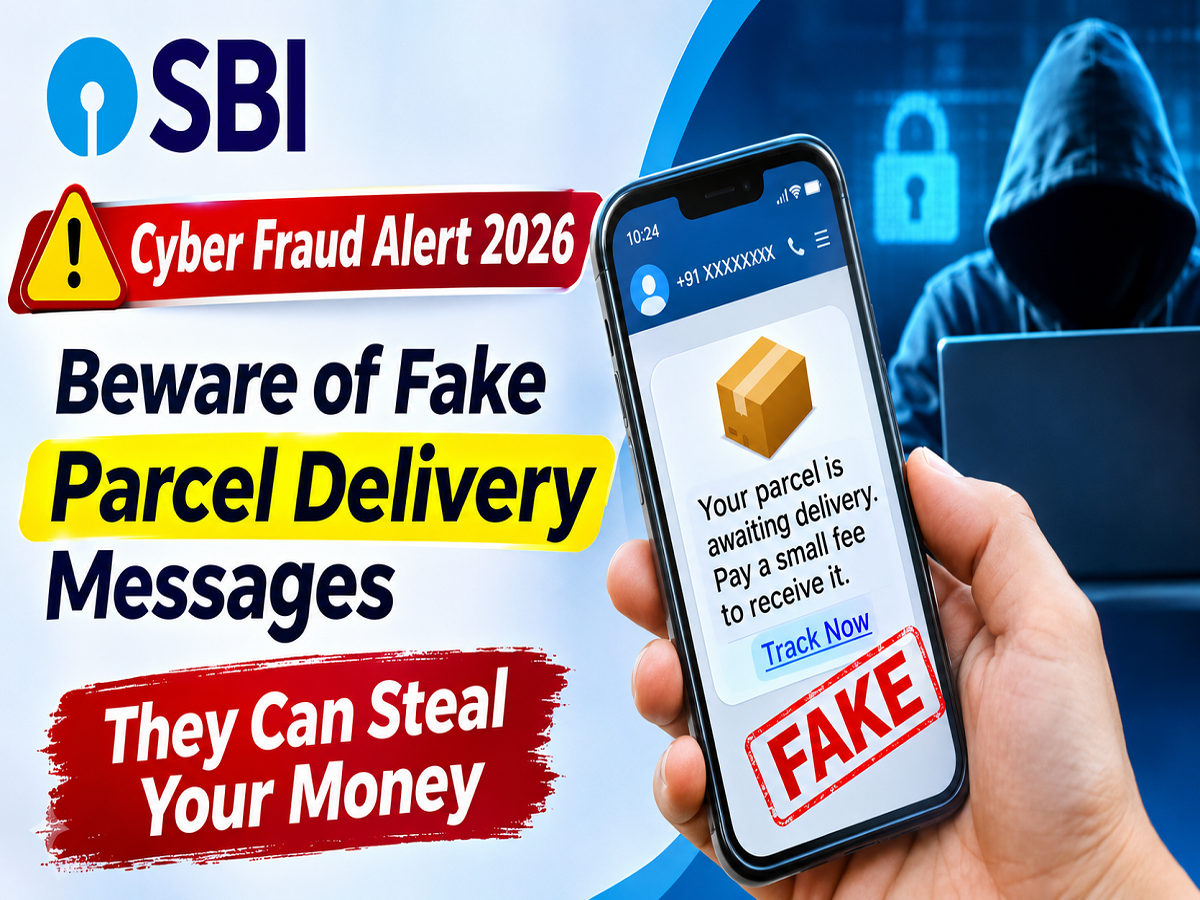
SBI Cyber Security Alert 2026: A message about an unexpected parcel delivery may look harmless, but it could be the beginning of a cyber fraud attempt. The State Bank of India (SBI) has issued a public awareness message warning people about fake package scams and advising customers to protect their personal and financial information.
As part of National Cyber Security Awareness Month and Special Campaign 6.0, SBI has highlighted the risks associated with fraudulent parcel-related messages. Cybercriminals may pretend to represent courier companies or delivery services to trick individuals into sharing confidential information.
The bank's message encourages people to remain cautious and avoid responding to suspicious requests involving unknown packages.
What Is a Fake Parcel Delivery Scam?
A fake parcel delivery scam is a type of online fraud in which criminals impersonate courier companies, delivery agents or logistics service providers.
The fraud usually begins with an unexpected SMS, WhatsApp message, email or telephone call.
A person may receive a notification claiming that a package is waiting for delivery, an address needs to be updated or a shipment has been stopped because of an incomplete payment.
The message may appear convincing because it uses familiar delivery-related language and creates a sense of urgency.
In some cases, fraudsters also misuse the names or logos of well-known courier companies to make their communication appear genuine.
The objective is generally to persuade the recipient to disclose sensitive information, visit a fraudulent website or make an unauthorised payment.
SBI Warns Customers Against Sharing Personal Information
Through its cyber awareness message, SBI has emphasised the importance of keeping personal details confidential.
Fraudsters may attempt to collect information such as mobile numbers, addresses, banking details, card information or authentication codes.
Some scammers may also ask individuals to click on links that imitate legitimate courier websites.
Once a person enters sensitive information on such a website, the details may be captured and misused.
Customers should remember that receiving a delivery-related message does not automatically mean that the sender is genuine.
Even if a message mentions a familiar courier company, its authenticity should be verified independently.
How Does the Fake Courier Scam Work?
Although scammers use different methods, a typical fake package fraud may involve the following stages:
- Unexpected delivery notification: The victim receives a message claiming that a parcel cannot be delivered.
- Creation of urgency: The message warns that the package may be returned, cancelled or held unless immediate action is taken.
- Suspicious website link: The recipient is directed to a website that may imitate a courier company's official page.
- Request for personal details: The fraudulent page may ask for an address, mobile number, card details or other information.
- Small payment demand: The scammer may request a minor delivery or verification charge.
- Attempted financial fraud: Stolen information or payment credentials may then be used for unauthorised transactions.
Not every fake parcel scam follows the same pattern. Some rely on telephone calls, while others use malicious applications or fraudulent payment requests.
Common Warning Signs of a Fake Parcel Message
Customers should be particularly cautious when they receive delivery notifications that contain unusual instructions.
Some warning signs include:
- A parcel notification when no package has been ordered or expected.
- A demand for immediate payment to prevent shipment cancellation.
- A link containing an unfamiliar or misspelled website address.
- Requests for banking passwords, card PINs or OTPs.
- Pressure to download an unknown application.
- Threats of legal action or financial penalties over an unexpected shipment.
- Calls from unknown individuals claiming to represent customs officials or courier agencies.
These warning signs do not prove that every message is fraudulent, but they indicate that additional verification is necessary.
What Should You Do If You Receive a Suspicious Parcel Message?
The safest approach is to verify the delivery information independently before taking action.
If you have recently ordered a product, open the shopping platform's official application or website and check the order status.
You can also visit the courier company's official website by entering its address directly into your browser.
Avoid clicking on links received through unexpected messages, especially when they request payment or sensitive information.
If a caller claims that a package is being held, ask for the shipment details and verify them through the courier company's published customer support channels.
Never share your UPI PIN, internet banking password or OTP to confirm the delivery of a parcel.
Can a Small Delivery Payment Lead to a Bigger Fraud?
Yes. Some fake delivery scams begin with a request for a small amount of money.
For example, a fraudulent message may claim that a nominal charge is required to correct an address or release a package.
The amount may appear insignificant, encouraging the recipient to complete the payment without checking the website.
However, the fraudulent page may be designed to capture card information or other sensitive details.
Scammers may also attempt to trick victims into authorising payments through misleading instructions.
It is important to remember that a UPI PIN is generally used to authorise outgoing payments, not to receive money.
Customers should carefully check payment requests before approving any transaction.
How to Report a Fake Courier Scam in India
Individuals who encounter suspected parcel fraud can report suspicious communication through official cybercrime reporting channels.
National Cybercrime Helpline
1930
For reporting cyber financial fraud in India
National Cyber Crime Reporting Portal
If money has already been transferred to a fraudster, the victim should immediately contact their bank and report the incident through the national cybercrime helpline.
Quick reporting may improve the chances of action being taken against a fraudulent transaction, although recovery of funds is not guaranteed.
Customers should also preserve suspicious messages, screenshots, transaction references and other relevant evidence.
What If You Have Already Shared Banking Information?
If you suspect that your banking credentials have been compromised, take immediate precautions.
Change affected passwords using the official banking application or website.
If card information has been disclosed, contact the bank through its verified customer support channels to request appropriate protective measures.
Customers who have installed an unknown application at a scammer's request should stop using it and seek assistance in securing their device and accounts.
Unauthorised transactions should be reported promptly to the bank and cybercrime authorities.
SBI customers can find verified security information and customer service details through the bank's official website at sbi.co.in.
National Cyber Security Awareness Month Highlights Online Safety
National Cyber Security Awareness Month provides an opportunity for banks, government departments and other organisations to educate the public about digital threats.
As online shopping and digital payments become more common, fraudsters continue to develop new methods to exploit unsuspecting users.
Fake courier notifications are one example of how criminals use everyday activities to make fraudulent messages appear believable.
Awareness campaigns encourage individuals to verify unexpected communications, protect confidential information and report suspicious activities.
The SBI message under Special Campaign 6.0 reinforces these basic cybersecurity precautions.
SBI Encourages Customers to Stay Alert Against Digital Scams
SBI's latest cyber awareness communication reminds customers that a fraudulent parcel notification can become a serious financial risk if personal information is shared without verification.
People should avoid opening suspicious delivery links, downloading unknown applications or disclosing confidential banking details.
The most effective precaution is to verify shipment information directly through the official courier or shopping platform.
A fake delivery message should never be allowed to become a real financial loss. Staying cautious, checking information independently and reporting suspected fraud promptly can help protect individuals from cybercriminals.
Source Credit: State Bank of India (SBI) — National Cyber Security Awareness Month, Special Campaign 6.0 public awareness message. Campaign references: CyberDost, Department of Administrative Reforms and Public Grievances (DARPG), and Department of Financial Services, Government of India. Additional reporting information: National Cyber Crime Reporting Portal.