Business
8th Pay Commission 2026: Will Gratuity Limit Rise From ₹25 Lakh to ₹75 Lakh? Check Employees’ Demands
8th Pay Commission Latest News: Central government employees are closely watching developments surrounding the 8th Central Pay Commission, particularly its potential recommendations on salaries, pensions, allowances and retirement benefits. One of the major issues attracting attention is the maximum gratuity payable to government employees when they retire.
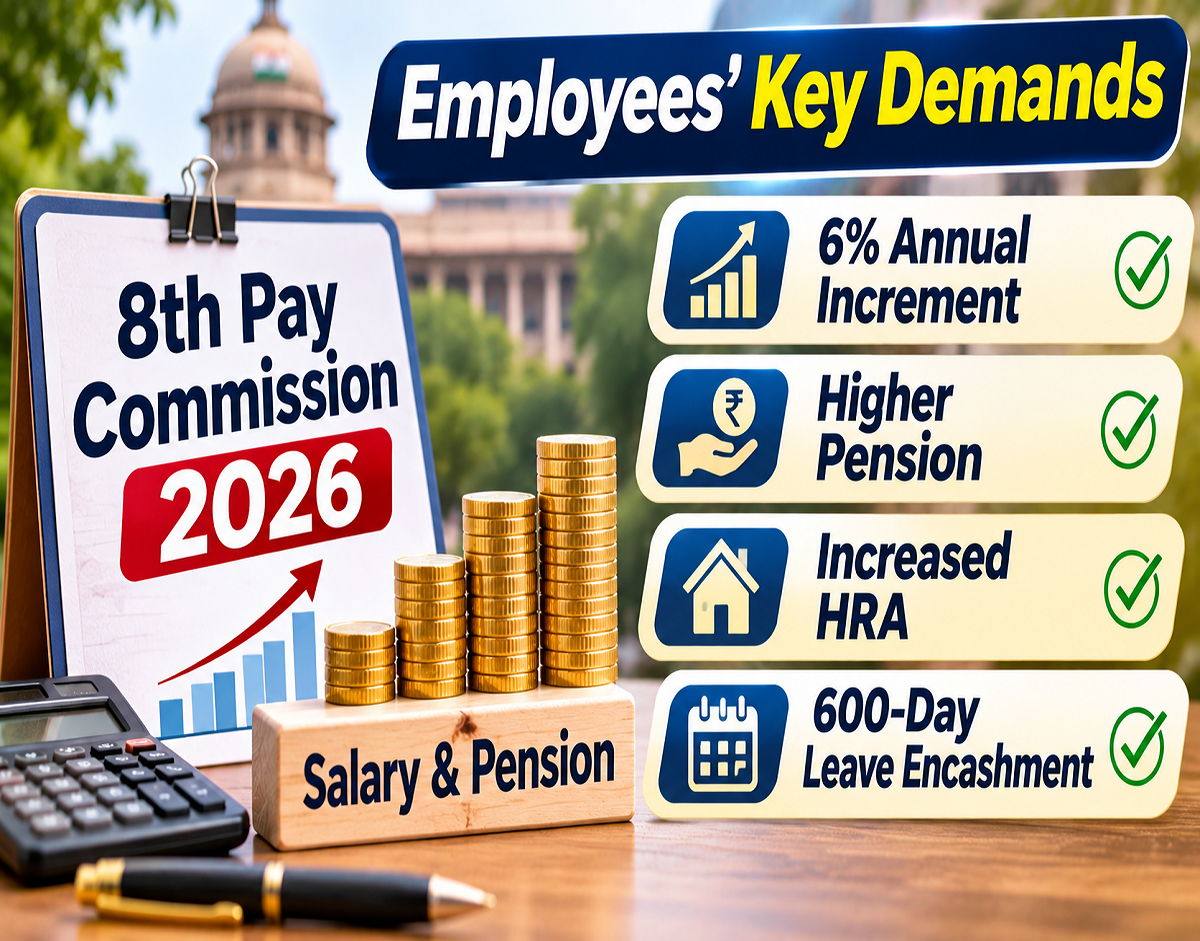
Employee organisations have reportedly demanded a substantial increase in the existing gratuity ceiling of ₹25 lakh. Some representatives are seeking a threefold increase to ₹75 lakh, while railway employee organisations have proposed a revised limit of ₹50 lakh.
These demands come amid concerns about inflation, rising healthcare costs and the financial requirements of employees after retirement.
However, the proposed ₹75 lakh gratuity limit has not been approved by the Central Government. It remains a demand submitted by employee representatives, and any revision will depend on the Pay Commission's recommendations and subsequent government decisions.
Here is a detailed explanation of the current gratuity rules, calculation methods, employee demands and the latest developments concerning the 8th Pay Commission.
What Is Gratuity and Why Is It Important for Government Employees?
Gratuity is a lump-sum retirement benefit paid to eligible employees in recognition of their service.
For central government employees covered by the applicable retirement benefit rules, gratuity is generally determined using their qualifying service and emoluments.
The calculation takes into account basic pay and the applicable dearness allowance (DA), subject to the relevant rules and maximum ceiling.
Unlike a monthly pension, gratuity is ordinarily paid as a one-time amount.
For many retiring employees, it forms an important part of their financial planning and may help meet household expenses, healthcare requirements or other long-term obligations.
What Is the Current Gratuity Limit for Central Government Employees?
The existing maximum retirement gratuity ceiling for eligible central government employees is ₹25 lakh.
This ceiling was increased from ₹20 lakh to ₹25 lakh with effect from January 1, 2024, following the increase in dearness allowance to 50%.
The amount payable to an individual employee is not automatically ₹25 lakh. It depends on the employee's qualifying service, last admissible emoluments and the applicable calculation rules.
An employee whose calculated gratuity is below ₹25 lakh receives the eligible calculated amount, while an employee whose calculation exceeds the ceiling is restricted by the applicable maximum.
How Is Gratuity Calculated for Central Government Employees?
For employees covered by the Central Civil Services pension framework, retirement gratuity is generally calculated at one-fourth of the applicable emoluments for each completed six-month period of qualifying service, subject to the prescribed maximum.
The calculation can be represented as:
\[ \text{Gratuity}=\frac{\text{Basic Pay + DA}}{4}\times\text{Qualifying Half-Year Periods} \]
The amount is subject to a maximum of 16.5 times the applicable emoluments and the monetary gratuity ceiling.
Example: Gratuity Calculation for a Government Employee
Suppose an employee retires with the following details:
| Particulars | Amount |
|---|---|
| Last basic pay | ₹80,000 |
| Dearness allowance (60%) | ₹48,000 |
| Total applicable monthly emoluments | ₹1,28,000 |
| Qualifying service | 30 years |
| Completed six-month periods | 60 |
The estimated gratuity would be:
₹1,28,000 × ¼ × 60 = ₹19,20,000
In this example, the calculated gratuity is below the existing ₹25 lakh ceiling.
Therefore, raising the maximum limit to ₹75 lakh would not automatically increase this employee's gratuity to ₹75 lakh.
The calculation is illustrative and assumes that the stated service and emoluments qualify under the applicable rules.
How Is Gratuity Calculated in the Private Sector?
For eligible employees covered by the Payment of Gratuity Act, the commonly used calculation is different.
The standard formula for a monthly-rated employee is:
\[ \text{Gratuity}=\frac{\text{Last Drawn Wages}\times15\times\text{Eligible Years of Service}}{26} \]
The last drawn wages generally include basic salary and dearness allowance, where applicable.
The calculation is based on 15 days' wages for each completed year of service, with qualifying fractions treated according to the applicable rules.
Private-sector gratuity provisions and ceilings are governed by a different legal framework from the Central Civil Services retirement gratuity rules.
Therefore, a demand made before the 8th Pay Commission does not automatically change gratuity entitlements for private-sector employees.
Why Are Employee Organisations Demanding ₹75 Lakh Gratuity?
Employee representatives argue that the existing gratuity ceiling should be reviewed in light of rising living costs and the financial pressures faced by retirees.
According to the supplied report, representatives associated with the National Council–Joint Consultative Machinery (NC-JCM) have demanded that the maximum gratuity ceiling be increased from ₹25 lakh to ₹75 lakh.
This would represent a 200% increase over the current ceiling, making the proposed maximum three times the existing amount.
The demand is part of broader discussions surrounding retirement benefits under the 8th Pay Commission.
Employee organisations believe that an increased ceiling could benefit long-serving employees whose gratuity calculations may otherwise exceed the present maximum.
Railway Employees Demand ₹50 Lakh Gratuity Ceiling
The Indian Railways Technical Supervisors Association (IRTSA) has reportedly submitted a separate proposal concerning gratuity.
According to the report, the association has demanded an increase in the maximum gratuity ceiling to ₹50 lakh.
It has also proposed a change in the calculation method.
Instead of calculating gratuity at one-fourth of the applicable emoluments for every completed six-month period, the association has suggested using one-third.
Such a revision, if accepted, could increase the calculated gratuity for eligible employees even where the existing monetary ceiling is not reached.
However, this proposal has not become an approved rule.
What Are the Main Gratuity Demands Under the 8th Pay Commission?
| Issue | Existing Position | Reported Employee Demand |
|---|---|---|
| Maximum gratuity ceiling | ₹25 lakh | ₹75 lakh proposed by NC-JCM representatives |
| Railway association's proposed ceiling | ₹25 lakh | ₹50 lakh |
| Government gratuity calculation | One-fourth of eligible emoluments per qualifying half-year | One-third proposed by IRTSA |
| Maximum calculation restriction | 16.5 times applicable emoluments | Removal demanded by some representatives |
| Implementation | Existing rules apply | Subject to recommendations and government approval |
Some employee representatives have also called for changes to the wage-day basis used in gratuity calculations.
These demands should not be confused with officially notified changes.
Will All Government Employees Receive ₹75 Lakh After Retirement?
No. Even if the government eventually increases the maximum gratuity ceiling to ₹75 lakh, it would not mean that every retiring employee receives that amount.
Gratuity is calculated individually according to qualifying service, applicable pay and the relevant rules.
A higher ceiling mainly benefits employees whose calculated gratuity would otherwise exceed the existing limit.
For employees with lower qualifying emoluments or shorter service periods, the calculated gratuity may remain below the current ceiling.
Any changes to the calculation formula could have a broader impact, but such changes would require separate approval.
8th Pay Commission: Who Is Heading the Panel?
The 8th Central Pay Commission is headed by Justice Ranjana Prakash Desai.
The three-member panel was constituted on November 3, 2025, and has been given 18 months to submit its recommendations.
The commission is examining issues related to central government employees' pay structures, allowances and other service-related benefits within its approved terms of reference.
Its recommendations are expected to play an important role in shaping future compensation arrangements for eligible central government employees and pensioners.
When Will the 8th Pay Commission Submit Its Report?
Based on its November 3, 2025 constitution date and the 18-month reporting period, the commission's report is expected around May 2027, unless the government changes the timeline.
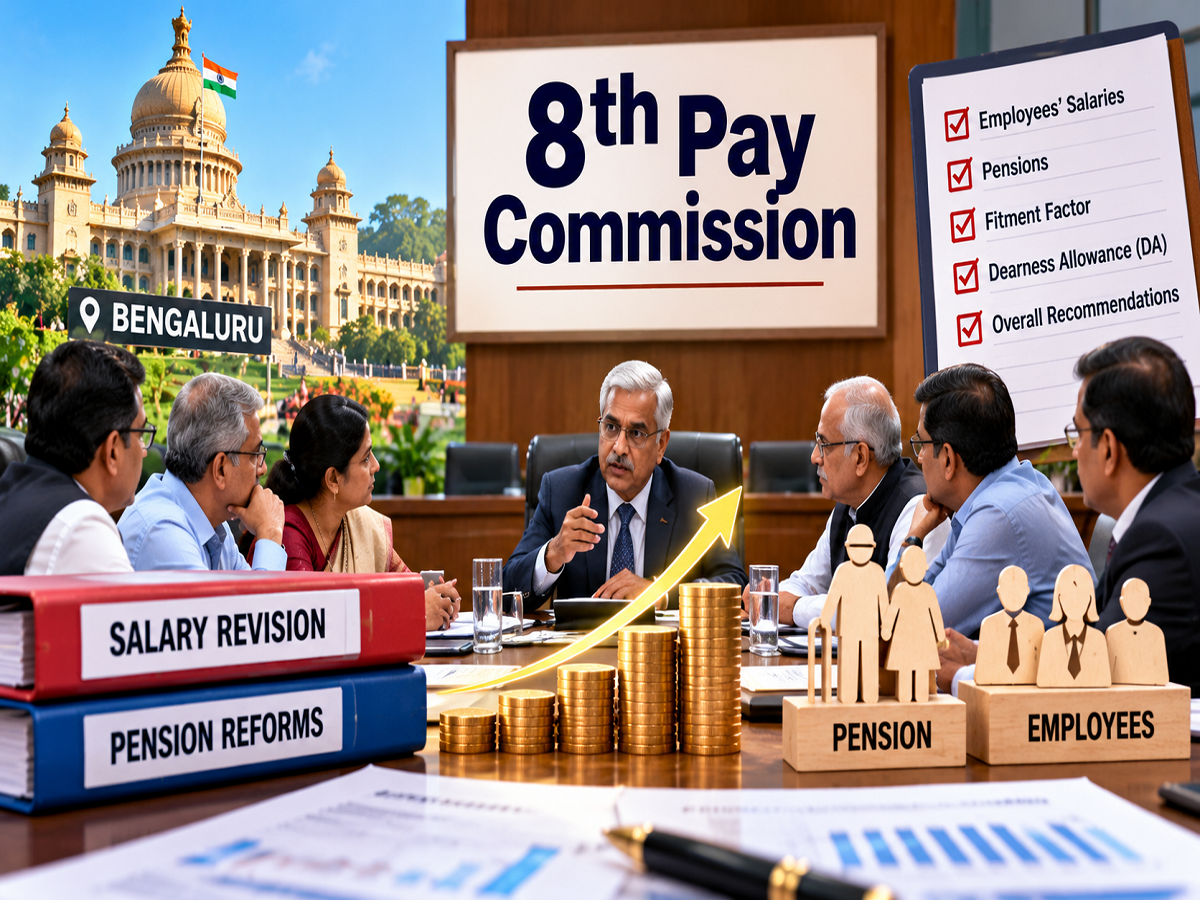
According to the supplied report, consultations were held in Bengaluru, with meetings concluding on October 8, 2026.
Further meetings were reportedly scheduled in Mumbai for October 22 and 23.
The consultation process provides employee organisations and other stakeholders with an opportunity to present their demands.
However, the commission's final recommendations may differ from the proposals submitted during these discussions.
Has the Government Approved the ₹75 Lakh Gratuity Proposal?
As of October 20, 2026, the supplied information does not establish any government approval for increasing the gratuity ceiling to ₹75 lakh.
The ₹75 lakh and ₹50 lakh figures represent reported demands from employee organisations.
For a revised gratuity ceiling to become effective, the relevant recommendations would need to be considered by the government, followed by the necessary approval and official notification.
Employees should therefore continue to use the existing gratuity rules for financial planning until a change is formally announced.
8th Pay Commission Gratuity Update 2026: What Should Employees Expect?
The demand for a higher gratuity ceiling has become an important issue in discussions surrounding the 8th Pay Commission.
While NC-JCM representatives are reportedly seeking a maximum of ₹75 lakh, IRTSA has proposed a ₹50 lakh ceiling along with a more favourable calculation formula.
If the government accepts a higher ceiling or changes the calculation method, eligible employees could see improvements in their retirement benefits.
However, the financial impact would vary according to each employee's qualifying service, pay and applicable retirement rules.
For now, the gratuity ceiling remains ₹25 lakh. The proposed increase to ₹75 lakh is a demand, not an approved government decision.