Business
Sugar Prices Rise Ahead of Festivals: Retail Rate Near ₹64 Per Kg as Government Moves to Boost Supply
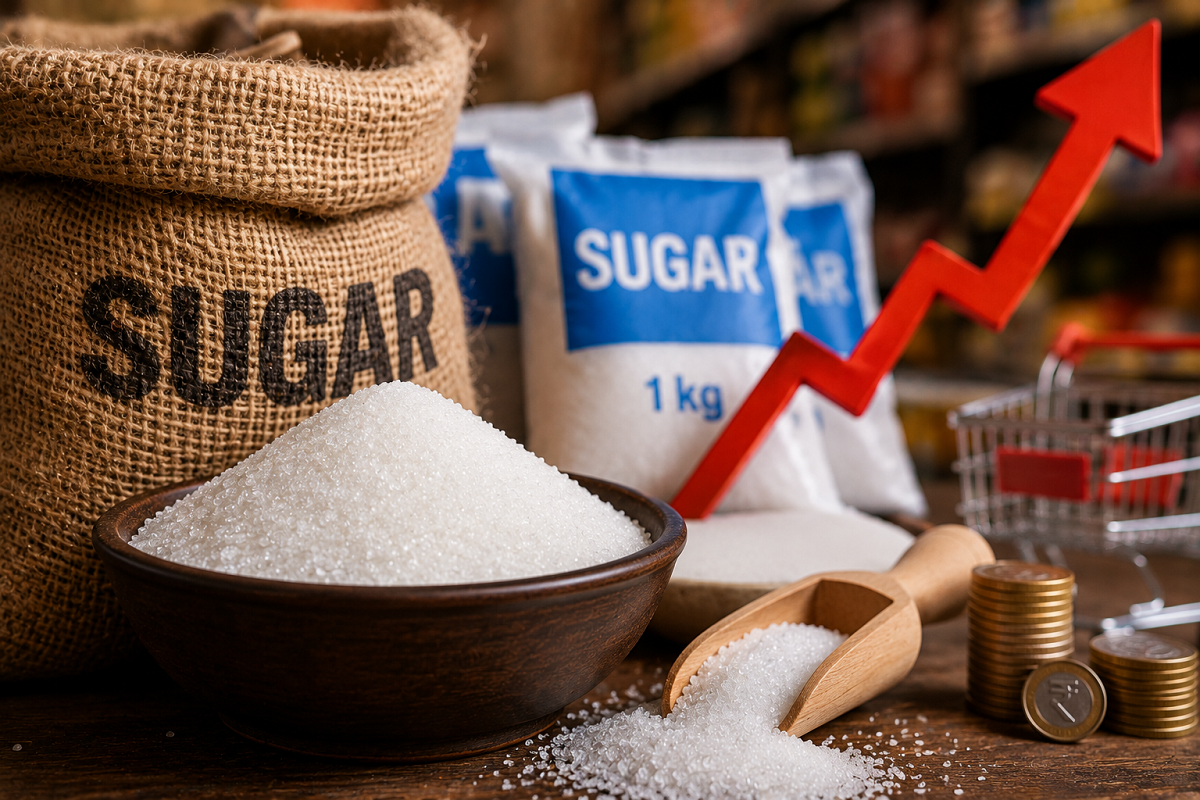
Sugar Price Update 2026: Household budgets are facing fresh pressure ahead of the festive season as sugar prices continue to remain elevated across India. Retail rates moved higher again on Tuesday, August 25, taking the all-India average price close to ₹64 per kilogram, according to price-monitoring data.
The increase comes at a crucial time for consumers. Demand for sugar and sweets typically rises around festivals such as Raksha Bandhan and Ganesh Chaturthi, when households, sweet shops, bakeries and restaurants increase purchases.
Government measures have already started pulling down prices at the mill level, but that relief has yet to fully reach retail consumers.
Sugar Price Climbs to Nearly ₹64 Per Kg
Data from the Department of Consumer Affairs' Price Monitoring Division showed the all-India average retail price of sugar at approximately ₹63.97 per kg on August 25.
The average price was around ₹63.05 per kg a day earlier, indicating another increase at the retail level.
The latest rate is substantially higher than levels seen just a month ago. According to the reported figures, the average price was approximately ₹48.81 per kg a month earlier. This means sugar has become about 31% more expensive within a month.
The year-on-year comparison is also significant. Sugar was available at an average of around ₹46.31 per kg during the corresponding period last year, putting current prices roughly 38% higher.
For families preparing sweets and other festive foods at home, the sharp increase could translate into noticeably higher grocery expenses.
Sugar Selling for Even More in Some Markets
The national average does not mean consumers are paying the same price everywhere.
Local retail rates depend on factors including transportation expenses, regional supplies, retailer margins and the type and quality of sugar being sold.
According to reported government data, the maximum retail price in monitored markets had reached approximately ₹76 per kg, while the modal price—the rate reported most frequently across markets—was around ₹65 per kg.
As a result, consumers in some locations may be paying considerably more than the national average.
Wholesale Sugar Is Also Much Costlier Than Last Year
The increase is not restricted to neighbourhood retail stores.
Wholesale sugar prices have also risen sharply compared with earlier periods. The average wholesale rate was reported at approximately ₹59.23 per kg on Monday.
A month earlier, the corresponding price was about ₹45.35 per kg, while the average rate a year ago was around ₹43.01 per kg.
This sharp increase at the wholesale level helps explain why retail sugar prices have remained high even as the government takes steps to improve supplies.
There are, however, early indications that the pressure at the mill level has started easing.
Mill Prices Drop After Government Intervention
Food Secretary Sanjeev Chopra said earlier this week that sugar prices at the mill level had fallen significantly following government measures aimed at controlling the market.
Mill prices reportedly touched a record level of approximately ₹67 per kg last week.
After government intervention, prices declined by around 18% to nearly ₹55 per kg.
The decline is important because lower ex-mill prices can eventually reduce wholesale and retail rates. However, changes in the supply chain do not always reach consumers immediately.
Existing inventories purchased by wholesalers and retailers at higher prices may continue to be sold before cheaper stocks reach local markets.
That means households may have to wait before the recent fall in mill prices is reflected fully at shops.
Government Allows Duty-Free Sugar Imports
One of the government's biggest interventions has been aimed directly at increasing domestic availability.
To improve supplies and control the price surge, the government has permitted the duty-free import of 10 lakh metric tonnes (10 LMT) of raw sugar.
Allowing imports without customs duty can make overseas purchases more viable and bring additional sugar into the domestic market.
Increasing supply is particularly important ahead of the festive season, when consumption generally increases.
If imported stocks enter the distribution system quickly and domestic supplies remain adequate, they could help reduce pressure on prices in the coming weeks.
Stock Limits Introduced to Check Hoarding
Increasing imports is only one part of the government's strategy.
Authorities are also trying to prevent excessive stock accumulation that could artificially tighten market availability.
A stock limit of 400 tonnes has been prescribed for sugar dealers. The measure is intended to discourage traders from holding unusually large quantities when prices are rising.
Restrictions will also apply to major industrial consumers.
From September 1, large users such as bakeries and sweet manufacturers will not be permitted to maintain stocks exceeding around 15 days of their consumption requirements, according to the announced measures.
These restrictions are designed to keep more sugar circulating through the market rather than being held in warehouses.
Physical Verification of Sugar Stocks Underway
Authorities are also strengthening enforcement against possible hoarding and black marketing.
Joint teams of central and state government officials are carrying out physical verification of sugar inventories at mills.
Physical inspections allow authorities to compare declared stock levels with the quantities actually stored at facilities.
Such checks become particularly important when commodity prices rise rapidly because market shortages can sometimes be worsened by speculative buying or deliberate withholding of stocks.
By monitoring inventories more closely, the government hopes to improve transparency and ensure adequate supplies reach consumers.
Why Retail Prices May Take Time to Fall
Consumers may wonder why sugar still costs close to ₹64 per kg even though mill prices have reportedly declined.
The answer lies partly in the time it takes for price changes to travel through the supply chain.
Sugar moves from mills through wholesalers, distributors and retailers before reaching consumers. Businesses that purchased stocks at higher rates may not immediately reduce their selling prices.
Transportation expenses and retailer margins also affect the final amount paid by households.
For this reason, a decline in mill prices today may take several days—or potentially longer—to become clearly visible at the retail level.
Will Sugar Become Cheaper Before the Festivals?
The direction of prices over the coming weeks will depend heavily on supply.
The fall in mill prices is an encouraging development, while duty-free imports, stock restrictions and government inspections could provide additional support.
However, festive demand may remain strong, especially from sweet shops, bakeries, restaurants and households.
If additional supplies reach markets smoothly and stock limits reduce speculative activity, retail prices could begin to soften. But consumers should not assume an immediate or uniform reduction across all cities.
For now, the national average retail price remains close to ₹64 per kg, significantly above both last month's and last year's levels.
With the festive season approaching, sugar prices will therefore remain an important part of the household inflation picture. The next few weeks will show whether government intervention and increased supplies are enough to bring meaningful relief to consumers.