Business
Petrol-Diesel Prices Today: Fuel Rates Stay Unchanged Ahead of Raksha Bandhan; Check City-Wise Prices
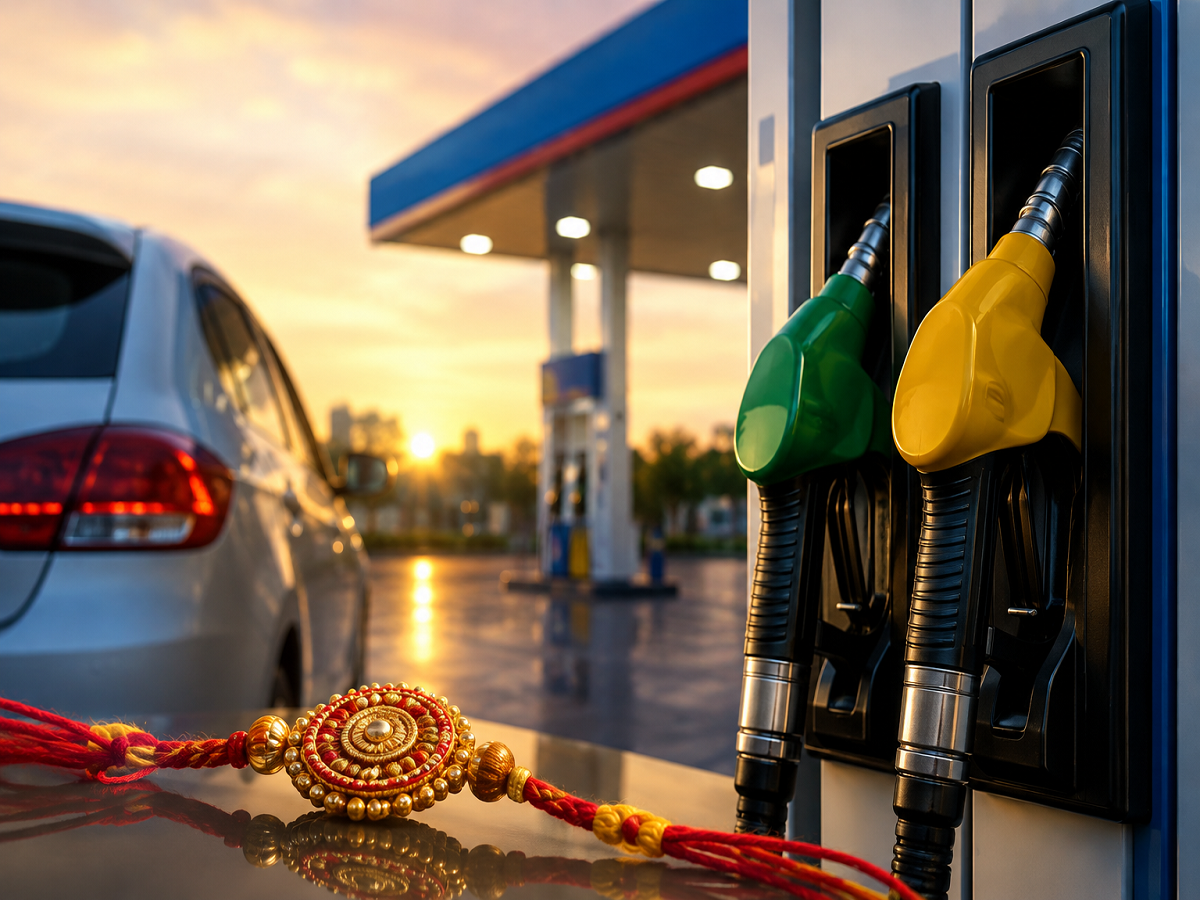
Petrol Diesel Price Today, August 27, 2026: Motorists hoping for some relief in fuel expenses ahead of Raksha Bandhan will have to wait a little longer. Petrol and diesel prices remained unchanged across major Indian cities on Thursday, August 27, despite a decline in international crude oil prices.
The movement in the global energy market has once again raised expectations that cheaper crude could eventually translate into lower petrol and diesel prices in India. However, domestic fuel retailers have not announced any fresh reduction so far.
State-run oil marketing companies, including Indian Oil Corporation (IOCL), Bharat Petroleum Corporation Limited (BPCL) and Hindustan Petroleum Corporation Limited (HPCL), continue to monitor international crude prices and other factors that influence retail fuel rates.
Petrol and Diesel Prices Remain Unchanged on August 27
There has been no fresh revision in petrol and diesel prices today. Retail fuel rates in India have remained unchanged since May 25, 2026.
The last major revision saw petrol become costlier by ₹2.61 per litre, while diesel prices increased by ₹2.71 per litre. Since then, consumers in major cities have been paying broadly the same rates.
Here are the petrol and diesel prices in some major cities on August 27:
| City | Petrol Price (Per Litre) | Diesel Price (Per Litre) |
|---|---|---|
| Delhi | ₹102.12 | ₹95.20 |
| Mumbai | ₹111.31 | ₹97.97 |
| Kolkata | ₹113.51 | ₹99.82 |
| Chennai | ₹107.78 | ₹99.56 |
| Hyderabad | ₹115.69 | ₹103.82 |
| Patna | ₹113.35 | ₹99.36 |
| Jaipur | ₹112.66 | ₹97.78 |
| Bhubaneswar | ₹103.19 | ₹100.68 |
| Bengaluru | ₹110.82 | ₹98.77 |
Among these cities, Hyderabad continues to have one of the highest petrol prices at ₹115.69 per litre. Delhi, meanwhile, has comparatively lower rates, with petrol priced at ₹102.12 and diesel at ₹95.20 per litre.
Crude Oil Is Cheaper, So Why Haven't Fuel Prices Fallen?
A decline in international crude oil prices does not necessarily lead to an immediate reduction in petrol and diesel prices at Indian fuel stations.
One reason is that oil marketing companies also take into account their previous margins and losses before changing retail prices. During periods of sharp volatility in international crude markets, companies may absorb part of the increase instead of passing the entire burden on to consumers immediately.
As market conditions improve, oil companies may use the stronger margins to offset losses or pressure accumulated during earlier periods of expensive crude.
Global geopolitical uncertainty is another factor. Fresh US sanctions on Iran and continuing concerns surrounding oil supply have kept the international energy market volatile. Oil companies may therefore prefer to observe whether lower crude prices are sustained before making significant changes to domestic retail rates.
This means consumers should not assume that every short-term fall in international crude prices will automatically result in cheaper petrol or diesel in India.
Why Do Petrol and Diesel Prices Differ From City to City?
Fuel prices are not uniform across India because several components are added before petrol or diesel reaches the consumer.
Taxes are among the most important reasons for the variation. The Centre and state governments impose different taxes and levies on petroleum products, while state-level taxation can vary considerably from one region to another.
As a result, a litre of petrol can cost significantly more in one city than in another even when the underlying fuel is essentially the same.
Transportation and distribution expenses also influence the final amount charged at a petrol pump. Fuel transported over longer distances can involve higher logistical costs. Dealer-related expenses and local market factors can further contribute to price differences.
A substantial portion of the amount consumers pay for petrol and diesel is therefore linked to taxes and other charges rather than only the underlying cost of crude oil.
How Are Petrol and Diesel Prices Decided in India?
Retail fuel pricing involves several components. International crude oil prices are important, but they are only one part of the calculation.
The rupee-dollar exchange rate also matters because India imports a large proportion of the crude oil it consumes. A weaker rupee can make crude imports more expensive even if international oil prices are relatively stable.
Refining expenses, freight and transportation charges, dealer commissions and government taxes are then factored into the final retail price.
Consequently, international crude prices and domestic petrol-diesel rates do not always move in the same direction or at the same speed.
Will Petrol and Diesel Become Cheaper After Raksha Bandhan?
For now, there is no announced nationwide reduction in petrol or diesel prices. Whether consumers receive relief in the coming days will depend on several factors, including the direction of international crude prices, geopolitical developments, currency movements and the pricing decisions of oil marketing companies.
If crude oil remains cheaper for a sustained period and global supply concerns ease, the possibility of lower domestic fuel rates could improve. However, consumers should rely on official price revisions rather than expecting an immediate reduction based solely on daily movements in crude oil.
Until a fresh revision is announced, motorists will continue to pay the prevailing petrol and diesel prices in their respective cities.
Disclaimer: Petrol and diesel prices can vary by location due to state taxes, freight charges and other local factors. Consumers should check the latest rate at their nearest fuel station or through official oil marketing company channels before making a purchase.