Technology
SIM Muling Scam Alert 2026: Do Not Share or Rent Your SIM Card, DoT Issues Cyber Safety Reminder
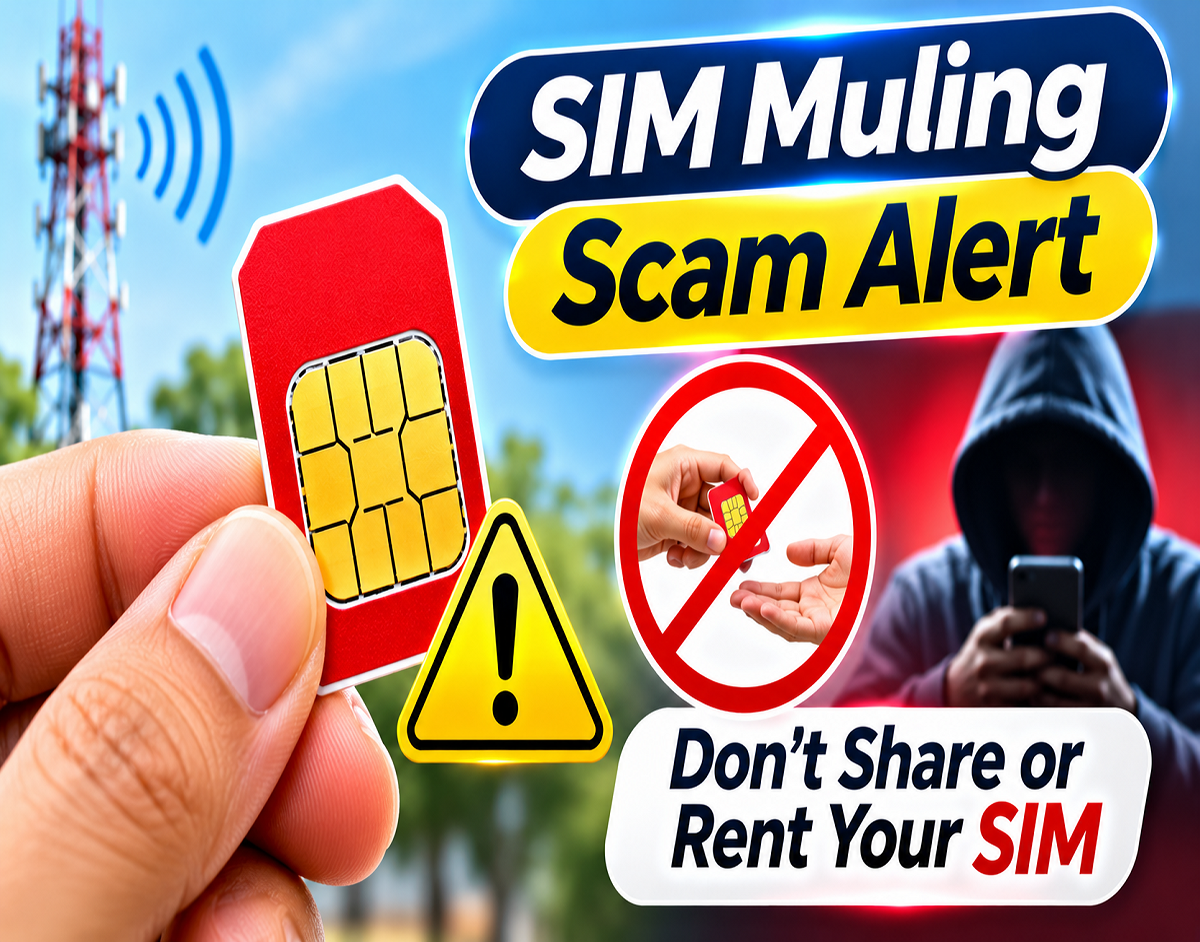
SIM Muling Scam Alert 2026: The Department of Telecommunications (DoT) has highlighted an important cyber safety issue through an awareness campaign encouraging mobile users to recognize the dangers of SIM muling. The campaign uses a hidden-message challenge to remind citizens about responsible SIM card usage and the risks of allowing others to misuse mobile connections.
The public awareness message asks users to decode a hidden message and share their answers in the comments. It includes the hashtag #SIMMuling, drawing attention to a form of telecom misuse that can facilitate cybercrime.
Although the actual puzzle image and its hidden text have not been provided, the campaign's stated theme concerns SIM safety and preventing misuse of mobile connections.
Mobile users should be cautious about handing over SIM cards, sharing OTPs or allowing unknown individuals to use connections registered in their names.
SIM Muling Scam 2026: Important Details
| Particulars | Information |
|---|---|
| Awareness Campaign | SIM Safety and SIM Muling |
| Government Department | Department of Telecommunications |
| Main Concern | Misuse of SIM Cards for Fraudulent Activities |
| Common Risk | SIM Cards Used by Unauthorized Persons |
| Potential Misuse | Fraudulent Calls, Messages and Other Cybercrime |
| Safety Precaution | Do Not Share or Transfer SIM Cards to Unknown Individuals |
| Telecom Safety Portal | Sanchar Saathi |
| Mobile Connections Check | Know Your Mobile Connections Facility |
| Suspicious Communication Reporting | Chakshu |
| Financial Cyber Fraud Helpline | 1930 |
| Official Website | https://sancharsaathi.gov.in |
What Is SIM Muling?
SIM muling generally refers to arrangements in which a person obtains, supplies or allows another person to use a SIM card or mobile connection for potentially fraudulent purposes.
A SIM card registered using one person's identity may be used by another individual to make calls, send messages or create accounts.
In some cases, criminals may persuade people to obtain SIM cards and hand them over in exchange for money.
These connections can then be used to contact potential victims or facilitate other illegal activities.
A person may not always understand how the SIM card will be used after handing it over.
That is why telecom safety campaigns emphasize the importance of keeping control of mobile connections registered in one's name.
How Does a SIM Muling Scam Work?
Fraudsters may approach individuals through social media, messaging applications or personal contacts.
They may offer a small payment in exchange for obtaining a new SIM card.
Sometimes the arrangement is presented as a temporary business requirement or a harmless favour.
The individual may be asked to complete SIM registration using their own identity documents.
After activation, the SIM card is handed over to another person.
The recipient may then use the connection for activities unrelated to the registered subscriber.
If the connection is misused for fraudulent calls or messages, it may become part of a cybercrime investigation.
This can create serious complications for the person whose identity was used to obtain the connection.
Why Do Cybercriminals Want SIM Cards Registered in Other People's Names?
Mobile numbers are widely used for communication, account registration and digital verification.
Fraudsters may seek access to multiple SIM cards to conceal their identities or make suspicious activity harder to trace.
Such numbers may be used to contact victims through calls or messages.
They may also be used to register accounts on digital platforms.
However, the exact role of a SIM card in a particular fraud depends on the circumstances.
A SIM card alone does not automatically provide access to another person's bank account.
Additional deception, stolen credentials or unauthorized transactions may be involved.
Five Warning Signs of SIM Muling
Mobile users should remain cautious when encountering the following situations.
1. Money Offered for a SIM Card
An unknown person offers payment if you obtain a new SIM card and hand it over.
2. Requests to Use Your Identity Documents
Someone asks you to complete SIM registration using your Aadhaar or other identity information for their benefit.
3. Unclear Business Requirements
A person claims that their company needs multiple SIM cards but cannot explain why the connections must be registered in your name.
4. Requests for SIM-Related OTPs
A caller or message sender asks for OTPs or other authentication details related to mobile service activation.
5. Pressure to Transfer Control Immediately
Someone insists that you hand over a newly activated SIM card without providing a legitimate and verifiable explanation.
These situations should be treated as warning signs requiring careful verification.
What Are the Risks of Sharing Your SIM Card?
Allowing another person to use a mobile connection registered in your name can create several risks.
The connection may be used to send fraudulent messages or make deceptive calls.
It may also be linked to accounts or activities that the registered subscriber does not recognize.
If authorities investigate suspected misuse, subscriber records may be relevant to the inquiry.
However, registration in a person's name does not automatically establish that the person knowingly participated in a crime.
Responsibility depends on the facts and applicable law.
The safest approach is to avoid supplying SIM cards to unknown individuals or participating in suspicious registration arrangements.
How to Check Mobile Numbers Registered in Your Name
The Department of Telecommunications provides a facility through the Sanchar Saathi portal that helps users review mobile connections associated with their identity.
The service is commonly known as Know Your Mobile Connections.
Users can follow these general steps:
Step 1: Visit https://sancharsaathi.gov.in.
Step 2: Open the Know Your Mobile Connections facility.
Step 3: Enter the required mobile number and complete the prescribed verification process.
Step 4: Review the mobile connections displayed through the service.
Step 5: Identify any number that you do not recognize or no longer require.
Step 6: Use the available reporting options according to the portal's instructions.
Step 7: Retain the acknowledgement or reference details for follow-up.
The exact portal interface and available options may change.
What Should You Do if an Unknown SIM Is Registered in Your Name?
If you discover an unfamiliar mobile connection associated with your identity, you should report it through the official Sanchar Saathi facility.
Avoid contacting unknown individuals who claim they can remove the number in exchange for money.
You may also contact the relevant telecom service provider through its official support channels.
If you suspect that your identity documents have been misused, preserve relevant records and seek assistance from the appropriate authorities.
Reporting an unfamiliar connection helps initiate the prescribed verification process.
What Is the Chakshu Facility?
Chakshu is a reporting facility available through Sanchar Saathi.
It allows citizens to report suspected fraudulent communications received through supported channels.
These may include suspicious calls, SMS messages and certain messaging-platform communications.
The facility is intended to support action against misuse of telecom resources.
However, if money has already been lost through cyber fraud, users should report the incident through the national cybercrime system.
Chakshu is not a substitute for filing a financial cybercrime complaint.
How to Report Financial Cyber Fraud
People who experience financial cyber fraud should immediately contact the national helpline 1930.
They can also submit a complaint through https://cybercrime.gov.in.
Important information to preserve includes transaction references, suspicious phone numbers, messages and payment records.
Victims should also notify their bank or payment service provider through official channels.
Prompt reporting may improve the possibility of tracing fraudulent transactions, although recovery is not guaranteed.
Important SIM Safety Tips for Mobile Users
Citizens should keep control of SIM cards registered in their names.
They should avoid obtaining connections for unknown individuals.
Identity documents should be shared only through legitimate and verified procedures.
SIM activation OTPs and account credentials should never be disclosed to unauthorized persons.
Users should periodically review mobile connections linked to their identity through official facilities.
Lost or stolen SIM cards should be reported promptly to the telecom operator.
Suspicious communications should be reported through the appropriate government channel.
SIM Muling Scam Alert 2026: Latest DoT Awareness Message
The Department of Telecommunications has used a hidden-message challenge to encourage public discussion about SIM safety.
The awareness post asks users to decode a message and share their answers, while the hashtag #SIMMuling identifies the broader cyber safety topic.
The exact hidden message cannot be confirmed without the accompanying puzzle image.
Nevertheless, the campaign highlights the importance of protecting mobile connections from unauthorized use.
Citizens should avoid suspicious SIM-sharing arrangements, verify the connections registered in their names and report potential misuse through official channels.
Source Credit: Department of Telecommunications (DoT) – SIM safety and SIM muling public awareness campaign.
Official Resources:
- Sanchar Saathi: https://sancharsaathi.gov.in
- Cybercrime Reporting: https://cybercrime.gov.in
- Financial Cyber Fraud Helpline: 1930
Disclaimer: This article explains SIM muling and related telecom safety precautions based on the supplied DoT awareness message. The original hidden-message image was not provided, so its exact wording has not been reproduced or inferred. Readers should use official telecom and cybercrime reporting channels for suspected misuse.