Technology
UPI QR Code Scam Alert 2026: Never Enter Your UPI PIN to Receive Money, Government Warns Users
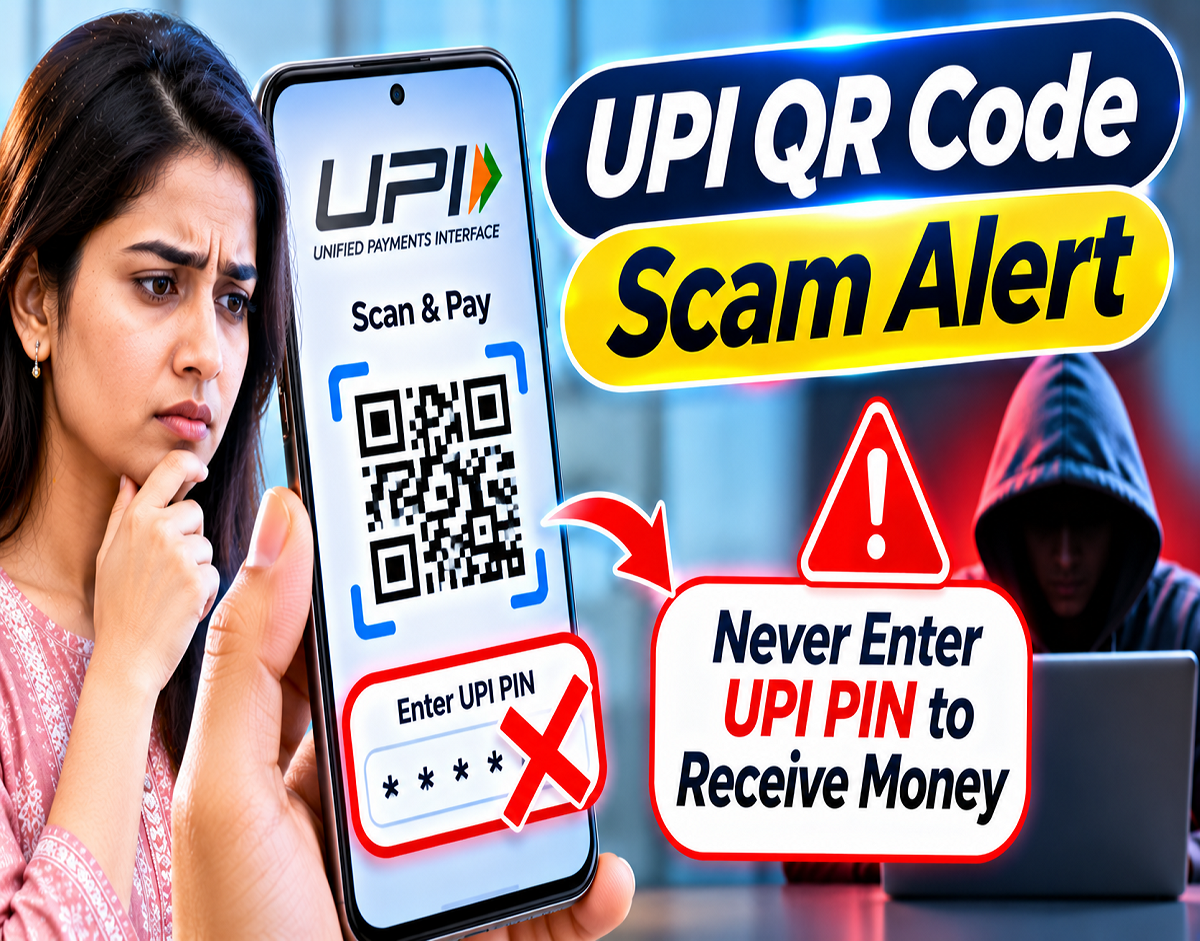
UPI QR Code Scam Alert 2026: Digital payments have made everyday transactions easier, but fraudsters are increasingly exploiting confusion about QR codes and UPI PINs to steal money. The Department of Telecommunications (DoT) has issued a cyber safety awareness message warning citizens against scanning suspicious QR codes or entering their UPI PIN when someone claims to be sending them money.
The advisory emphasizes one of the most important rules of UPI payments: You do not need to enter your UPI PIN to receive money.
Scammers may approach people through online marketplaces, messaging applications or telephone calls and convince them that scanning a QR code is necessary to receive a payment.
In reality, the QR code may initiate a payment from the victim's bank account rather than credit money to it.
The government has urged citizens to remain cautious, verify payment requests and keep their financial information confidential.
UPI QR Code Scam 2026: Important Details
| Particulars | Information |
|---|---|
| Cyber Safety Advisory | QR Code and UPI Payment Fraud |
| Government Department | Department of Telecommunications |
| Common Fraud Method | Fake Payment Collection Requests |
| Main Trick | Asking Victims to Scan QR Codes to Receive Money |
| Important Safety Rule | UPI PIN Is Not Required to Receive Payments |
| Main Financial Risk | Unauthorized or Deceptively Authorized Payments |
| Payment Verification | Check Transaction Details in the Official UPI App |
| Financial Cyber Fraud Helpline | 1930 |
| Cybercrime Reporting Website | https://cybercrime.gov.in |
| Telecom Fraud Reporting | Sanchar Saathi – Chakshu |
What Is a UPI QR Code Scam?
A UPI QR code scam is a fraudulent payment technique in which criminals trick individuals into authorizing transactions under false pretences.
QR codes are widely used for legitimate digital payments.
Customers commonly scan merchant QR codes to pay for goods and services.
However, fraudsters may misuse this familiar process.
They may send a QR code and claim that scanning it will allow the recipient to collect a refund, receive a payment or accept a reward.
The victim may then be directed to enter a UPI PIN.
If the transaction is actually a payment instruction, entering the PIN can authorize money to leave the victim's account.
The scam succeeds by creating confusion between sending and receiving money.
How Does the Fake QR Code Payment Scam Work?
Fraudsters may contact a person who is expecting money.
For example, someone selling a second-hand mobile phone through an online marketplace may receive a message from a supposed buyer.
The buyer may claim that the payment has been initiated but must be accepted by scanning a QR code.
The seller may then be asked to scan the code and enter their UPI PIN.
Instead of receiving the promised payment, the seller may authorize a transfer from their own bank account.
Similar techniques can be used in fake refund, prize or customer support scams.
The exact transaction flow may vary depending on the application and the scammer's method.
Why Is a UPI PIN Not Required to Receive Money?
A UPI PIN is an authentication credential used to authorize applicable debit transactions from a linked bank account.
When someone sends money to your UPI ID or payment address, you ordinarily do not need to enter a PIN to receive it.
The sender initiates and authorizes the payment from their own account.
The recipient should verify the credit through the official banking or UPI application.
If a person claims that a UPI PIN is required to accept an ordinary incoming payment, the request should be treated as suspicious.
Users should also remember that some legitimate UPI activities, such as setting up or modifying certain mandates, may involve authorization.
They must carefully review what is being approved rather than assuming that every PIN request represents a simple incoming payment.
UPI Payment vs Receiving Money: Understand the Difference
| Activity | Is a UPI PIN Normally Required? |
|---|---|
| Sending Money Through UPI | Yes |
| Paying a Merchant by Scanning a QR Code | Yes |
| Receiving an Ordinary UPI Payment | No |
| Checking Whether Money Has Been Credited | No |
| Approving a UPI Collect Request That Debits Your Account | Yes |
| Checking Your Bank Balance Through Certain UPI Apps | May Require a UPI PIN |
The key distinction is whether the transaction authorizes money to leave your account.
A UPI PIN should never be entered merely because an unknown person says it is necessary to receive money.
Five Common QR Code Fraud Tricks
1. Fake Online Marketplace Buyer
A fraudster pretends to purchase a product and sends a QR code claiming that the seller must scan it to receive payment.
2. Fake Refund Offer
The scammer claims that a failed order or payment is eligible for a refund.
The victim is asked to scan a QR code and authorize a transaction.
3. Fake Prize or Cashback
A message promises cashback, a reward or a promotional prize.
The recipient is directed to complete a suspicious payment-related process.
4. Fake Customer Care Assistance
A person impersonating customer support claims that a QR code must be scanned to resolve a transaction problem.
5. Fake Advance Payment
A supposed buyer or service customer offers an advance payment but asks the recipient to complete an unfamiliar QR-based procedure.
These scams often involve urgency and misleading explanations.
How to Identify a Suspicious QR Code Request
A QR code should be treated cautiously when it arrives unexpectedly from an unknown person.
Warning signs include requests to scan a code to receive money, demands for a UPI PIN and claims that payment will fail unless the recipient acts immediately.
Users should also be suspicious when someone refuses to use a normal verified payment method.
If the application displays a payment amount and asks for authorization, users should check whether the amount will be debited from their account.
They should never approve a transaction without understanding its purpose.
How to Stay Safe While Scanning QR Codes
Before scanning a QR code, users should confirm why the code is being used.
For merchant payments, the displayed recipient details and amount should be reviewed carefully.
Users should avoid scanning QR codes sent by unknown individuals under the pretext of receiving money.
They should never disclose their UPI PIN to another person.
Banking passwords, OTPs and other confidential credentials should also be kept private.
If a transaction screen appears different from what was expected, the user should cancel the process and independently verify the request.
What Should You Do if You Accidentally Entered Your UPI PIN?
If you suspect that a fraudulent transaction has occurred, act immediately.
Check your bank account through the official banking or UPI application.
If money has been debited, contact your bank or payment service provider through its verified support channels.
Report financial cyber fraud through the national helpline at 1930.
You can also file a complaint at https://cybercrime.gov.in.
Preserve the suspicious QR code, messages, phone number and transaction reference details.
If your UPI credentials may have been compromised, follow the bank's instructions to secure the account.
Prompt action may improve the chances of restricting further misuse or tracing funds, although recovery is not guaranteed.
How Can Sanchar Saathi Help?
The Department of Telecommunications operates Sanchar Saathi to help citizens address certain telecom security concerns.
Its Chakshu facility allows users to report suspected fraudulent communications through supported channels.
If a scammer sends a suspicious payment-related message or makes a fraudulent call, the communication may be reportable through the portal.
However, the Chakshu facility does not replace a financial cybercrime complaint.
People who have already lost money should use the national cybercrime reporting system and notify their bank.
Important UPI Safety Tips for Everyone
UPI users should remember that receiving an ordinary payment does not require entering a UPI PIN.
They should independently verify payment credits through their bank or UPI application.
They should avoid clicking suspicious payment links or scanning QR codes sent by unknown individuals.
Users should never approve unfamiliar collect requests.
They should also avoid sharing screen access with unknown customer support callers.
When receiving money for goods or services, sellers should confirm that the payment has actually reached their account before handing over the product.
A screenshot claiming that payment has been completed is not reliable proof of receipt.
UPI QR Code Scam Alert 2026: Latest DoT Advisory
The Department of Telecommunications has warned citizens that fraudsters may use QR codes to trick people into authorizing payments while claiming that money is being sent to them.
The awareness message urges users to avoid suspicious requests and protect their financial credentials.
The central safety message is clear: Never enter your UPI PIN to receive an ordinary payment.
Citizens who encounter suspicious communications should report them through appropriate official channels.
Victims of financial cyber fraud should immediately contact 1930 and notify their bank.
Source Credit: Department of Telecommunications (DoT), Government of India – Public awareness communication on QR code scams and UPI payment safety.
Official Resources:
- Sanchar Saathi: https://sancharsaathi.gov.in
- National Cybercrime Reporting Portal: https://cybercrime.gov.in
- National Payments Corporation of India: https://www.npci.org.in
- Financial Cyber Fraud Helpline: 1930
Disclaimer: This article is intended for public financial and cyber safety awareness. UPI transaction procedures can vary depending on the payment feature and application. Users should carefully verify transaction details before authorizing any payment and use official banking channels for assistance.