
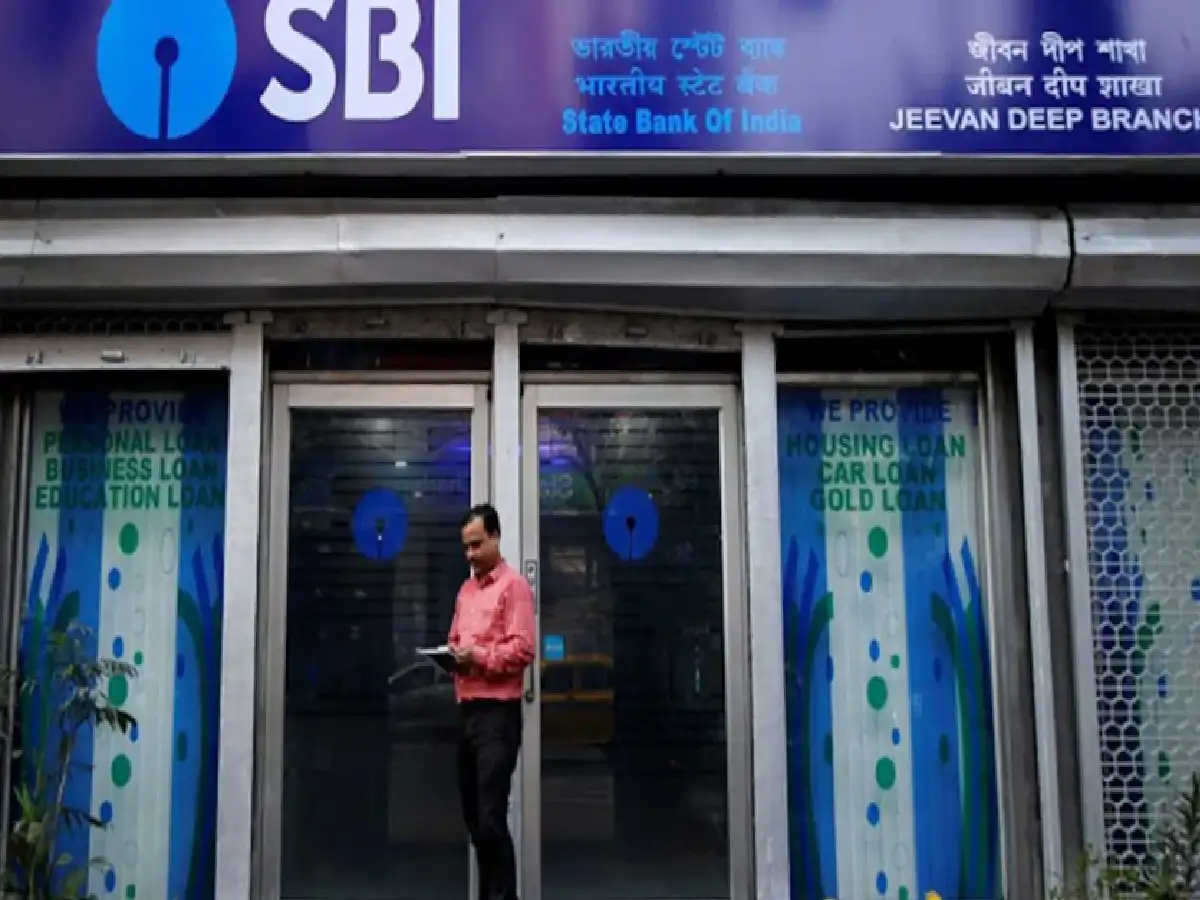
State Bank of India customers should pay attention to reports about changes in cash withdrawal charges from October 1, 2026. The update is particularly important because the rules can differ depending on the type of savings account a customer holds and the number or type of transactions made during a month.
According to the information provided, customers may get a specified number of free withdrawals, after which a charge of ₹15 plus applicable GST could apply to additional transactions. However, customers should not assume that the same rule applies to every SBI savings account.
Here is what customers need to understand before the new rules take effect.
What Is Expected to Change From October 1, 2026?
Under the reported rules, customers covered by the revised structure would receive four free withdrawals in a month. Once this limit is exhausted, subsequent eligible withdrawals could attract a fee of ₹15 plus GST per transaction.
For example, if a customer completes all four free transactions and then makes another transaction covered by the charge structure, an additional fee may be deducted.
The actual amount paid would be higher than ₹15 after adding the applicable GST.
Customers should therefore check which SBI account variant they have rather than assuming the four-withdrawal rule automatically applies to them.
Does This Mean Every SBI Customer Will Pay for ATM Withdrawals?
No. This is an important distinction.
SBI offers multiple types of savings accounts, and transaction limits and service charges can vary between account categories. The conditions applicable to a regular savings account may not necessarily be identical to those for a Basic Savings Bank Deposit (BSBD) Account or another account variant.
Similarly, ATM transactions may be governed by separate conditions depending on the ATM network, location, account type and applicable banking rules.
Therefore, claims suggesting that every SBI customer will have to start paying after four ATM withdrawals should be treated cautiously.
Understand the Four-Free-Transaction Limit Carefully
Another point that requires attention is what SBI defines as a "withdrawal" or transaction under the applicable schedule.
Customers commonly associate withdrawals only with ATM cash transactions. Banking rules, however, may classify transactions differently depending on the account and service involved.
This makes it important to verify whether a transaction through a branch, ATM or another permitted channel is included in the monthly free limit.
Customers should refer to the latest SBI service-charge schedule applicable to their specific account.
What Is a Basic Savings Bank Deposit Account?
A Basic Savings Bank Deposit Account, commonly called a BSBD account, is designed to provide essential banking facilities without requiring customers to maintain a prescribed minimum balance.
It is different from many conventional savings accounts and comes with its own set of facilities and restrictions.
Depending on the applicable SBI terms, customers may receive basic banking services such as deposits, withdrawals and an ATM-cum-debit card without the minimum-balance requirements associated with certain other accounts.
Because BSBD accounts operate under specific regulatory and bank rules, customers should not directly apply regular savings account charges to them—or vice versa.
SBI BSBD Account Has an Important Condition
One significant condition associated with a Basic Savings Bank Deposit Account is that the customer generally cannot simultaneously maintain another savings bank account with the same bank under the applicable BSBD framework.
Therefore, anyone considering opening such an account should first understand its eligibility conditions, transaction facilities and limitations.
Choosing an account solely to avoid a particular transaction charge may not make sense if its other features do not match the customer's banking requirements.
Will Digital Transactions Also Be Charged?
Customers should be particularly careful about claims that ordinary digital payments will automatically become chargeable after the free withdrawal limit is reached.
UPI payments, card payments, ATM cash withdrawals, branch withdrawals and electronic fund transfers are different types of banking transactions and may be governed by different rules.
A change concerning "withdrawals" should therefore not automatically be interpreted as a charge on every digital transaction.
Before changing their payment habits, customers should verify exactly which transaction types are covered by SBI's revised service-charge schedule.
How Much Would ₹15 Plus GST Actually Cost?
If a particular transaction carries a charge of ₹15 and 18% GST applies, the tax component would be ₹2.70.
That would take the total cost to ₹17.70 per chargeable transaction.
If several such transactions are made during a month, these relatively small individual charges can add up. Customers who frequently withdraw cash may therefore benefit from planning withdrawals more carefully.
How Can Customers Avoid Unnecessary Banking Charges?
Customers should first identify their exact SBI savings account type and understand its monthly transaction limits.
Rather than making several small cash withdrawals, it may be more convenient to plan cash requirements in advance when appropriate. Digital payments can also reduce dependence on cash, although customers should check the applicable terms for whichever payment method they use.
Most importantly, don't rely solely on viral social-media posts or messages claiming that "ATM withdrawals will become expensive from October 1."
Bank charges usually depend on account category and specific transaction conditions.
Check SBI's Official Service-Charge Information
Because banking fees can be revised, customers should verify the latest schedule directly with State Bank of India before the reported October 1, 2026 implementation date.
The official notification or service-charge schedule should clarify which account holders are affected, how many transactions remain free, what counts toward the limit and whether the ₹15 plus GST charge applies to a particular transaction.
Key Takeaway for SBI Customers
The biggest point is that customers should not assume a single withdrawal rule applies to every SBI account.
If SBI's revised charges take effect from October 1, 2026 as reported, customers should check their account category, free transaction entitlement and charges for additional transactions.
A quick review of the official SBI schedule before October can prevent unexpected deductions and help customers choose the most suitable way to access their money.