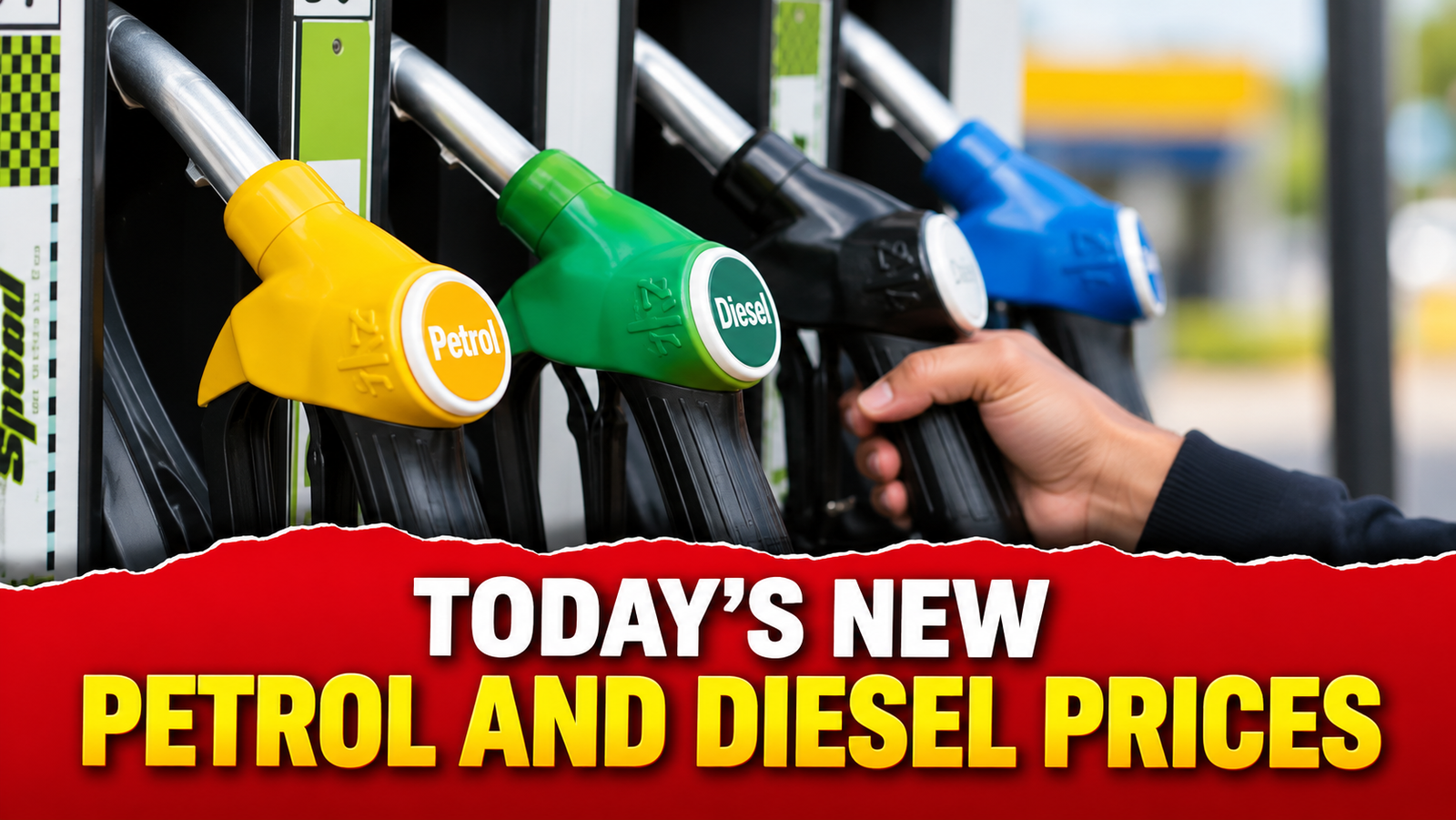
Petrol and diesel prices remained unchanged across several major Indian cities on Saturday, September 19, 2026. Oil marketing companies issued the latest city-wise rates at 6 a.m., with consumers in Delhi, Mumbai, Kolkata, Chennai and other locations continuing to pay the previously applicable prices.
In Delhi, petrol is priced at ₹102.12 per litre, while diesel costs ₹95.20 per litre. Mumbai continues to have petrol at ₹111.31 and diesel at ₹97.97 per litre. In Kolkata, the applicable rates are ₹113.51 for petrol and ₹99.82 for diesel.
The price in Kolkata has been taken from the detailed city table because the introductory portion of the supplied report mentioned a conflicting petrol rate of ₹104.95 per litre.
Petrol and diesel rates on September 19, 2026
| City | Petrol Price per Litre | Diesel Price per Litre |
|---|---|---|
| Delhi | ₹102.12 | ₹95.20 |
| Mumbai | ₹111.31 | ₹97.97 |
| Kolkata | ₹113.51 | ₹99.82 |
| Chennai | ₹107.78 | ₹99.56 |
| Ghaziabad | ₹101.76 | ₹95.36 |
| Patna | ₹113.35 | ₹99.36 |
| Nagpur | ₹111.90 | ₹98.20 |
| Dehradun | ₹103.54 | ₹95.93 |
| Agra | ₹101.66 | ₹95.02 |
Fuel prices can vary within the same state because of local taxes, freight expenses and other regional costs. Consumers should therefore check the rate applicable to their city or nearest fuel station before filling their vehicle’s tank.
Have fuel prices fallen today?
There was no broad reduction in the retail prices of petrol or diesel in the listed cities on September 19. Although the government recently lowered certain export levies on petroleum products, that change applies to fuel being exported from India and does not automatically reduce prices at domestic petrol pumps.
The central government reportedly reduced the export levy on petrol by ₹1 per litre, bringing it down from ₹1.50 to ₹0.50 per litre. The export levy on diesel was cut by ₹5, from ₹25 to ₹20 per litre.
The Road and Infrastructure Cess component associated with the diesel export levy was also reportedly reduced to zero. Meanwhile, the levy on exports of aviation turbine fuel, commonly known as ATF, was lowered by ₹4 per litre—from ₹19 to ₹15.
These revised export levies took effect from September 16, 2026, for the applicable review period. According to the reported notification details, the changes concern exports and do not alter domestic excise duties. Therefore, motorists should not interpret the levy reduction as a direct ₹1 or ₹5 cut in pump prices. Financial Express reported the revised export-duty structure.
Why do fuel prices differ between cities?
The price displayed at a petrol station is made up of several components. These generally include the base cost of fuel, central levies, state-level value-added tax, dealer commission and transportation expenses.
State taxes are one of the main reasons petrol and diesel prices differ between cities. A litre of petrol may therefore be significantly more expensive in Patna or Mumbai than in Delhi, even when oil companies make no nationwide change.
International crude-oil prices and the rupee-dollar exchange rate also influence the cost of supplying fuel. India imports a substantial portion of its crude-oil requirement, so a weaker rupee or an increase in global oil prices can raise costs for domestic refiners.
However, daily movements in international crude prices do not always lead to an immediate change at petrol pumps. Retail prices are decided by oil marketing companies after considering several commercial and policy-related factors.
Fuel dealers raise concerns over new UPI costs
Another issue attracting attention is the introduction of a Merchant Discount Rate on certain UPI payments from October 15, 2026. Under the reported structure, person-to-merchant UPI transactions above ₹2,000 will generally attract a 0.4% charge, subject to prescribed exemptions and limits.
Fuel transactions are reportedly covered by a separate concessional structure, with a flat MDR of ₹5 instead of the regular percentage-based charge. Small merchants meeting the specified monthly UPI turnover condition are also expected to receive an exemption. The fee is meant to be paid within the merchant-payment ecosystem and cannot be passed directly to customers, according to the reported rules. Reuters detailed the MDR framework.
Petrol-pump operators have expressed concern because their margins are regulated and they cannot freely increase fuel prices to recover additional payment-processing expenses. Some dealers have sought an exemption for fuel transactions.
Consumers should not assume that UPI payments have already been stopped at all petrol pumps. Acceptance will depend on the final implementation, individual outlets and any clarification or exemption issued before the new charging structure takes effect.
How to check the latest fuel rate in your city
Consumers can confirm local prices through the official applications and websites of Indian Oil, Bharat Petroleum and Hindustan Petroleum. Many fuel stations also display the current rate prominently at the entrance and dispensing machine.
Checking the official rate is particularly important when travelling between cities, as even neighbouring districts may have different prices. The amount charged should always match the price displayed on the fuel dispenser at the time of purchase.
As of September 19, the key takeaway is clear: the reduction in export levies has not produced a corresponding cut in domestic petrol and diesel prices, and the listed city rates remain unchanged.