Technology
OTP Fraud Alert: Never Share Your Verification Code With Strangers, DoT Highlights Essential Cyber Safety Tips
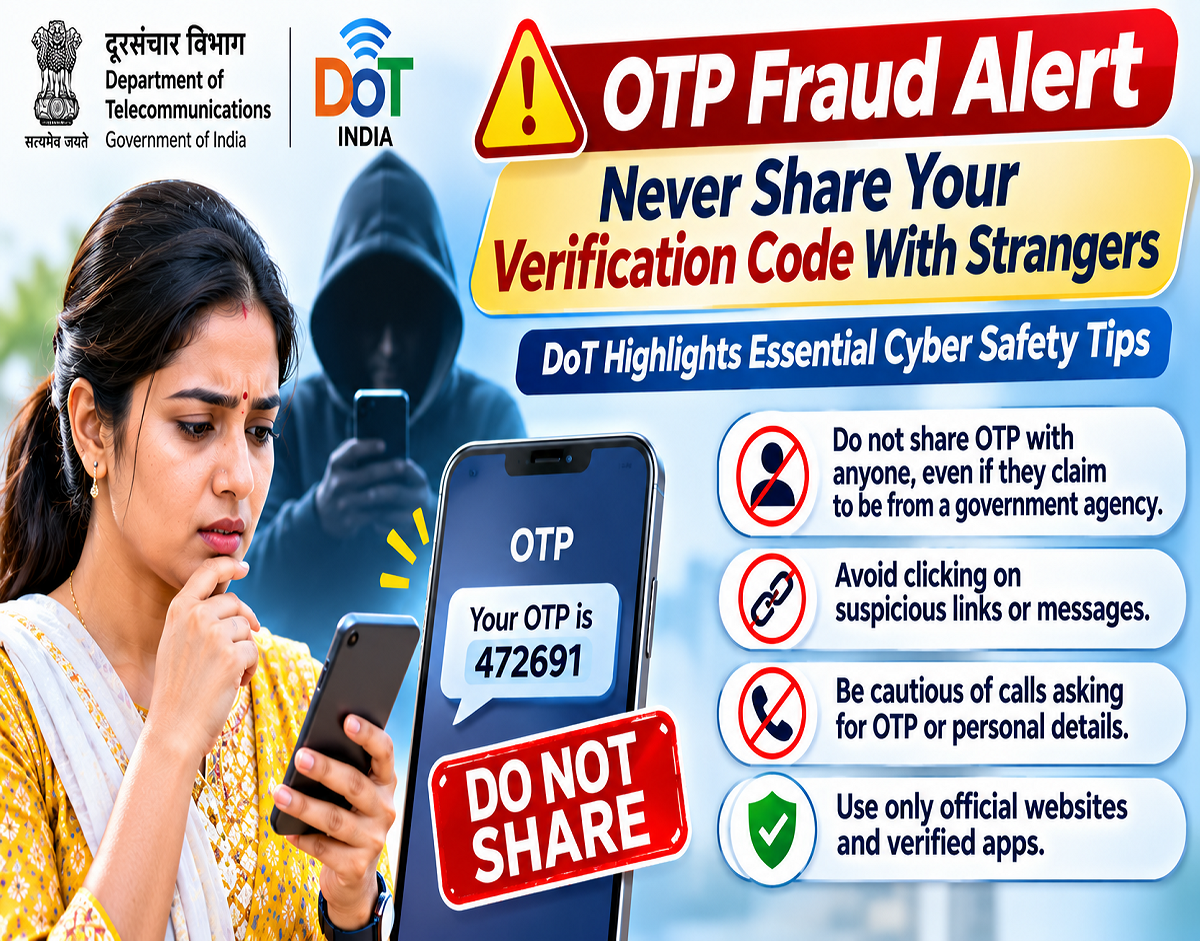
OTP Fraud Prevention: With the growing popularity of digital banking, online shopping and UPI payments, cybercriminals are constantly developing new methods to deceive smartphone users. One of the most common techniques involves tricking individuals into revealing their One-Time Passwords (OTPs), which can potentially lead to unauthorised transactions, account takeovers and financial losses.
The Department of Telecommunications (DoT), through its Sanchar Saathi cyber awareness initiative, has highlighted the importance of protecting confidential verification codes. The department is encouraging citizens to remain vigilant and avoid sharing OTPs with unknown individuals under any circumstances.
A seemingly harmless phone call or message requesting a verification code could be part of a sophisticated cyber fraud attempt.
What Is an OTP and Why Is It Important?
A One-Time Password is a temporary security code generated to authenticate a user's identity or authorise a specific activity.
OTPs are commonly used for online banking, digital payments, account registration, password resets and identity verification. These codes generally remain valid for a limited period and can be used only once.
Although OTPs provide an additional layer of digital security, sharing them with an unauthorised person can compromise that protection.
Cybercriminals may attempt to use stolen verification codes to access personal accounts, approve transactions or change account credentials.
How Cybercriminals Trick Users Into Sharing OTPs
Fraudsters frequently impersonate representatives of banks, telecom companies, government departments, insurance providers and online shopping platforms to gain the confidence of potential victims.
They may create a sense of urgency by claiming that a bank account, SIM card or digital wallet will be blocked unless immediate verification is completed.
Some common excuses used by cybercriminals include:
- Updating bank account KYC information.
- Preventing mobile SIM card deactivation.
- Claiming lottery prizes or cashback rewards.
- Processing refunds for online purchases.
- Activating government financial assistance.
- Increasing credit card limits.
- Verifying insurance or pension payments.
- Restoring suspended digital accounts.
Users should treat unsolicited requests for confidential authentication codes as potential fraud attempts.
What Can Happen if You Share Your OTP?
The consequences of disclosing an OTP depend on the transaction or service for which the verification code was generated.
| Type of OTP | Potential Security Risk |
|---|---|
| Banking OTP | Unauthorised financial transactions |
| WhatsApp Verification Code | WhatsApp account takeover |
| Aadhaar OTP | Unauthorised identity authentication |
| Email Verification Code | Loss of access to an email account |
| Password Reset OTP | Unauthorised password changes |
| Telecom Verification OTP | Misuse of telecom-related services |
| Shopping Account OTP | Unauthorised access or purchases |
Even if the caller appears to know your name, mobile number or other personal information, it does not necessarily mean that the request is genuine.
Never Share These Confidential Details With Unknown Individuals
Apart from OTPs, smartphone users should protect other sensitive financial and personal information.
Never disclose your ATM PIN, UPI PIN, internet banking password, credit card CVV or account recovery codes to unknown callers or individuals claiming to represent financial institutions.
Genuine bank representatives do not require customers to disclose confidential transaction authentication codes over telephone calls, WhatsApp messages or emails.
Users should also avoid installing screen-sharing or remote-access applications at the request of strangers.
How to Report Suspicious Calls and Messages Through Sanchar Saathi
The Department of Telecommunications provides the Sanchar Saathi platform to help citizens access telecom security services and report suspected fraudulent communications.
Users can report suspicious calls, SMS messages and WhatsApp communications through the Chakshu facility.
Follow these steps:
- Visit the official Sanchar Saathi portal at sancharsaathi.gov.in.
- Locate the Chakshu facility for reporting suspected fraudulent communications.
- Select the relevant communication category.
- Provide the suspicious mobile number and requested details.
- Upload supporting evidence, if available.
- Complete the required verification and submit your report.
Chakshu is intended for reporting suspected fraudulent communications. Individuals who have already suffered financial losses should use the dedicated cybercrime reporting channels.
What to Do if You Have Accidentally Shared an OTP
If you have disclosed a confidential verification code to a suspected fraudster, immediate action can help reduce the risk of further damage.
Contact your bank or the relevant service provider through its official customer support channels. Request the blocking of affected accounts, cards or payment services wherever necessary.
Change compromised passwords, review recent transactions and remove unfamiliar devices from affected accounts.
Victims of financial cyber fraud should immediately call the national cybercrime helpline at 1930 and register a complaint through the National Cyber Crime Reporting Portal at cybercrime.gov.in.
Keep screenshots, transaction references, suspicious mobile numbers and relevant messages as evidence.
Simple Cyber Safety Habits Can Prevent Financial Losses
Maintaining a few basic digital security practices can significantly reduce exposure to online fraud. Always read OTP messages carefully to understand the purpose for which a code has been generated.
Avoid clicking suspicious links, downloading applications from unofficial sources or responding to messages promising unexpected financial rewards.
Enable two-step verification wherever available, keep smartphone applications updated and regularly review banking transactions.
The DoT's latest cyber awareness message reinforces an important principle of digital security: confidential verification codes should remain under the control of their intended users.
Taking a few moments to verify a suspicious request can help protect your money, personal information and digital identity from cybercriminals.
Source Credit: Department of Telecommunications (DoT), Ministry of Communications, Government of India — Sanchar Saathi Cyber Safety and OTP Protection Awareness Campaign, Sanchar Saathi Portal and National Cyber Crime Reporting Portal.