Technology
Fake Air Purifier Filter Alert: Check These 9 Important Things Before Buying a Replacement HEPA Filter
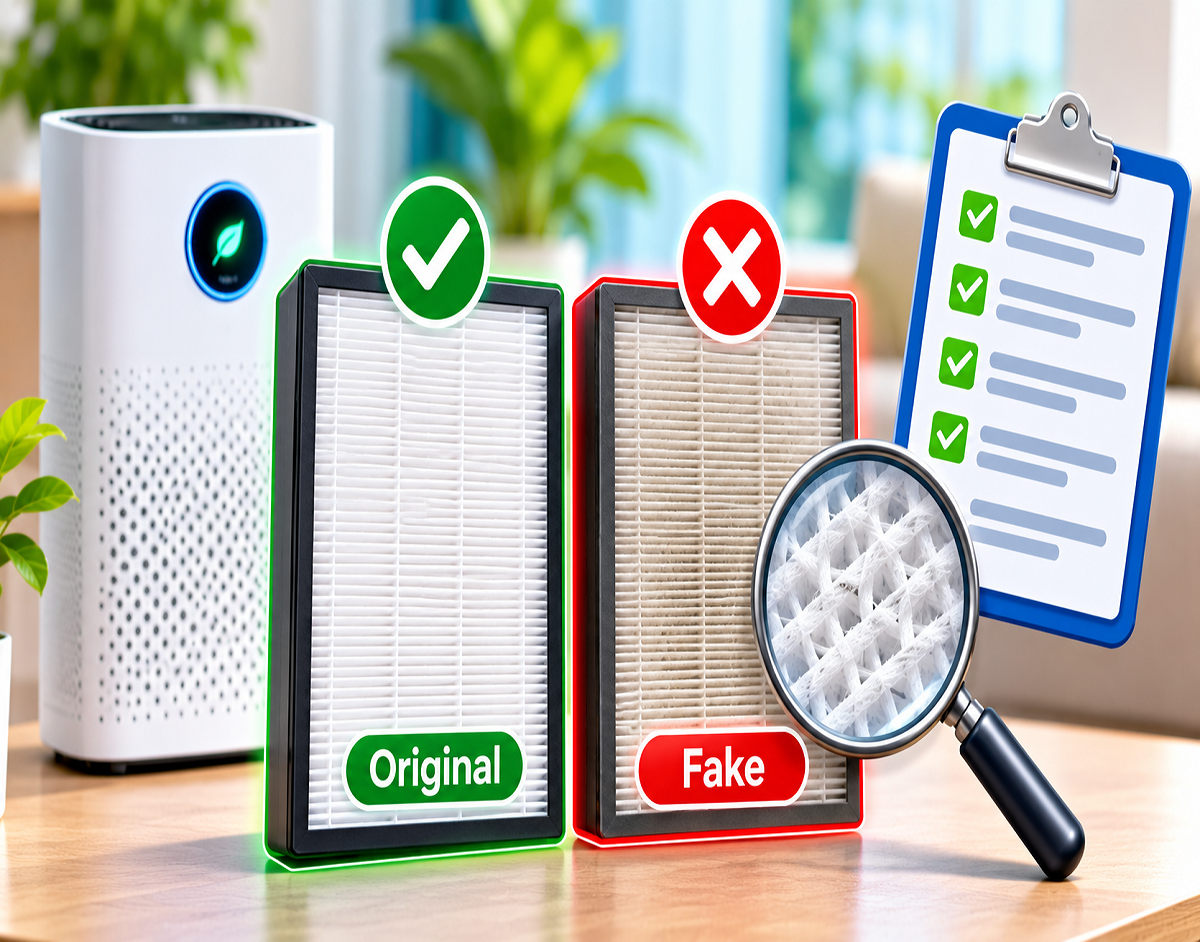
Air Purifier Filter Buying Guide: With growing concerns over air pollution across India, air purifiers have become an important household appliance for many families. However, the effectiveness of these devices largely depends on the quality and condition of their filters.
When purchasing replacement filters, customers may come across several products that look identical to original filters but are available at significantly lower prices. Some may carry misleading HEPA certification claims, copied packaging or counterfeit branding.
Installing a poor-quality filter can reduce air purification efficiency, restrict airflow and potentially affect appliance performance.
Interestingly, not every third-party replacement filter is fake. Several independent manufacturers offer compatible filters, but their filtration performance and compatibility should be carefully verified before purchase.
Here are nine important things you should check before buying an air purifier replacement filter.
1. Verify the Air Purifier Filter Model Number
The first step is to check whether the replacement filter is specifically designed for your air purifier model.
Even filters manufactured by the same brand may have different dimensions, filtration layers and installation requirements.
Users should check the model number mentioned on the existing filter, appliance label or official user manual. Compare these details with the replacement product listed on the manufacturer's website.
An incorrectly sized filter may leave gaps through which unfiltered air can pass, reducing overall purification efficiency.
2. Check the HEPA Filtration Rating
Many air purifier filters are marketed using terms such as HEPA, True HEPA, H13 and H14. However, simply printing these terms on packaging does not establish filtration performance.
Under the EN 1822 classification standard, HEPA filters are categorised according to their filtration efficiency at the most penetrating particle size.
| Filter Classification | Minimum Overall Filtration Efficiency |
|---|---|
| E10 | 85% |
| E11 | 95% |
| E12 | 99.5% |
| H13 HEPA | 99.95% |
| H14 HEPA | 99.995% |
Buyers should look for credible testing documentation and manufacturer specifications rather than relying exclusively on promotional claims.
A higher filter rating does not automatically guarantee better overall air purifier performance, as airflow and filter compatibility are equally important.
3. Examine the Filter's Build Quality
The physical construction of a replacement filter can provide useful clues about its manufacturing quality.
Before purchasing or installing a filter, check for:
- Uneven or damaged filter pleats.
- Poor-quality adhesive and loose joints.
- Gaps around the filter frame.
- Damaged or missing sealing material.
- Torn filtration layers.
- Incorrect dimensions.
- Loose or poorly secured filter components.
Although visual inspection cannot confirm filtration efficiency, obvious manufacturing defects should raise concerns about product quality.
4. Compare the Filtration Layers With the Original Filter
Many modern air purifiers use multiple filtration layers to capture different types of airborne pollutants.
A replacement filter should provide the filtration functions required by the original appliance.
| Filtration Layer | Primary Function |
|---|---|
| Pre-filter | Captures hair, pet fur and larger dust particles |
| HEPA filter | Captures fine airborne particles and allergens |
| Activated carbon filter | Helps reduce certain gases and unpleasant odours |
| Protective mesh | Provides structural support and protects filter media |
| Sealing material | Helps prevent unfiltered air from bypassing the filter |
Some inexpensive replacement filters may lack an activated carbon layer or contain a different quantity of filtration material compared with the original product.
Check the manufacturer's specifications to ensure that essential filtration layers are not missing.
5. Do Not Depend Entirely on QR Codes and Packaging
Counterfeit products may feature copied brand logos, barcodes, QR codes and packaging designs that closely resemble genuine products.
A professionally printed box does not necessarily guarantee authenticity.
Buyers should examine the packaging for manufacturing details, importer information, model numbers, customer support information and batch identification, wherever applicable.
If the manufacturer provides an official product authentication facility, use it to verify the serial number or authentication code.
Avoid entering personal information on unfamiliar websites accessed through suspicious QR codes.
6. Purchase From Authorised and Reliable Sellers
Buying replacement filters from trusted sellers can reduce the risk of receiving counterfeit products.
Customers should preferably consider official brand websites, authorised service centres, recognised electronics retailers and reputable online sellers.
Before placing an order, review the seller's ratings, return policy, product description and warranty information.
Always request a proper purchase invoice, as it may be required when raising a complaint or requesting a replacement.
7. Be Careful With Unusually Cheap Air Purifier Filters
Replacement air purifier filters can be expensive, encouraging many customers to search for affordable alternatives.
However, products being sold at exceptionally low prices deserve additional scrutiny.
For example, if an original replacement filter costs ₹3,000 and another product claiming to be the same genuine branded filter is available for ₹700, buyers should investigate the reason behind the substantial price difference.
A lower price does not automatically mean that a product is counterfeit. Nevertheless, unusually large discounts combined with questionable seller credentials or missing product specifications can indicate potential problems.
8. Understand the Difference Between Original, Compatible and Counterfeit Filters
Customers should understand that third-party compatible filters and counterfeit filters are not necessarily the same.
| Feature | Original Filter | Third-Party Compatible Filter | Counterfeit Filter |
|---|---|---|---|
| Manufacturer | Original equipment manufacturer | Independent manufacturer | Unauthorised manufacturer |
| Branding | Genuine brand identity | Own branding or clearly identified compatible product | Misleading or copied branding |
| Compatibility | Designed for specified models | Must be verified | May be unreliable |
| Filtration performance | Based on manufacturer specifications | Depends on independent testing and quality | Often uncertain |
| Price | Generally higher | May be more affordable | Frequently offered at unusually low prices |
| Warranty support | Subject to brand policy | Depends on seller or manufacturer | Generally unreliable |
| Authenticity | Verifiable through official channels where available | Legitimate if honestly marketed | Misrepresented as genuine |
A properly manufactured third-party filter with verified filtration performance and accurate dimensions may be a legitimate alternative to an original replacement filter.
9. Check Air Purifier Performance After Installation
After installing a replacement filter, monitor the appliance's performance.
Reduced airflow, unusual operating noise, poor fitting, persistent odours or filter recognition errors may indicate compatibility or quality-related issues.
However, normal airflow and favourable air quality readings alone cannot establish that a filter meets its advertised HEPA classification.
If you notice significant performance problems, stop using the questionable filter and contact the seller or appliance manufacturer.
Air Purifier Filter Buying Checklist
Before purchasing a replacement filter, verify the following details:
- Correct air purifier model number.
- Accurate filter dimensions.
- Verified HEPA filtration specifications.
- Appropriate filtration layers.
- Proper frame construction and sealing.
- Reliable seller credentials.
- Genuine branding or clearly disclosed third-party compatibility.
- Valid purchase invoice.
- Return and replacement policy.
- Manufacturer-recommended filter specifications.
Can a Fake Air Purifier Filter Affect Indoor Air Quality?
A counterfeit or poorly manufactured filter may fail to capture airborne particles at the advertised efficiency. Incorrect dimensions and inadequate sealing can also allow unfiltered air to circulate through the appliance.
Additionally, excessively restrictive filter material may reduce airflow and affect the air purifier's overall cleaning capacity.
Consumers should therefore consider filtration efficiency, airflow, sealing and compatibility rather than selecting a replacement filter solely on the basis of price or appearance.
Purchasing a reliable air purifier filter is essential for maintaining effective indoor air filtration. Carefully checking product specifications, seller credentials and manufacturing quality can help consumers avoid counterfeit products and make informed purchasing decisions.
Disclaimer: The HEPA classification table, illustrative pricing example and additional technical explanations have been included to expand the supplied article. No individual filter or manufacturer has been independently tested. Always verify product compatibility and filtration claims before purchasing.