Business
Gold and Silver Prices Drop Sharply as Oil Rally and US Rate Uncertainty Shake Bullion Market

Gold and silver prices came under significant pressure in the international market on September 11, 2026, as rising crude oil prices and uncertainty surrounding the US Federal Reserve's next interest-rate move weighed on precious metals.
Gold slipped below the psychologically important $4,400-per-ounce region, while silver recorded an even steeper percentage decline. The latest movement highlights how quickly bullion prices are responding to changes in inflation expectations, bond yields, crude oil and monetary policy signals.
According to the market data cited in the report, COMEX gold was trading at $4,369.40 per ounce, down $37.90 or 0.86% from its previous close. During the session, gold touched a high of $4,380.70 and a low of $4,351.30 per ounce.
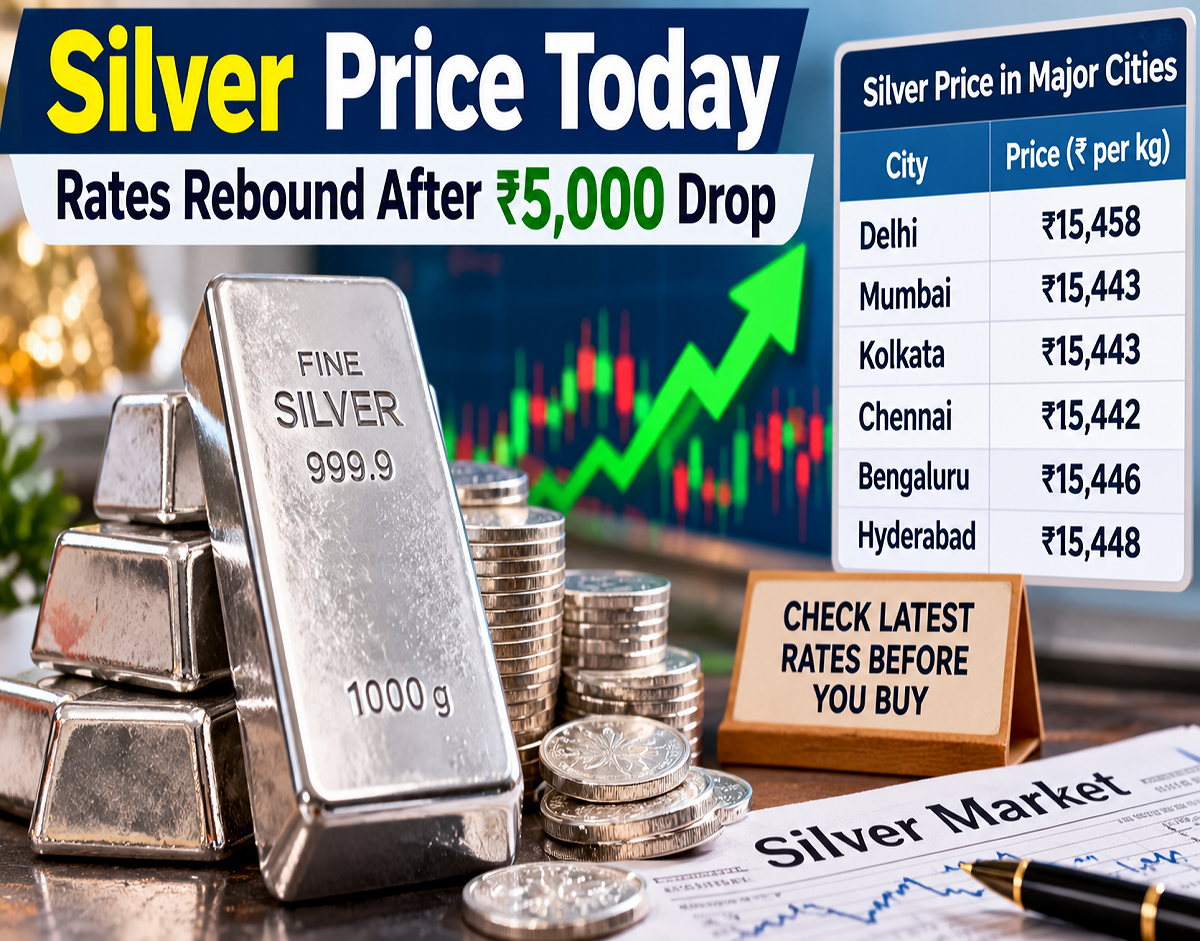
Silver faced stronger selling pressure. COMEX silver traded around $63.91 per ounce, falling $1.017 or 1.57%. Its session range was between $63.71 and $64.32 per ounce.
Why Are Gold and Silver Prices Falling?
One of the major factors influencing bullion is the sharp increase in global crude oil prices.
Brent crude moved above $108 per barrel, while US West Texas Intermediate crossed $103. The report notes that both oil benchmarks had risen by more than 6% in the previous session.
Higher crude oil prices can increase inflation concerns because energy costs affect transportation, manufacturing and several other parts of the economy.
If inflation remains elevated, expectations of easier monetary policy can weaken. Higher-for-longer interest rates or rising bond yields can reduce the relative appeal of gold because the metal itself does not generate interest income.
This relationship has become an important factor behind the latest volatility in precious metals.
Gold Could Remain in a Broad Trading Range
Vedika Narvekar, Research Analyst for Commodities and Currencies at Anand Rathi Share and Stock Brokers, said the recovery in oil prices was again putting pressure on gold.
According to her assessment cited in the report, gold has largely remained around the $4,400-per-ounce region as traders wait for greater clarity about the Federal Reserve's next policy move.
She expects international gold to trade broadly between $4,340 and $4,450 per ounce.
In the Indian futures market, gold could remain within approximately ₹1.51 lakh to ₹1.55 lakh per 10 grams, according to the outlook cited in the report.
These are market estimates rather than guaranteed price targets, and actual prices can move outside projected ranges depending on economic and geopolitical developments.
Weak Dollar and ETF Buying Offer Some Support
Although gold and silver have fallen, the market is not facing only negative factors.
A softer US dollar has provided some support to precious metals in recent sessions. Gold generally becomes relatively more affordable for buyers using other currencies when the dollar weakens.
Strong investment flows into gold exchange-traded funds have also supported demand.
According to the report, global gold ETFs attracted around $18 billion in August, described as the second-highest monthly inflow on record. Global holdings increased by 121 tonnes to a record 4,189 tonnes.
Prithviraj Kothari also pointed to a weaker dollar, US fiscal concerns and geopolitical risks as factors supporting gold.
At the same time, stronger-than-expected US inflation could create fresh pressure by pushing bond yields higher.
Another Expert Sees Gold Around $4,300-$4,500
Kothari expects gold to remain broadly within the $4,300-$4,500 per ounce range, according to the source.
For silver, he indicated that holding above $67 per ounce could create room for further gains. However, the latest quoted COMEX silver price in the report was below that level, at around $63.91 per ounce.
This makes upcoming inflation data and movements in global markets particularly important for silver traders.
Why Crude Oil Matters for Gold Prices in India
For Indian consumers and investors, the connection between crude oil and bullion is particularly important.
India imports a large amount of its energy requirements. Higher crude prices can therefore affect domestic inflation expectations as well as the value of the rupee.
Gaurav Garg, Head of Research at Lemonn, identified high crude oil prices and a weaker rupee as important risks for Indian inflation and MCX commodities. At the same time, dollar weakness can provide support to precious metals.
The report noted the rupee around ₹95.10-₹95.25 against the US dollar in recent market commentary.
A weaker rupee can make imported bullion more expensive in domestic currency terms. As a result, international gold prices can decline while Indian prices show comparatively greater resilience.
Silver Is Showing Bigger Price Swings Than Gold
Silver has been considerably more volatile.
In the international market movement cited in the report, silver declined 1.57%, compared with gold's 0.86% fall.
Vikram Subburaj, CEO of Giottus.com, noted that silver had outperformed gold in a recent MCX session, although a sharp fall in open interest suggested short covering contributed to the move.
Recent MCX levels cited in the report placed gold near ₹1.54 lakh per 10 grams, while silver was around ₹2.44 lakh to ₹2.45 lakh per kilogram.
Silver could continue to experience significant fluctuations because the market is reacting quickly to economic news and US inflation expectations.
What Could Decide the Next Move in Gold and Silver?
The next major trigger for precious metals is likely to be the direction of US inflation and Federal Reserve monetary policy expectations.
If inflation remains higher than expected, US bond yields could rise. That could limit the upside for both gold and silver.
On the other hand, softer inflation data could revive expectations for easier monetary policy and potentially provide fresh support to bullion prices.
For Indian investors, several indicators will therefore be important in the coming sessions: international gold and silver prices, crude oil, US bond yields, the dollar and the rupee.
For now, the precious metals market appears likely to remain volatile and range-bound, with silver potentially experiencing larger price swings than gold.
Investors should remember that expert price ranges are forecasts rather than assurances. Bullion prices can change rapidly in response to economic data, interest-rate expectations, currency movements and geopolitical developments.