Business
Aadhaar OTP Safety Alert 2026: Never Share Your OTP With Anyone, UIDAI Warns Users About Fraud
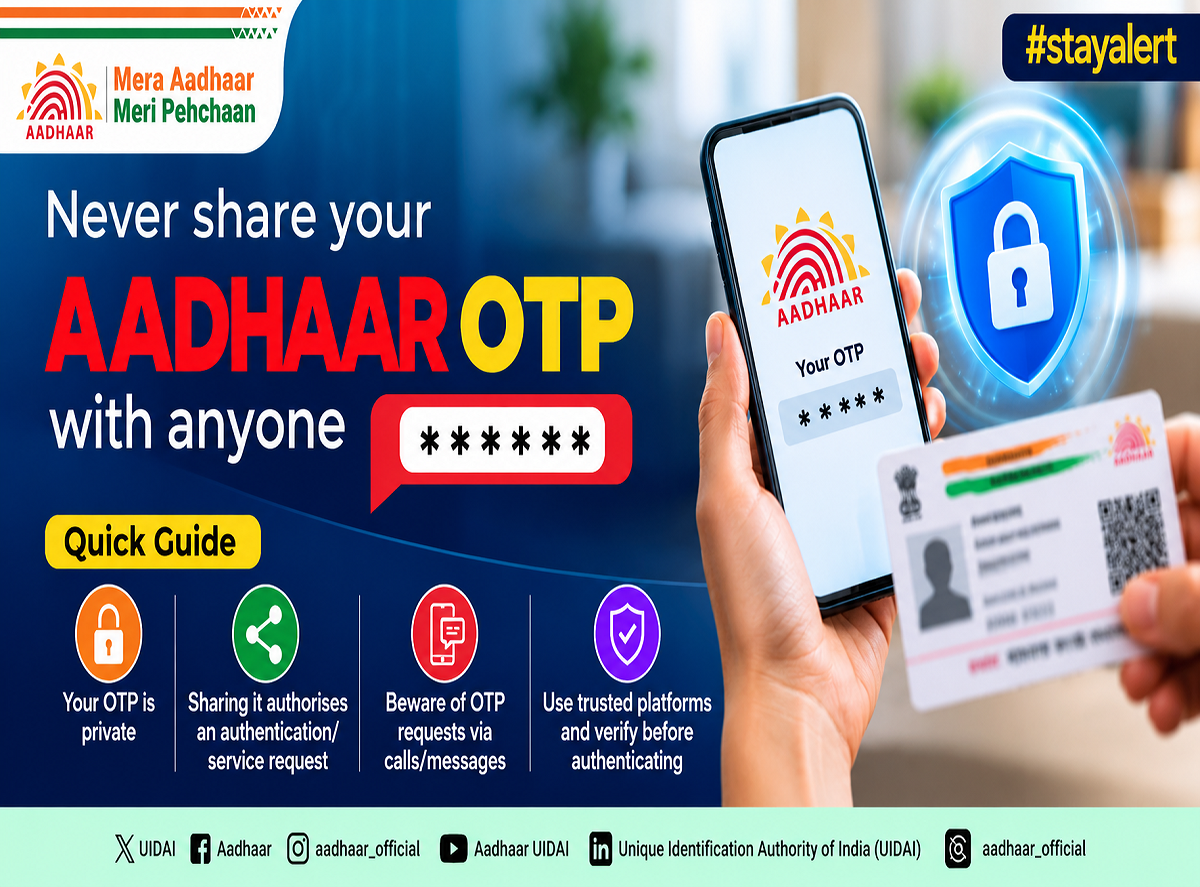
Aadhaar OTP Safety Tips 2026: Aadhaar users are being reminded to protect their One-Time Passwords (OTPs) and never disclose them to anyone. The Unique Identification Authority of India (UIDAI) has highlighted the importance of keeping Aadhaar authentication details confidential to prevent identity misuse and online fraud.
An Aadhaar OTP is a security code used to verify a person's identity during certain Aadhaar-related services and digital transactions. Sharing this code with an unknown individual could allow unauthorised authentication or misuse of personal information.
With digital services becoming increasingly common, protecting Aadhaar credentials is essential for people using online banking, government services, mobile applications and identity verification platforms.
UIDAI Aadhaar Alert: Why You Should Never Share Your OTP
UIDAI's public awareness message emphasises that an Aadhaar OTP is private information and should not be shared with anyone.
An OTP is generally sent to the mobile number registered with Aadhaar when a user initiates an eligible authentication request.
The code helps confirm that the person completing the process has access to the registered mobile number.
However, fraudsters may attempt to obtain OTPs by pretending to be government officials, bank employees or customer support representatives.
If a person shares an OTP without understanding the transaction, it may be used to complete an unauthorised verification process.
Therefore, users should never disclose Aadhaar OTPs through phone calls, WhatsApp messages, SMS replies, emails or unfamiliar websites.
How Do Aadhaar OTP Scams Work?
Cybercriminals often use social engineering techniques to trick individuals into revealing confidential information.
In some cases, fraudsters contact Aadhaar holders and claim that their Aadhaar card requires an urgent update.
They may warn that banking services, mobile connections or government benefits will be suspended unless the person completes an immediate verification process.
The fraudster may then request an OTP received on the registered mobile number.
Another common tactic involves sending suspicious links that appear to lead to official Aadhaar services.
Users who open these links may be asked to enter their Aadhaar number, personal details and OTP.
Such websites may be designed to collect confidential information.
It is important to understand that receiving an OTP does not automatically mean that a transaction is genuine.
Users should verify the purpose of every authentication request before entering the code themselves on a trusted platform.
Can Someone Misuse Your Aadhaar OTP?
Yes. An Aadhaar OTP can potentially be misused when combined with other personal information or an unauthorised authentication request.
For example, a fraudster who has obtained a person's Aadhaar details may attempt to initiate an online verification process.
If the victim shares the OTP, the fraudster may be able to complete that specific authentication step.
However, an Aadhaar OTP alone does not automatically provide access to every bank account or allow unrestricted financial transactions.
The potential consequences depend on the service involved, the information available to the fraudster and the security measures used by the relevant platform.
Nevertheless, keeping OTPs confidential is an important way to reduce identity-related risks.
Important Aadhaar OTP Safety Tips
UIDAI's security reminder highlights a simple but essential precaution: keep your OTP private.
Aadhaar users should follow these safety practices:
- Never share your OTP: Do not disclose an Aadhaar OTP to anyone over the phone, through messages or in person.
- Avoid suspicious links: Do not enter Aadhaar details on unfamiliar websites received through SMS, email or social media.
- Use official platforms: Access Aadhaar services through UIDAI's authorised website and applications.
- Check authentication requests: Enter an OTP only when you have personally initiated and verified the relevant service.
- Beware of urgent threats: Be cautious of callers claiming that your Aadhaar will be blocked unless you immediately share a code.
- Protect your registered mobile number: Keep your mobile connection secure because Aadhaar authentication messages may be delivered to it.
- Report suspicious activity: Contact the appropriate authorities if you suspect that your Aadhaar information has been misused.
These precautions can help users avoid common online scams.
What Should You Do if You Accidentally Share an Aadhaar OTP?
If you have disclosed an Aadhaar OTP to an unknown person, take action promptly.
First, stop communicating with the suspicious caller or sender.
Next, review your Aadhaar authentication history through the official UIDAI website to check for unfamiliar authentication activity.
If you notice a suspicious transaction, contact UIDAI for guidance.
Users can also consider using the Aadhaar biometric lock facility where appropriate. However, biometric locking is not a substitute for protecting OTPs and does not necessarily prevent OTP-based authentication.
If banking or financial information has also been compromised, immediately contact the relevant bank or financial institution.
For suspected cyber financial fraud in India, victims can contact the national cybercrime helpline 1930 or file a complaint through the official National Cyber Crime Reporting Portal.
Quick reporting may help authorities respond to fraudulent activity.
How to Check Aadhaar Authentication History
UIDAI provides an authentication history facility that allows Aadhaar holders to review available records of authentication requests associated with their Aadhaar.
Users can access the service through the official myAadhaar portal.
After completing the required authentication, users can review the available transaction details.
This may help identify authentication activity that they do not recognise.
However, authentication history should be interpreted carefully because some entries may relate to legitimate services previously used by the Aadhaar holder.
If an unfamiliar record appears, users should seek clarification from UIDAI or the relevant service provider.
Does UIDAI Ask for Aadhaar OTP Over the Phone?
Aadhaar users should be suspicious of anyone who calls unexpectedly and asks them to disclose an OTP.
An OTP is intended for use in the authentication process initiated by the user.
People claiming to represent UIDAI, banks or government departments should not be trusted merely because they know the Aadhaar holder's name or other personal information.
Users should independently contact the organisation through its verified official channels if they receive an unexpected verification request.
UIDAI's official helpline 1947 can be used for Aadhaar-related assistance.
Why Aadhaar OTP Security Is Important in 2026
Aadhaar-based authentication is used across various digital services in India.
These may include identity verification, selected financial services and government-related processes.
As more services become accessible online, users need to remain alert to attempts to obtain confidential authentication information.
Fraudsters may exploit a person's lack of awareness or create a false sense of urgency to persuade them to share sensitive details.
Understanding how OTP verification works can help users recognise suspicious requests.
An OTP should be treated as a confidential security credential rather than an ordinary message that can be forwarded to someone else.
Final Update
UIDAI's Aadhaar security reminder reinforces an important message for every Aadhaar holder: your OTP is personal, and you should never share it with anyone.
Whether the request comes through a phone call, SMS, WhatsApp message or website, users should verify its authenticity before taking action.
Aadhaar holders should use official UIDAI platforms, regularly review suspicious authentication activity and report suspected fraud promptly.
Remember: Never disclose your Aadhaar OTP to a stranger, even if the person claims to be a government official, bank representative or customer support executive. Protecting this small security code can help prevent serious identity-related problems.