Business
WhatsApp Earning Scam Alert 2026: Police Warn Against Fake Daily Income Offers, Know How to Stay Safe
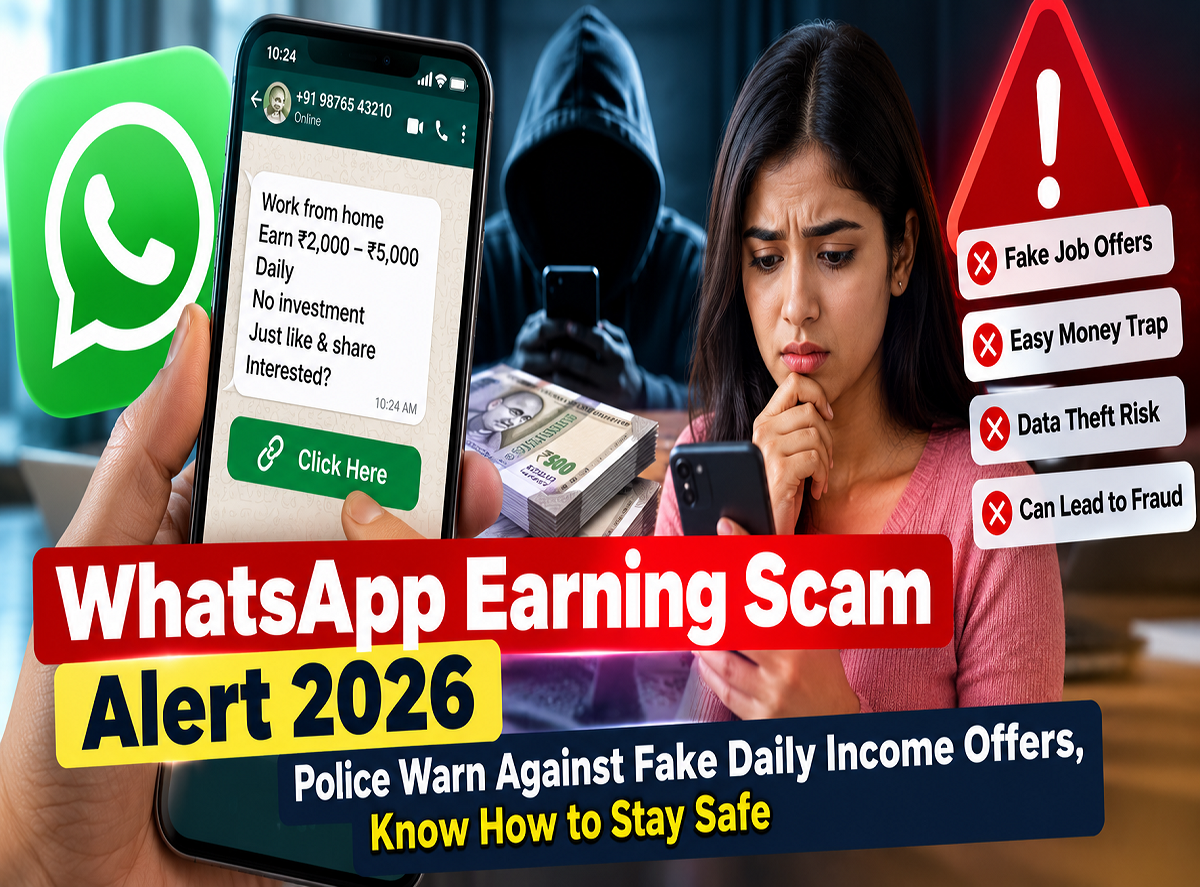
WhatsApp Scam Alert 2026: Have you received a WhatsApp message promising easy money for completing simple online tasks? If someone offers you attractive daily earnings for liking videos, reviewing products or working from home for just a few minutes, you should be extremely careful.
Cybercriminals are increasingly using WhatsApp messages, social media advertisements and fake job offers to target people looking for additional income.
According to a report published by Aaj Tak on October 30, 2026, Jhalawar Superintendent of Police Amit Kumar Budania has warned people about fraudulent earning schemes circulating through WhatsApp.
These schemes often appear genuine initially, but their real purpose is to obtain money or sensitive financial information from unsuspecting users.
WhatsApp Earning Messages: What Is the New Scam?
Online earning scams typically begin with an unexpected message from an unknown mobile number.
The sender may claim to represent a recruitment agency, digital marketing company or online business.
The message often promises that users can earn money from home without professional experience or significant effort.
Some fraudsters advertise flexible working hours and attractive daily payments to make the opportunity seem appealing.
Victims may be asked to complete simple tasks such as liking videos, rating businesses, subscribing to social media channels or reviewing products.
Although these activities may appear harmless, they can be used to draw people into a larger financial fraud.
The biggest warning sign is when an alleged employer asks you to deposit money before you can receive your earnings.
How Do WhatsApp Task-Based Earning Scams Work?
Fraudsters may use a series of steps to gain the victim's confidence before demanding money.
Step 1: An Attractive Job Offer
The victim receives a WhatsApp message advertising easy work-from-home income.
The sender may promise daily payments without requiring qualifications, interviews or formal employment documents.
Step 2: Simple Tasks to Build Trust
The fraudster asks the person to complete a few easy activities.
These might involve interacting with social media posts or submitting screenshots.
Sometimes a small payment is made to convince the victim that the scheme is genuine.
Step 3: Invitation to a Private Group
The victim may then be invited to join a WhatsApp or Telegram group.
Other group members may post screenshots showing supposed earnings or successful withdrawals.
Such screenshots and testimonials can be fabricated.
Step 4: Demand for an Investment
After gaining the victim's trust, the fraudster may introduce a higher-paying task that requires an advance deposit.
The amount demanded may increase as the victim becomes more involved.
Step 5: Withdrawal Problems
When the victim attempts to withdraw the advertised earnings, the fraudster may demand additional payments.
These may be described as taxes, account verification charges, security deposits or withdrawal processing fees.
Eventually, the victim may lose contact with the operator or find that the money cannot be recovered through the fraudulent platform.
Jhalawar Police Warn People About Online Earning Fraud
Jhalawar SP Amit Kumar Budania has highlighted the risks associated with suspicious earning messages and advertisements.
The warning is particularly relevant for people who are searching for part-time employment or opportunities to supplement their income.
Students, homemakers, unemployed individuals and working professionals may all encounter such offers.
Fraudsters often exploit the appeal of earning money from home and the convenience of completing tasks through a mobile phone.
Police awareness messages encourage people to verify suspicious offers instead of trusting claims made by unknown individuals.
A genuine employment opportunity should have verifiable company details, clear work responsibilities and transparent payment arrangements.
Seven Warning Signs of a Fake WhatsApp Earning Offer
| Warning sign | Why it is suspicious |
|---|---|
| Guaranteed high daily earnings | Unrealistic promises may be used to attract victims |
| Unknown recruiter | The sender's identity may be difficult to verify |
| No interview or proper job description | Important employment details are missing |
| Advance payment required | The supposed employer asks the applicant for money |
| Pressure to act immediately | The victim is discouraged from checking the offer |
| Requests for OTPs or banking information | Sensitive financial information may be stolen |
| Extra fees to withdraw earnings | Fraudsters may demand repeated payments |
Not every online job offer is fraudulent. However, several of these warning signs appearing together should raise serious concerns.
How to Identify a Genuine Work-From-Home Job
Before accepting an online earning opportunity, verify the organisation offering the work.
Check whether the company has an official website, identifiable business details and a legitimate recruitment process.
If someone claims to represent a well-known company, contact that company through its published official channels.
Do not rely solely on phone numbers or links supplied by the unknown recruiter.
Be particularly cautious if the job involves transferring money between bank accounts, receiving funds for strangers or making cryptocurrency payments.
Such arrangements may expose participants to financial losses or legal complications.
A legitimate recruiter should be able to explain the job responsibilities, payment structure and employment conditions clearly.
What Should You Do if You Receive a Suspicious WhatsApp Message?
If you receive an unexpected earning offer, avoid clicking unfamiliar links or downloading applications suggested by the sender.
Do not share your Aadhaar details, PAN information, bank account credentials, passwords, OTPs or UPI PIN.
You can block the sender and report the suspicious account through WhatsApp.
To report a chat, open the conversation, access the contact information and select the available reporting option.
You should also avoid forwarding the message to friends or family as a genuine earning opportunity.
If you want to warn others, clearly explain that the message may be fraudulent.
How to Report a WhatsApp Earning Scam in India
If you have already transferred money to a suspected fraudster, act immediately.
Contact your bank or payment service provider and explain that the transaction may be fraudulent.
You can also report financial cybercrime through the national cybercrime helpline.
1930 — Cybercrime Helpline
Call promptly after discovering suspected financial fraud.
Copy
National Cyber Crime Reporting Portal
Submit a complaint and provide available evidence.
Preserve screenshots of the conversation, transaction IDs, payment receipts, suspicious links and relevant phone numbers.
These records may help authorities investigate the complaint.
Quick reporting can improve the chances of tracing suspicious transactions, although recovery of lost money is not guaranteed.
Can Fraudsters Steal Money Without Knowing Your UPI PIN?
A fraudster generally cannot authorise an ordinary UPI debit merely by knowing your mobile number.
However, criminals may trick users into approving payment requests, entering their UPI PIN or installing malicious applications.
Some scams also involve fake payment screenshots, phishing websites and remote-access applications.
Remember that you do not need to enter your UPI PIN simply to receive an ordinary UPI payment.
If someone asks you to enter a PIN to collect a reward, salary or refund, verify the request carefully.
Why Are Online Earning Scams Becoming a Serious Concern?
Digital payments and messaging applications have made financial transactions and communication more convenient.
Unfortunately, fraudsters can exploit the same convenience to contact large numbers of potential victims.
A convincing message, fake company identity and fabricated payment proof can make a fraudulent scheme appear credible.
People facing financial pressure may be particularly attracted to offers promising immediate income.
Cybersecurity awareness is therefore important for users of all age groups.
Taking a few minutes to verify an opportunity may prevent substantial financial losses.
WhatsApp Earning Scam 2026: What Users Should Remember
WhatsApp can be useful for legitimate recruitment and business communication, but unsolicited offers promising unusually easy income deserve careful scrutiny.
The warning highlighted by Jhalawar Police reminds users that cybercriminals may initially offer small rewards before demanding larger deposits.
Never pay an unknown recruiter simply to unlock tasks or withdraw supposed earnings.
The key takeaway: If a WhatsApp message promises attractive daily earnings with little effort, verify the company before responding. Avoid advance deposits, protect banking information and report suspected financial fraud immediately through 1930 or the national cybercrime portal.