Business
Vehicle Permit Rules 2026: Which Vehicles Need a Permit in India? Check Requirements and Application Process
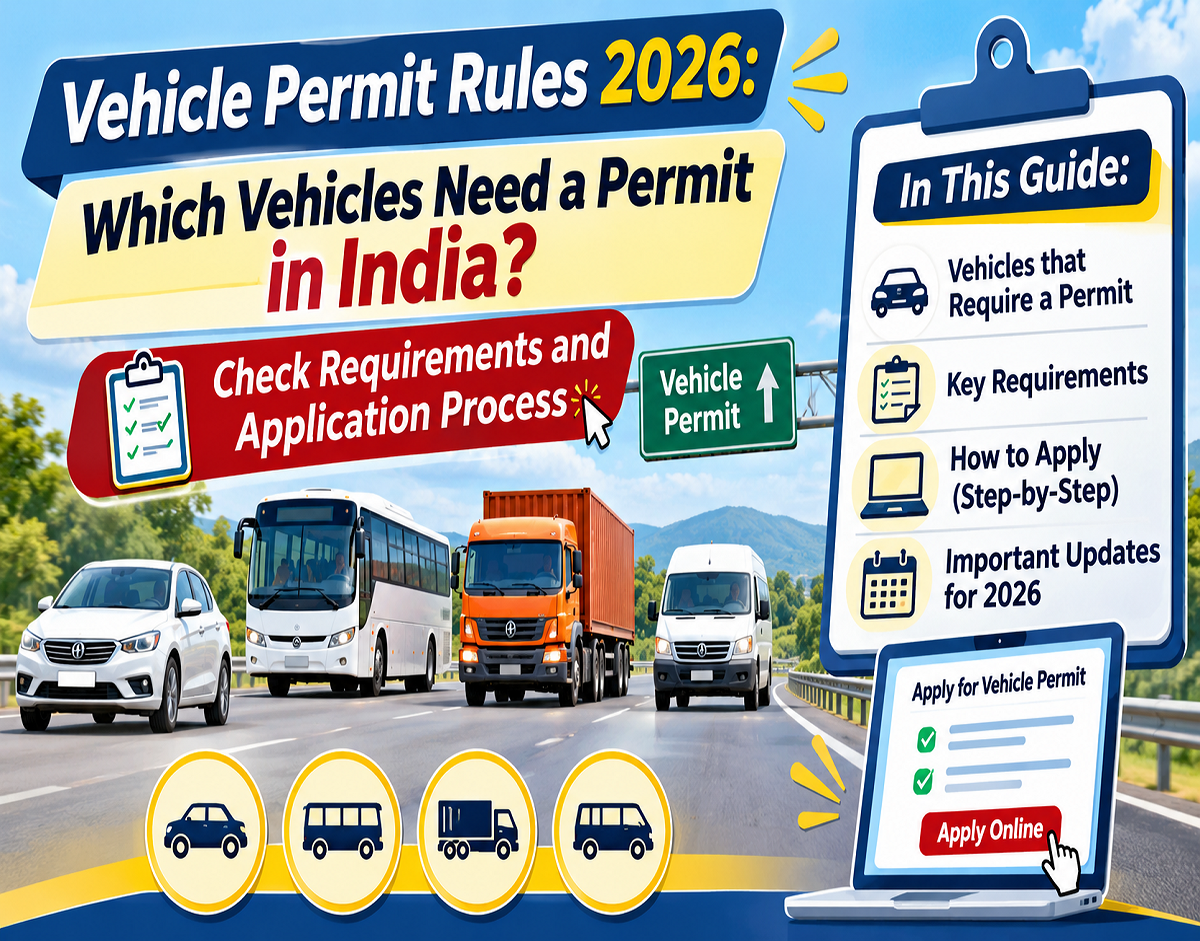
Vehicle Permit Rules 2026: Do you own a car, taxi, bus, truck or another commercial vehicle? Understanding vehicle permit requirements is essential to avoid legal complications and ensure compliance with transport regulations. The Uttar Pradesh Transport Department has shared a public awareness message encouraging vehicle owners and drivers to understand what a vehicle permit is, which vehicles require one and why following transport rules is important.
Under India's Motor Vehicles Act, 1988, transport vehicles generally require appropriate permits to operate on public roads, subject to statutory exemptions. However, ordinary private vehicles used for personal purposes typically do not require a separate commercial transport permit.
Permit requirements depend on factors such as vehicle classification, purpose of use, operating area and the nature of the transport service.
What Is a Vehicle Permit?
A vehicle permit is an authorization issued by the relevant transport authority allowing a transport vehicle to operate under specified conditions.
The permit may define the type of service, permitted operating area, route or other conditions applicable to the vehicle.
In India, vehicle permits are governed primarily by the Motor Vehicles Act, 1988, and the applicable Central and State Motor Vehicle Rules.
The Regional Transport Authority (RTA), State Transport Authority (STA) or another designated authority handles permit-related matters according to the applicable jurisdiction.
Operating a transport vehicle without the required authorization can result in penalties and other enforcement action.
Which Vehicles Need a Permit in India?
Vehicle permit requirements generally apply to vehicles used for transporting passengers or goods for commercial purposes.
| Vehicle category | General permit requirement |
|---|---|
| Private car for personal use | Generally not required |
| Private motorcycle or scooter | Generally not required |
| Commercial taxi or cab | Required, subject to applicable rules |
| Passenger bus | Generally required |
| Commercial goods truck | Generally required |
| Goods carriage or commercial pickup | Generally required, subject to exemptions |
| Auto-rickshaw used for passenger transport | Generally required |
| School bus | Permit requirements apply according to its classification and use |
| Private vehicle used for commercial transport | Appropriate transport authorization and classification may be required |
Certain transport vehicles qualify for statutory exemptions. Therefore, permit requirements should be verified against the vehicle's registration category and intended use.
Different Types of Vehicle Permits
India's transport regulatory framework includes several categories of permits.
1. Stage Carriage Permit
A stage carriage permit generally applies to passenger vehicles operating services in which passengers pay separate fares for individual journeys or stages.
Public buses operating on designated routes commonly fall within this category.
The permit may specify the route, service conditions and other operating requirements.
2. Contract Carriage Permit
Contract carriage permits are used for passenger transport services operating under a contract for the vehicle as a whole, subject to the statutory definition and permit conditions.
Certain taxis, tourist vehicles and hired passenger vehicles may operate under this category.
3. Goods Carriage Permit
Goods carriage permits apply to vehicles used for transporting goods where a permit is required.
The conditions depend on the vehicle's classification, permitted operating area and applicable regulations.
4. National Permit
A national permit is relevant to eligible goods carriage operations extending across multiple states under the applicable authorization framework.
Vehicle owners must comply with the relevant permit and authorization conditions.
5. Private Service Vehicle Permit
A private service vehicle permit may apply to qualifying vehicles used to carry people for or in connection with the owner's trade or business, rather than as a public passenger service.
The exact requirements depend on the vehicle's statutory classification and intended use.
Do Private Cars and Two-Wheelers Need Permits?
Ordinary privately registered cars and two-wheelers used for personal transportation generally do not require commercial transport permits.
However, owners must still comply with registration, driving licence, insurance and other applicable legal requirements.
If a private vehicle is used to provide commercial passenger or goods transport services, different regulatory requirements may apply.
A private registration certificate does not automatically authorize commercial operation.
Vehicle owners planning to change the purpose of their vehicle should contact the relevant transport authority to understand the required procedures.
How to Apply for a Vehicle Permit Online
Vehicle owners can access available permit-related services through the government's Parivahan platform.
The general application process is:
- Visit the official website at https://parivahan.gov.in/.
- Open the vehicle-related services section.
- Select the relevant state and transport authority.
- Choose the available permit-related service.
- Enter the vehicle registration and other requested details.
- Complete the application and upload documents where required.
- Pay the applicable government fees.
- Follow the instructions for verification and permit issuance.
Online availability and procedures may vary by state and permit category. <Cite refs={["turn668682search2","turn668682search4"]}/>
What Documents Are Required for a Vehicle Permit?
The exact documents depend on the permit category and state transport authority.
Applicants may need a valid registration certificate, insurance certificate, fitness certificate where applicable, pollution certificate, tax payment details and identity or address information.
Additional documents may be required for interstate operations, tourist services or specialized transport activities.
Applicants should confirm the official checklist before submitting their applications.
What Is the Penalty for Driving Without a Required Permit?
Under Section 66 of the Motor Vehicles Act, transport vehicles generally cannot operate in public places without the required permit unless a statutory exemption applies.
Section 192A provides penalties for operating a vehicle without the required permit or violating specified permit conditions.
The amended provision lists a penalty of ₹10,000 for an initial contravention and ₹20,000 for a subsequent contravention, subject to applicable legal provisions and enforcement procedures. <Cite refs={["turn668682search0","turn668682search1"]}/>
Vehicle owners should also remember that a permit does not replace other mandatory documents, including vehicle registration, insurance and applicable fitness certification.
Is a Vehicle Permit Valid Across India?
Not every vehicle permit automatically authorizes operations throughout the country.
Some permits apply to a particular state, region or route, while others provide broader authorization under specific conditions.
Commercial vehicle owners planning interstate operations should confirm whether their existing permit covers the intended journey.
They may need additional authorization, countersignatures or a suitable national or tourist permit depending on the vehicle and operation.
UP Transport Department Advises Vehicle Owners to Follow Rules
The Uttar Pradesh Transport Department's awareness message encourages motorists to understand the purpose of vehicle permits and comply with applicable transport regulations.
The communication does not itself announce a new nationwide permit requirement, revised permit fee or fresh penalty.
Instead, it reminds vehicle owners that permit obligations depend on how a vehicle is registered and used.
The important distinction is that ordinary personal-use vehicles generally do not require transport permits, while commercial passenger and goods vehicles usually do, unless an exemption applies.
Before starting commercial operations, vehicle owners should verify their permit category, operating area, validity and other regulatory requirements.
Source Credit: Uttar Pradesh Transport Department — Official Vehicle Permit and Transport Rules Public Awareness Communication.
Additional Reference: Motor Vehicles Act, 1988, Sections 66 and 192A; Ministry of Road Transport and Highways.
Official Transport Services Portal: https://parivahan.gov.in/
Uttar Pradesh Transport Department: https://uptransport.upsdc.gov.in/