Business
Trump's Proposed Hormuz Transit Tax Could Raise India's Oil Import Costs: Here's What It Means
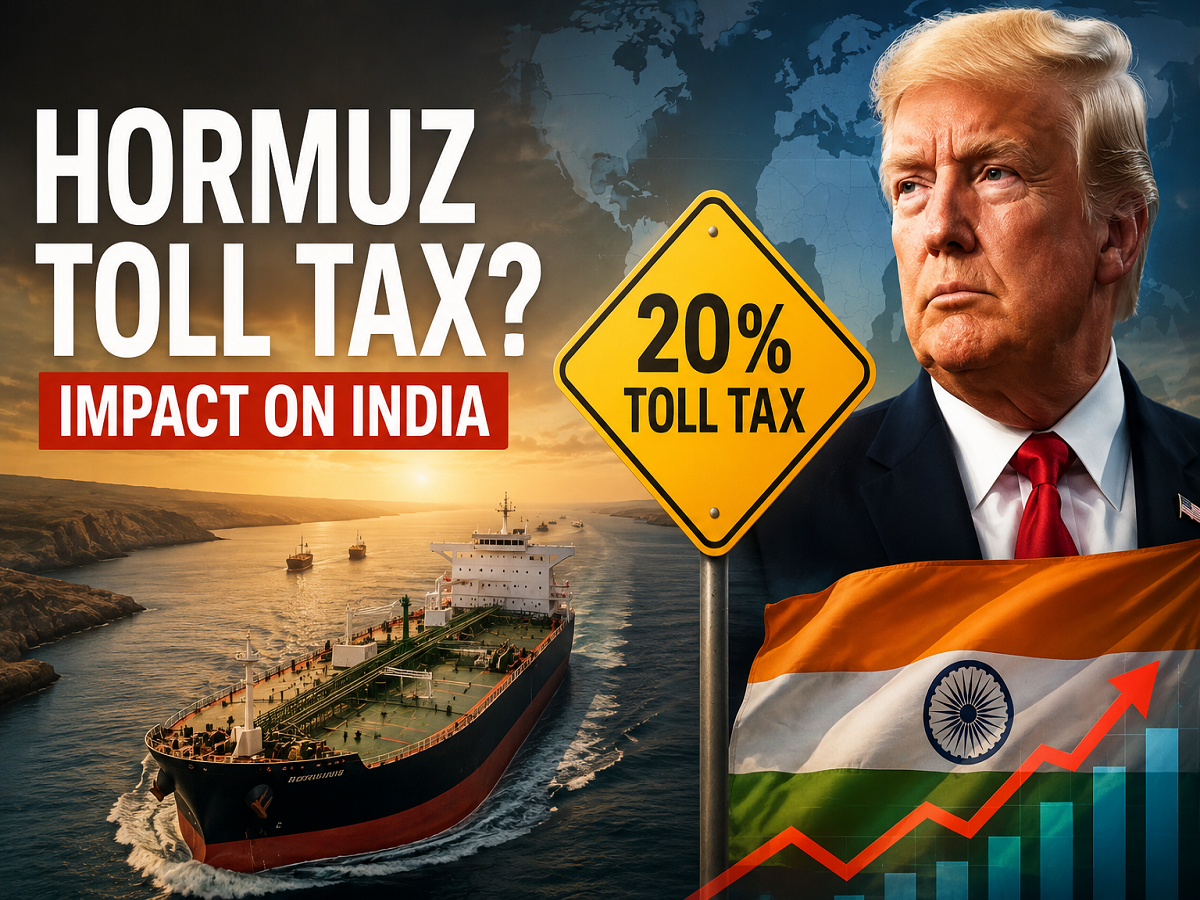
Donald Trump Hormuz Tax Proposal: A proposed 20% transit charge on ships passing through the Strait of Hormuz has sparked fresh concerns for countries heavily dependent on imported crude oil. If implemented, the move could increase transportation costs, affect global energy prices, and put additional pressure on major oil-importing nations, including India.
Trump's Hormuz Transit Fee Proposal Raises Global Concerns
Global energy markets are once again on edge as discussions around a proposed 20% transit fee for vessels using the Strait of Hormuz gain attention. The proposal, associated with former U.S. President Donald Trump, comes at a time when geopolitical tensions in the Middle East are already disrupting investor confidence and increasing uncertainty in the oil market.
The Strait of Hormuz is one of the world's most important maritime trade routes, carrying a significant share of global crude oil and liquefied natural gas (LNG) shipments every day. Any additional cost or disruption along this corridor could have ripple effects across international energy markets.
Why the Strait of Hormuz Matters
The Strait of Hormuz connects the Persian Gulf with the Gulf of Oman and the Arabian Sea. It serves as a critical export route for oil-producing nations such as Saudi Arabia, Iraq, Kuwait, the United Arab Emirates, and Qatar.
A large portion of the world's crude oil supply travels through this narrow passage. Because of its strategic importance, even minor geopolitical developments in the region often influence international oil prices.
How Could India Be Affected?
India imports nearly 85% of its crude oil requirements, with a substantial share sourced from Middle Eastern countries. If shipping companies are required to pay an additional transit fee while moving through the Strait of Hormuz, the increased transportation expenses could eventually be reflected in the landed cost of crude oil.
Higher import costs may have several consequences, including:
- Increased crude oil import bills.
- Pressure on fuel prices if global oil rates remain elevated.
- Higher logistics and transportation costs.
- Potential impact on inflation if energy prices continue to rise.
The actual impact, however, would depend on whether the proposed fee is implemented, its final structure, and how global shipping and energy markets respond.
Could Petrol and Diesel Prices Rise?
Any sustained increase in international crude oil prices has the potential to influence domestic fuel pricing. However, retail petrol and diesel prices in India are determined by several factors, including global crude prices, exchange rates, taxes, freight costs, and government policy.
Therefore, while higher shipping costs could contribute to upward pressure, they do not automatically translate into an immediate increase in fuel prices.
Global Energy Market Watching Closely
Energy analysts believe that uncertainty surrounding the Middle East remains one of the biggest drivers of oil market volatility. Investors and governments are closely monitoring developments related to shipping security, regional conflicts, and policy announcements that could affect energy supply chains.
If any restrictions, additional transit charges, or security concerns disrupt normal shipping through the Strait of Hormuz, global oil prices could remain volatile in the near term.
The Bottom Line
The proposed 20% Hormuz transit tax has generated fresh debate because of its potential impact on global energy trade. For oil-importing countries like India, any increase in shipping costs could raise the overall cost of crude imports and add pressure to the economy. However, the proposal has not yet translated into a confirmed policy, and its eventual impact will depend on future geopolitical developments and international market responses.