Business
Railway RAC Seat Upgrade: Vacant Berths May Be Allotted Automatically With SMS Alerts to Passengers
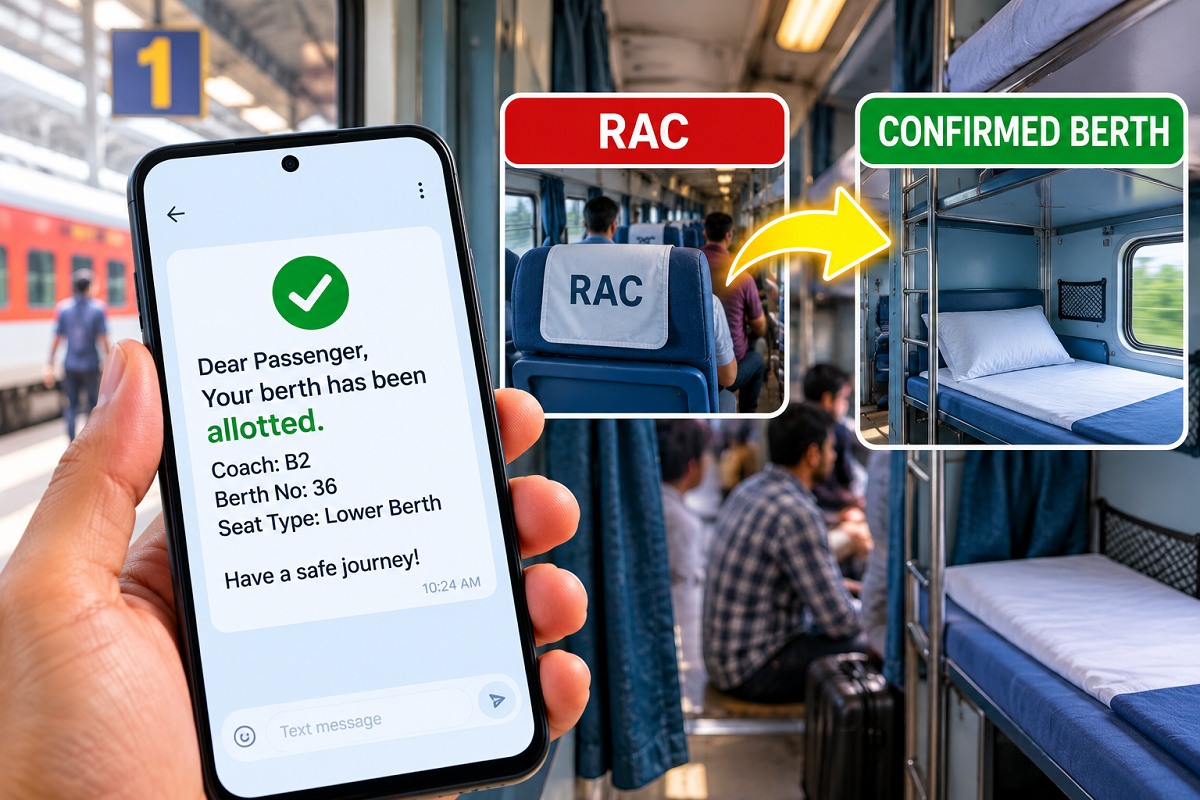
Train passengers travelling with RAC tickets may soon have an easier way to receive vacant berths during their journey. Indian Railways is reportedly preparing an upgraded system that can automatically assign an available berth to the next eligible RAC passenger after a booked passenger is officially marked as not having boarded the train.
Under the proposed arrangement, passengers would no longer need to repeatedly approach the Travelling Ticket Examiner (TTE) simply to find out whether a berth has become vacant. Once the system confirms an upgrade, information about the allotted berth is expected to be sent to the passenger's registered mobile number.
The facility is being introduced on a pilot basis, according to the reported details. A wider rollout would follow after the railway evaluates how the system performs.
How Will Automatic Berth Allocation Work?
The proposed system is based on an upgraded version of the Hand Held Terminal, or HHT, used by railway ticket-checking staff onboard trains.
At present, TTEs use these handheld devices to check passenger information and update boarding status.
Under the new mechanism, when a TTE marks a booked passenger as “Unboarded” on the HHT after completing the prescribed verification, the information would be transmitted to the central system.
If that passenger's berth becomes available, the system would then identify the next eligible RAC passenger according to the applicable priority and allocation rules.
The vacant berth could subsequently be assigned electronically instead of relying on a passenger to personally approach the TTE and ask about availability.
Passenger Could Receive Confirmation on Phone
Another useful part of the proposed system is mobile notification.
When a berth is allotted, the eligible passenger is expected to receive a message on the mobile number registered with the booking.
This could reduce uncertainty for passengers who start their journey with RAC status and are waiting to see whether a full berth becomes available.
Instead of repeatedly checking with railway staff, passengers could receive the updated berth information directly on their phone after the system processes the vacancy.
Keeping the correct mobile number linked to the reservation would therefore become particularly important.
Why Is Indian Railways Changing the Process?
RAC passengers are allowed to travel on eligible reserved tickets, but they may initially have to share seating arrangements until a full berth becomes available.
During a journey, berths can become vacant for several reasons. A confirmed passenger may not board the train, or other changes in passenger status may create availability.
Traditionally, travellers hoping for an upgrade may approach the TTE to ask whether a vacant berth is available.
The proposed automated process is intended to make this allocation more systematic and transparent by linking the TTE's onboard update directly with the central reservation system.
HHT Devices Will Play a Key Role
The Hand Held Terminal is central to the proposed arrangement.
According to the reported details, the upgraded HHT setup will use connectivity features such as 4G and location-related technology to update passenger information.
Once the TTE records the required boarding status, the central system can process the updated information and apply the relevant railway allocation rules.
The objective is to reduce unnecessary manual intervention in deciding which eligible passenger receives an available berth.
Importantly, the TTE would still perform essential onboard verification. Automation applies to the subsequent allocation process after the necessary status has been entered into the system.
Could Waiting-List Passengers Also Benefit?
The reported system is intended to improve the handling of RAC and eligible waitlisted passengers, but travellers should not assume that every waiting-list ticket automatically becomes valid for onboard travel.
Different rules apply to RAC and waitlisted tickets depending on factors such as how the ticket was booked and its final status after chart preparation.
Passengers should therefore check their final reservation status before boarding.
The automatic allocation mechanism also does not guarantee that every RAC passenger will receive a full berth. An upgrade can occur only when an eligible berth actually becomes available and the passenger qualifies according to the applicable priority rules.
Live Vacancy Information Could Improve Transparency
Another reported feature is greater visibility of berth availability.
Passengers may be able to check updated information about vacant berths through railway digital platforms as the system develops.
Real-time or near-real-time information could make it easier for passengers to understand whether berths have become available instead of relying entirely on verbal enquiries during the journey.
Railways also expects greater digitisation to reduce complaints related to discretionary or irregular allotment of vacant seats.
Does This Mean Passengers Will No Longer Need a TTE?
Not entirely.
The new system does not eliminate the role of the TTE. Ticket-checking staff will still be responsible for verifying passengers and updating their boarding status through the HHT.
The key change is expected to happen after a berth becomes officially available.
Rather than manually deciding who should receive that berth, the central system would use the applicable priority rules to identify the eligible passenger and process the allocation.
This could reduce the need for passengers to search for the TTE merely to request a vacant berth.
System to Begin as a Pilot Project
Passengers should note that the automatic berth-allocation facility is not being presented as a nationwide feature already available on every train.
According to the reported update, Indian Railways plans to introduce the mechanism as a pilot project first.
The system's performance can then be assessed before any broader implementation across the railway network.
Details such as the trains or routes included in the pilot, its starting date and the timeline for a wider rollout should be checked against subsequent official railway announcements.
For RAC passengers, the proposed system could make onboard upgrades considerably more convenient. If implemented successfully, an eligible passenger could simply receive a berth assignment and mobile notification after a vacancy is recorded—without repeatedly approaching railway staff to ask whether a seat has opened up.
Note: The automatic berth-allocation mechanism is reported to be planned as a pilot project. Availability, rollout dates, eligible trains and operational rules may change. Passengers should check their PNR and the latest information from official Indian Railways or IRCTC channels before travelling.