Business
PM SVANidhi Yojana 2026: Street Vendors Can Access Business Loans to Expand Self-Employment Opportunities
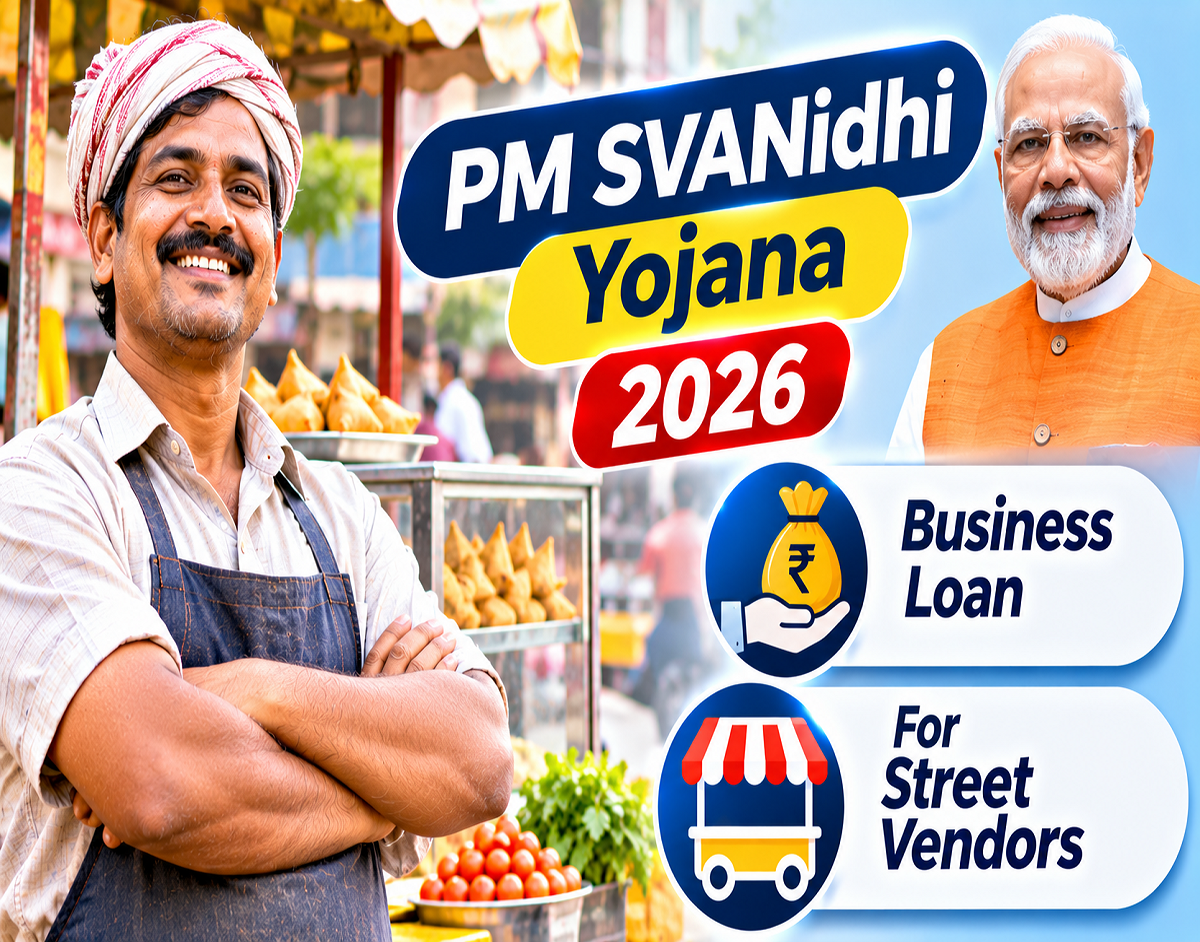
PM SVANidhi Yojana 2026: The Madhya Pradesh government's public relations department, Jansampark MP, has highlighted the role of the Pradhan Mantri Street Vendor's AtmaNirbhar Nidhi (PM SVANidhi) scheme in expanding self-employment opportunities in urban areas.
In its latest social media communication, the department emphasized the importance of the scheme in supporting small street-based businesses and promoting entrepreneurship in cities.
PM SVANidhi is a central government initiative designed to provide working capital loans to eligible street vendors. The programme helps small traders access formal credit, strengthen their businesses and reduce dependence on informal borrowing arrangements.
The scheme is particularly relevant for people operating roadside shops, vegetable stalls, fruit carts, tea stalls and other small vending businesses.
PM SVANidhi Yojana 2026: Key Details
| Particulars | Information |
|---|---|
| Scheme Name | PM Street Vendor's AtmaNirbhar Nidhi |
| Popular Name | PM SVANidhi Yojana |
| Implementing Ministry | Ministry of Housing and Urban Affairs |
| Main Beneficiaries | Eligible Street Vendors |
| Primary Objective | Working Capital Support and Financial Inclusion |
| Loan Type | Collateral-Free Working Capital Loan |
| Application Channel | Official Portal and Authorized Institutions |
| Main Focus | Urban Livelihoods and Self-Employment |
| Official Website | https://pmsvanidhi.mohua.gov.in |
The Jansampark MP communication highlights the scheme's contribution to urban self-employment. It does not announce a new state-specific loan amount, application deadline or beneficiary target.
What Is PM SVANidhi Yojana?
PM SVANidhi is a government-supported microcredit initiative for street vendors.
The programme was introduced to help eligible vendors obtain working capital and continue or expand their livelihood activities.
Street vendors play an important role in India's urban economy by supplying affordable goods and services to local communities.
However, many small vendors face difficulties obtaining formal business loans because they may lack conventional collateral or extensive financial documentation.
PM SVANidhi aims to address this challenge by providing access to structured credit through participating lending institutions.
The scheme also encourages timely repayment, digital transactions and greater participation in the formal financial system.
How Much Loan Can Street Vendors Get Under PM SVANidhi?
PM SVANidhi provides working capital financing in stages, subject to the scheme's current guidelines.
Under the revised framework announced in 2025, the loan structure includes the following ceilings:
| Loan Tranche | Maximum Loan Amount |
|---|---|
| First Loan | ₹15,000 |
| Second Loan | ₹25,000 |
| Third Loan | ₹50,000 |
Access to subsequent loan tranches depends on the applicable eligibility and repayment conditions.
The maximum amount is not automatically available to every applicant.
Lending institutions assess applications according to the scheme rules and relevant credit requirements.
Applicants should verify the currently applicable loan limits and terms through the official PM SVANidhi portal.
Who Can Benefit From PM SVANidhi?
The scheme is intended for eligible street vendors carrying out vending activities in covered urban areas.
Potential beneficiaries may include people selling vegetables, fruits, flowers, snacks, tea, clothing and other everyday products.
Small vendors providing eligible street-based services may also fall within the programme's scope.
However, eligibility is not determined solely by the type of goods sold.
Applicants must satisfy the scheme's identification, verification and other prescribed conditions.
Vendors should contact their urban local body or an authorized lending institution to confirm whether they qualify.
How Does PM SVANidhi Support Self-Employment?
Small vendors often require working capital to purchase goods, maintain inventory and manage daily business expenses.
A fruit seller, for example, may need funds to purchase fresh stock before beginning the day's sales.
A tea stall operator may require money for ingredients, utensils or other essential supplies.
A street-based clothing seller may need additional capital to increase available inventory during periods of higher demand.
Access to a formal working capital loan can help eligible vendors manage these requirements.
It may also reduce their dependence on informal lenders who charge high borrowing costs.
Nevertheless, borrowers should carefully assess their repayment capacity before taking a loan.
Is Collateral Required for PM SVANidhi Loans?
PM SVANidhi is designed as a collateral-free working capital lending programme.
This is an important feature for street vendors who may not own property or other assets that can be pledged as security.
However, collateral-free financing does not mean that borrowers are exempt from repayment obligations.
Applicants must comply with the loan agreement, repayment schedule and other applicable conditions.
Loan approval remains subject to the scheme framework and the participating lender's procedures.
What Are the Benefits of Timely Loan Repayment?
Timely repayment is an important part of the PM SVANidhi programme.
Eligible borrowers who repay their loans according to the prescribed conditions may qualify for further loan tranches.
The scheme framework also provides for an interest subsidy, subject to applicable rules.
Historically, PM SVANidhi has offered a 7% annual interest subsidy on eligible loans, with the benefit governed by the scheme's operational guidelines.
Borrowers should verify the current subsidy conditions and repayment requirements before applying.
Timely repayment may also help vendors build a formal credit history, potentially improving their access to financial services.
How to Apply for PM SVANidhi Yojana Online
Eligible street vendors can seek information and apply through the official PM SVANidhi system or authorized assistance channels.
The general application process involves the following steps:
Step 1: Visit the official PM SVANidhi portal at https://pmsvanidhi.mohua.gov.in.
Step 2: Review the current eligibility requirements and application instructions.
Step 3: Select the appropriate application facility available on the portal.
Step 4: Provide the required personal and vending-related information.
Step 5: Submit the documents or verification details prescribed under the scheme.
Step 6: Select or proceed through the authorized lending channel as instructed.
Step 7: Complete any additional verification requested by the lending institution.
Step 8: Track the application status through the authorized system.
The final loan decision is made according to the applicable scheme and lender requirements.
Applicants should not assume that submitting an application guarantees approval.
What Documents May Be Required?
The document requirements depend on the applicant's vending status and the current scheme rules.
Applicants may need identity information, bank account details and documents supporting their eligibility as street vendors.
A Certificate of Vending, identity card or Letter of Recommendation may be relevant, depending on the applicant's circumstances and the prescribed process.
The exact documentation should be confirmed through the official portal or the concerned urban local body.
Applicants should avoid submitting false information or using unauthorized agents to obtain eligibility documents.
Role of Urban Local Bodies in PM SVANidhi
Urban local bodies play an important role in the implementation of the scheme.
Their responsibilities may include supporting the identification and verification of eligible street vendors and facilitating access to the programme.
They may also help applicants understand the documentation and procedures required for participation.
This administrative support is important because many street vendors operate small businesses without extensive formal records.
The programme aims to connect such vendors with authorized financial institutions through an organized system.
PM SVANidhi and Digital Payments
The scheme also promotes greater use of digital financial services among street vendors.
Digital payments can provide convenient transaction options for customers and help vendors maintain electronic payment records.
For small businesses, accepting digital payments may reduce dependence on cash transactions.
The programme has included digital transaction incentives under applicable guidelines.
However, eligibility for any incentive depends on the current rules and qualifying transaction conditions.
Vendors should confirm the latest incentive structure through official sources.
Why Is PM SVANidhi Important for Madhya Pradesh?
Madhya Pradesh has a large network of urban markets, roadside vendors and small self-employed traders.
Street vending provides livelihood opportunities to people engaged in retail and everyday service activities.
Access to affordable working capital can help eligible vendors manage stock purchases and other business expenses.
Jansampark MP's latest communication highlights the scheme as a means of expanding self-employment opportunities in cities.
The announcement reflects the broader objective of supporting urban livelihoods through access to formal financial services.
However, the social media post does not provide new district-wise beneficiary figures or a fresh Madhya Pradesh-specific allocation.
Important Precautions for Applicants
Street vendors should apply only through official or authorized channels.
They should avoid individuals claiming to guarantee government loan approval in exchange for unofficial payments.
Applicants must not share OTPs, UPI PINs or banking passwords with unknown callers.
Before accepting financing, borrowers should review the sanctioned loan amount, interest rate, repayment schedule and other applicable terms.
They should also verify whether any subsidy or incentive is available under the current scheme guidelines.
PM SVANidhi Yojana 2026: Latest Update
The Madhya Pradesh government's Jansampark department has highlighted PM SVANidhi as an initiative supporting the growth of self-employment opportunities in urban areas.
The scheme provides eligible street vendors with access to collateral-free working capital loans through formal lending institutions.
Its objectives include supporting small businesses, encouraging timely repayment and improving financial inclusion.
Street vendors interested in applying should review the current eligibility conditions and application procedure through the official PM SVANidhi portal or their local urban authority.
Source Credit: Jansampark Madhya Pradesh (@JansamparkMP), public awareness post on PM SVANidhi Yojana and expanding urban self-employment opportunities.
Original Post: https://x.com/JansamparkMP/status/2120857967960736002
Official Website: PM SVANidhi Portal
Disclaimer: This article provides general information about PM SVANidhi. Loan limits, interest subsidies, incentives, eligibility requirements and application procedures are subject to the current government guidelines and lending institution policies. Applicants should verify the latest terms through official sources.