
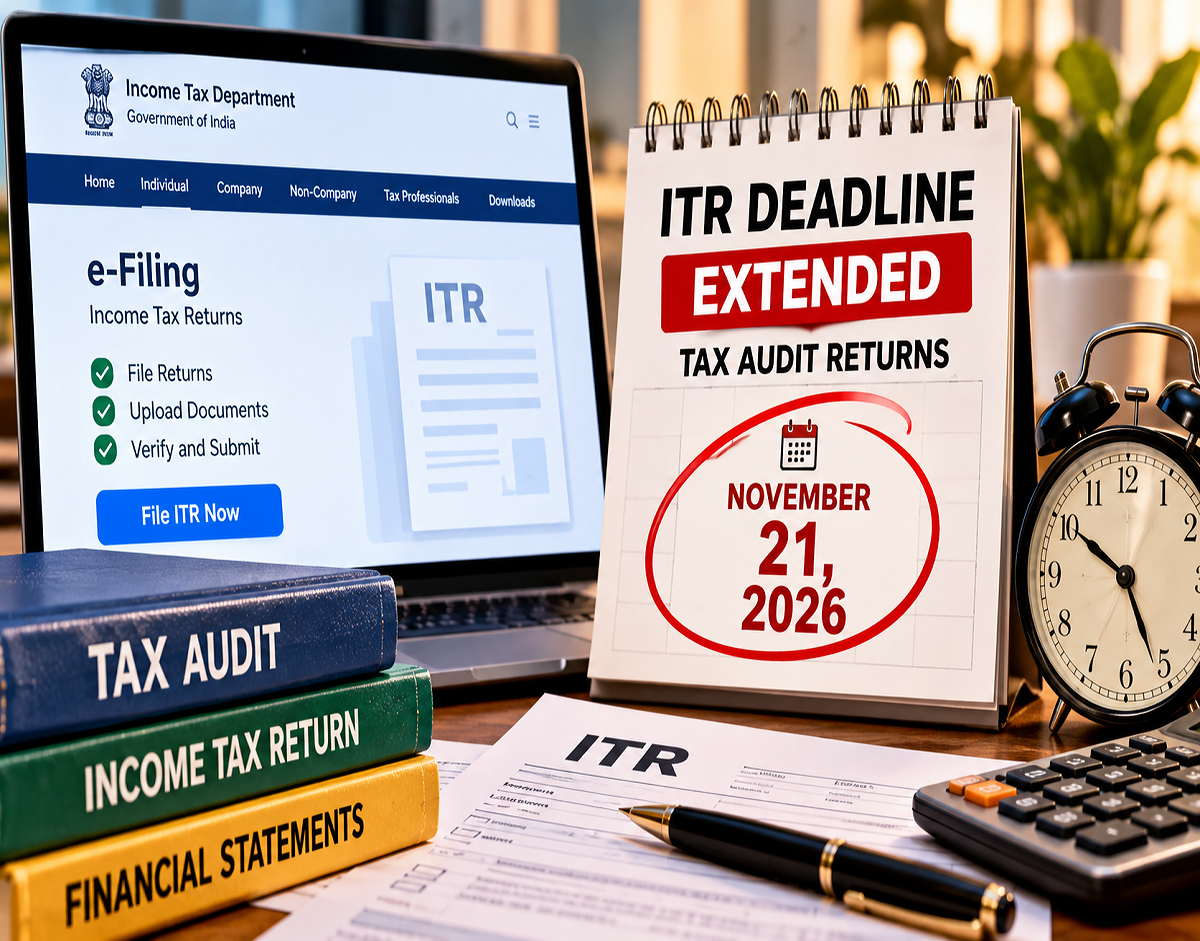
Taxpayers covered under tax audit requirements have received additional time to complete their income tax return filing for Assessment Year 2026-27. According to the information provided, the Central Board of Direct Taxes (CBDT) has extended the applicable ITR filing deadline from October 31, 2026, to November 21, 2026.
The deadline for submitting tax audit reports has also been extended. Instead of the earlier September 30, 2026 deadline, eligible taxpayers and tax professionals will now have until October 21, 2026, to complete the tax audit report process.
The revised schedule effectively gives taxpayers covered by the extension another 21 days for both stages. The additional time could be particularly useful for businesses, professionals and chartered accountants dealing with extensive financial records and reconciliation work.
New ITR and Tax Audit Deadlines
Under the revised timeline cited in the source, taxpayers should keep these two dates in mind:
| Compliance Requirement | Earlier Deadline | Revised Deadline |
|---|---|---|
| Tax Audit Report | September 30, 2026 | October 21, 2026 |
| ITR for Applicable Tax Audit Cases | October 31, 2026 | November 21, 2026 |
The two deadlines serve different purposes. October 21 is the revised date for the applicable tax audit report, while November 21 is the extended ITR filing deadline for the taxpayers covered by the announcement.
Taxpayers should therefore not treat November 21 as the deadline for completing every audit-related compliance requirement.
Why Was the Deadline Extended?
The extension follows requests from several chartered accountant associations and tax professionals seeking more time to complete audit-related work.
Tax audits can require detailed verification and reconciliation of financial information. Professionals may need to compare accounting records with tax statements, GST returns and other financial disclosures before an audit report can be finalised.
Differences between various records may also need to be identified and corrected before the return is filed.
The extended timeline is expected to provide additional time for taxpayers and chartered accountants to complete these checks instead of rushing through the process close to the original deadline.
What Is Checked During a Tax Audit?
A tax audit can involve examination of several aspects of a taxpayer's financial records.
Turnover and other financial information may need to be reconciled with GST returns where applicable. Details relating to Tax Deducted at Source (TDS) and Tax Collected at Source (TCS) may also require verification.
Taxpayers and their professionals may additionally compare information available in Form 26AS, the Annual Information Statement (AIS) and the Taxpayer Information Summary (TIS).
These records can contain information about taxes deducted, financial transactions and income reported through different channels. Differences between the taxpayer's books and information appearing in these statements may require closer examination.
Expenses, Assets and Loans May Also Need Verification
The audit process is not limited to checking income or turnover.
Business expenses, fixed assets, loans and statutory dues may also need examination. Transactions involving related parties and other disclosures relevant under income tax rules can form part of the process as well.
This makes accurate bookkeeping particularly important.
If inconsistencies are identified, taxpayers may need to reconcile or correct the information before the audit report is finalised. Waiting until the last few days could therefore create difficulties if a mismatch requires additional documentation or clarification.
What Should Taxpayers Do After the Extension?
Although the revised deadlines provide additional time, taxpayers covered by tax audit provisions may benefit from completing their documentation well before the final dates.
Relevant records should be shared with the chartered accountant as early as possible. These may include books of accounts, bank statements, invoices, GST-related records and TDS information, depending on the nature of the taxpayer's business and applicable requirements.
Taxpayers should also review Form 26AS, AIS and TIS rather than assuming that all information appearing in these records automatically matches their books.
If a discrepancy is found, there may still be time to investigate it before the return is prepared.
Don't Forget to Accept the Tax Audit Report
Another important step can arise after the chartered accountant uploads the applicable tax audit report.
As noted in the source article, the taxpayer may need to log in to the Income Tax e-filing account and accept or approve the uploaded report. Merely providing documents to the CA or waiting for the professional to upload the report may not complete the entire process.
Taxpayers should therefore leave sufficient time for reviewing and accepting the report where required.
Completing this step early can also provide more time to prepare the final income tax return before the revised November deadline.
Two Important Dates to Remember
For taxpayers covered by the reported extension, the key dates are now October 21, 2026, for the applicable tax audit report and November 21, 2026, for the relevant income tax return.
The additional time can help taxpayers complete reconciliations, verify documents and resolve discrepancies. However, the extension should not be viewed as a reason to postpone compliance until the final day.
Taxpayers should confirm that the extension applies to their specific return category and circumstances, keep their financial documents updated, complete the audit process within the applicable timeline and ensure all required actions on the e-filing portal are finished before submitting the return.
Disclaimer: Income tax deadlines and compliance requirements can depend on the taxpayer category and applicable provisions. Taxpayers should verify the relevant CBDT notification or official Income Tax e-filing information and consult a qualified tax professional where necessary.
Clarify the 21-day extension wordingReplace cautious source references



