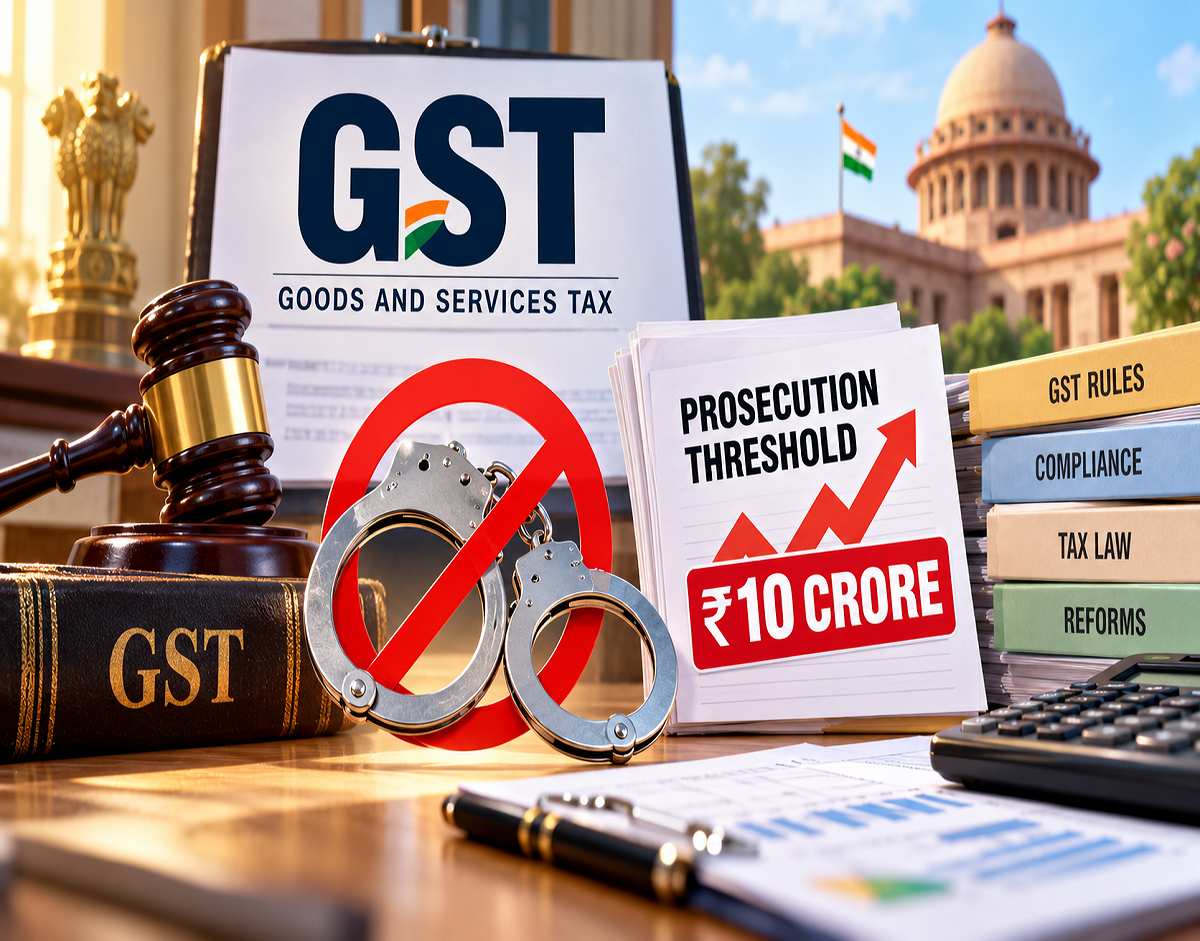
India's Goods and Services Tax (GST) framework could see significant changes if a set of proposals aimed at decriminalising certain tax-related offences moves forward. Among the key suggestions under consideration are removing the specific power of arrest available to GST authorities, increasing the monetary threshold for launching prosecution and reducing imprisonment terms for certain offences.
These changes have not yet been approved or implemented. According to the information available, the recommendations have been made by the GST Council's Law Committee and are expected to be considered by the GST Council.
If accepted and followed by the necessary legislative changes, the proposals could alter how serious GST violations are investigated and prosecuted. However, removing GST-specific arrest provisions would not necessarily mean that deliberate fraud or other criminal conduct would escape legal action.
Here is what the proposed changes could mean for taxpayers and businesses.
GST-Specific Arrest Provision Could Be Reconsidered
One of the most significant proposals concerns the power to arrest under the Central Goods and Services Tax (CGST) Act.
At present, Section 69 of the CGST Act gives the Commissioner the authority, subject to prescribed conditions, to order the arrest of a person believed to have committed specified offences punishable under Section 132.
These provisions can apply to serious alleged violations, including certain cases involving fake invoices, fraudulent input tax credit (ITC), wrongful refunds and deliberate tax evasion.
According to the report, the Law Committee has recommended reconsidering the separate arrest mechanism available under the GST framework as part of a broader effort to decriminalise certain GST offences.
If such a proposal is eventually approved and the law is amended accordingly, GST officials would no longer exercise arrest powers under Section 69 in the manner currently provided.
However, taxpayers should note that this remains a proposal under consideration, rather than an existing change in GST law.
Removal of GST Arrest Powers Would Not Make Fraud Legal
The possible removal of a GST-specific arrest provision should not be interpreted as immunity from criminal proceedings.
Legal experts cited in the report indicate that where the facts of a case justify criminal action, proceedings could potentially be initiated under generally applicable criminal laws, including provisions of the Bharatiya Nyaya Sanhita (BNS), depending on the nature and circumstances of the alleged offence.
In other words, the proposal appears aimed at changing how criminal enforcement is handled under the GST framework rather than eliminating accountability for deliberate fraud.
The broader objective behind decriminalisation measures is to distinguish tax administration and recovery proceedings from cases that warrant criminal prosecution.
Prosecution Threshold Could Increase From ₹5 Crore to ₹10 Crore
Another major recommendation concerns the monetary threshold for initiating prosecution in GST cases.
The report says the Law Committee has suggested raising the threshold from the existing ₹5 crore level to ₹10 crore for relevant offences involving tax evasion or wrongly availed input tax credit.
If the recommendation is accepted and implemented, prosecution rules for cases involving amounts below ₹10 crore could change.
The proposal could therefore reduce the number of cases that enter criminal prosecution solely under the existing monetary criteria.
However, the final scope would depend on the wording of any amendment ultimately approved. Taxpayers should not assume that an amount below ₹10 crore would automatically be exempt from penalties, recovery proceedings or every form of legal action.
Jail Terms for Certain GST Offences Could Also Be Reduced
The Law Committee has reportedly suggested lowering the maximum imprisonment periods prescribed for some GST offences.
Under the existing framework described in the report, Section 132 of the CGST Act provides different levels of punishment depending on the nature and monetary value of the offence.
For specified offences involving ₹5 crore or more, the maximum imprisonment can extend to five years. For amounts between ₹2 crore and ₹5 crore, the maximum term can extend to three years, while certain offences involving ₹1 crore to ₹2 crore can attract imprisonment of up to one year.
The committee has reportedly recommended reducing imprisonment periods in some of these categories.
No revised imprisonment structure should be treated as final until the GST Council considers the recommendations and the required legal changes are formally approved and notified.
Why Is the GST Law Committee Important?
The GST Council's Law Committee consists of officials representing the Centre and states. It examines legal and procedural issues arising under GST and recommends amendments, clarifications or other changes for consideration by the GST Council.
A recommendation from the Law Committee therefore represents an important stage in the policymaking process, but it does not by itself change the law.
Any major alteration to statutory provisions such as arrest powers, prosecution thresholds or imprisonment terms would need to go through the applicable approval and legislative process before becoming effective.
What Could Decriminalisation Mean for Businesses?
Businesses have frequently raised concerns about criminal proceedings arising from tax disputes, particularly where the distinction between an error, interpretation dispute and deliberate fraud may be contested.
A higher prosecution threshold and changes to arrest provisions could reduce the criminal-law consequences associated with some GST disputes if the proposals are ultimately adopted.
At the same time, authorities would continue to have mechanisms for assessing tax liabilities, recovering unpaid tax and imposing applicable interest and penalties. Serious fraudulent conduct could also remain exposed to criminal proceedings under other applicable laws where the facts support such action.
Therefore, decriminalisation should not be understood as the removal of GST compliance obligations.
What Happens Next?
The next important stage will be consideration of the Law Committee's recommendations by the GST Council.
The Council could accept the recommendations, modify them, seek further examination or decide not to proceed with particular proposals. Even after Council approval, statutory amendments may be necessary before some changes can take effect.
For businesses and taxpayers, the key point is that the reported changes to GST arrest powers, the ₹10 crore prosecution threshold and reduced jail terms are proposals at this stage and should not be treated as rules already in force.
Until any amendments are officially enacted and notified, taxpayers must continue to comply with the existing GST provisions.
Disclaimer: This article is for general information only. The proposals discussed above are subject to government and GST Council decisions and may change before implementation. Businesses and taxpayers should rely on official notifications and seek professional tax or legal advice for specific cases.