Business
Gold Drops 6% in September After Two-Month Rally: What Could Trigger the Next Price Rebound?
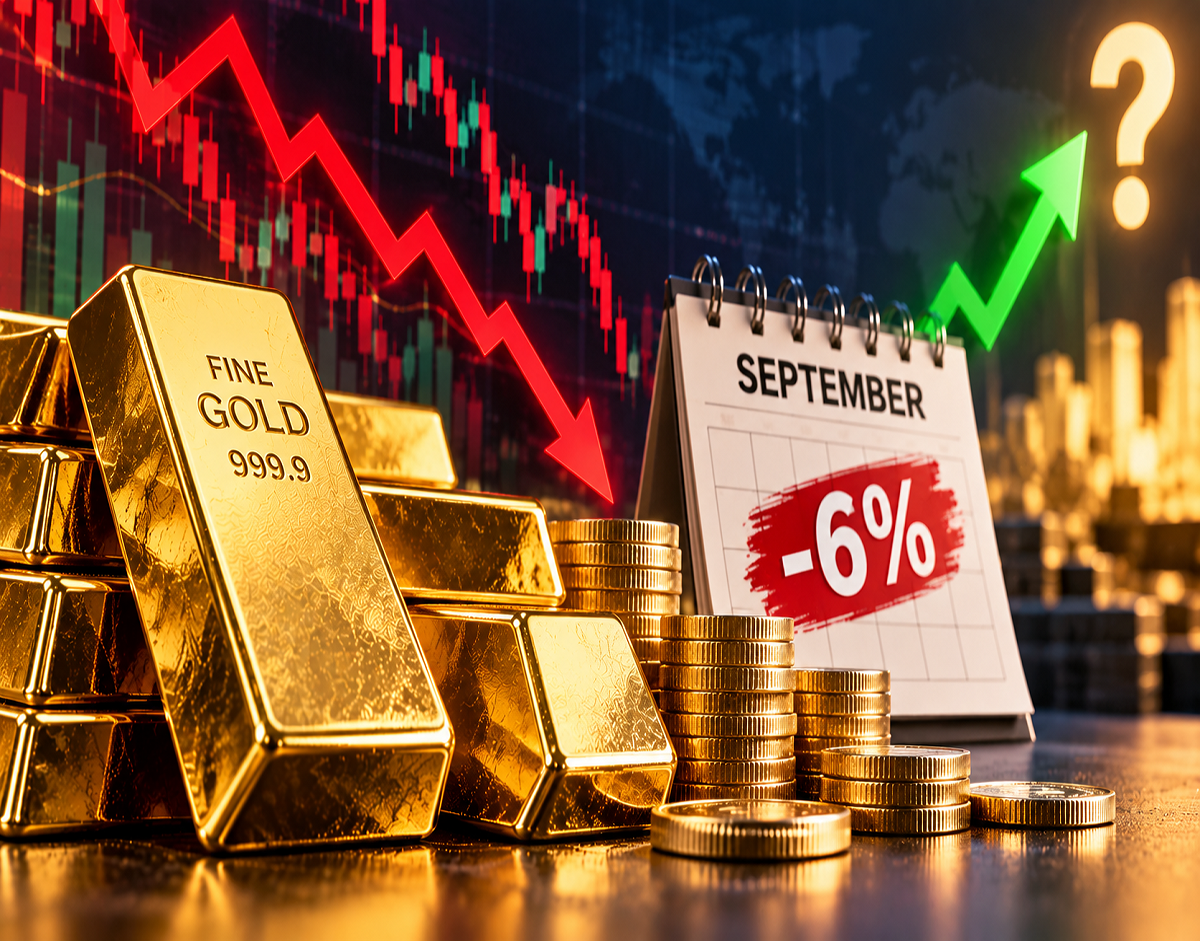
Gold's powerful rally has lost momentum in September, with prices correcting sharply as rising US Treasury yields and expectations of another Federal Reserve interest-rate increase weigh on the precious metal. After gaining around 11% during July and August, gold has fallen roughly 6% so far this month.
International gold prices have been hovering around $4,300 per ounce, while domestic prices have also faced sustained selling pressure. Commodity analysts believe the near-term environment could remain challenging unless there is a meaningful change in US monetary policy expectations, bond yields, the dollar or geopolitical developments.
The correction is particularly notable because geopolitical uncertainty and elevated crude oil prices would normally increase demand for gold as a safe-haven asset. This time, however, expensive energy is simultaneously raising inflation concerns and strengthening expectations that US interest rates could remain higher.
Why Has Gold Lost Momentum?
The sharp rise in US Treasury yields has emerged as one of the biggest headwinds for bullion.
Gold does not generate regular interest income. Therefore, when yields on government bonds rise, investors may find interest-bearing assets relatively more attractive. This increases the opportunity cost of holding gold and can put pressure on its price.
According to the figures cited in the source report, the US 30-year Treasury yield has approached 5.5%, reaching its highest level in more than two decades.
The 10-year US Treasury yield was also quoted at around 5.13%, described in the report as its highest level since 2007, while the 30-year yield was around 5.44%, its highest since 2004.
Analysts at Kotak Securities said higher yields have increased the opportunity cost associated with holding non-yielding gold. US fiscal concerns are also among the factors keeping bullion below its recent highs.
Fed Rate Expectations Add to Pressure
Expectations surrounding the Federal Reserve's October meeting have become another major driver for precious metals.
The source report cited CME FedWatch data showing markets pricing in a 68% probability of a 25-basis-point rate increase in October, up from 57% a week earlier.
Ashish Rajodia, Head of Commodities at PL Capital, cited a 68.1% probability of a quarter-point increase at the Federal Reserve's October 28 meeting, compared with a 31.9% probability of rates remaining unchanged.
These figures represent market-implied expectations at the time referenced in the source and can change quickly as new economic data becomes available.
Strong US economic indicators and concerns that expensive energy could keep inflation elevated have contributed to expectations of tighter monetary conditions.
Why Expensive Crude Isn't Helping Gold This Time
Higher crude oil prices can sometimes benefit gold because geopolitical tensions often encourage investors to seek safe-haven assets.
However, the current market dynamic is more complicated.
Concerns surrounding the Strait of Hormuz and tensions between the United States and Iran have supported energy prices. Higher crude prices can contribute to inflation, potentially giving the Federal Reserve another reason to maintain restrictive monetary policy or raise rates further.
That possibility has supported both the US dollar and Treasury yields—two developments that can work against gold.
As a result, the inflationary consequences of geopolitical tensions are currently competing with gold's traditional safe-haven appeal.
Central Bank Buying Could Limit the Downside
Despite near-term pressure, gold continues to receive structural support from central bank purchases.
The source report said central banks continued adding gold to their reserves even as prices remained elevated and monetary conditions stayed restrictive.
It cited the People's Bank of China as purchasing 20.2 tonnes of gold in August, described as its largest monthly purchase since late 2023. Poland was also identified as one of the significant gold buyers during the year.
European gold exchange-traded funds reportedly registered positive net inflows during August.
Continued institutional and central bank demand could potentially cushion deeper corrections, particularly if reserve managers use periods of price weakness to increase their gold holdings.
What Levels Should Gold Traders Monitor?
N.S. Ramaswamy, Head of Commodity and CRM at Ventura, believes gold could remain range-bound or experience further weakness in the near term if the dollar and bond yields stay strong.
For COMEX gold, he identified support in the $4,200-$4,250 per ounce region, while resistance was placed between $4,360 and $4,450.
For MCX gold, he identified support around ₹1,49,000-₹1,50,000 per 10 grams and resistance between ₹1,53,000 and ₹1,54,000.
Meanwhile, Rajodia said MCX Gold's December contract was trading around ₹1,50,500 per 10 grams after falling approximately ₹2,700, or 1.80%, during the period referenced in the report.
He identified another set of technical support levels at ₹1,48,000 and ₹1,46,000, while resistance was seen around ₹1,52,500 and ₹1,55,000.
These levels represent individual analysts' technical assessments and should not be considered guaranteed targets.
What Could Spark the Next Gold Rally?
Two developments could play an important role in determining gold's next major direction: the Federal Reserve's October interest-rate decision and developments surrounding US-Iran discussions related to the Strait of Hormuz.
A softer-than-expected signal from the Federal Reserve could potentially bring Treasury yields down and weaken the dollar. Such a combination could provide support to gold and allow prices to challenge higher resistance zones.
Progress in geopolitical negotiations could also influence crude oil prices and inflation expectations. If energy prices ease significantly, markets could reduce expectations of aggressive monetary tightening.
On the other hand, persistently hawkish signals from the Fed, rising Treasury yields or renewed energy-related inflation concerns could keep gold under pressure.
Gold Outlook Remains Mixed
Gold currently faces competing forces.
Central bank purchases and its traditional role as a store of value continue to provide longer-term support. At the same time, elevated Treasury yields, a firm US dollar and expectations of tighter Federal Reserve policy are creating significant near-term resistance.
For another sustained upward move to emerge, markets may need to see a decline in bond yields, weakness in the dollar, a shift toward a softer Federal Reserve policy stance or a significant change in geopolitical risk.
Until one or more of those catalysts emerge, gold could remain volatile, with investors closely tracking US economic data, interest-rate expectations, crude oil prices and developments in West Asia.
Disclaimer: Market forecasts, support and resistance levels, and interest-rate expectations mentioned in this article are based on expert assessments