
Health
Does Tulsi Really Boost Immunity? Here's What Research Says About Its Benefits, Right Dosage, and Safety
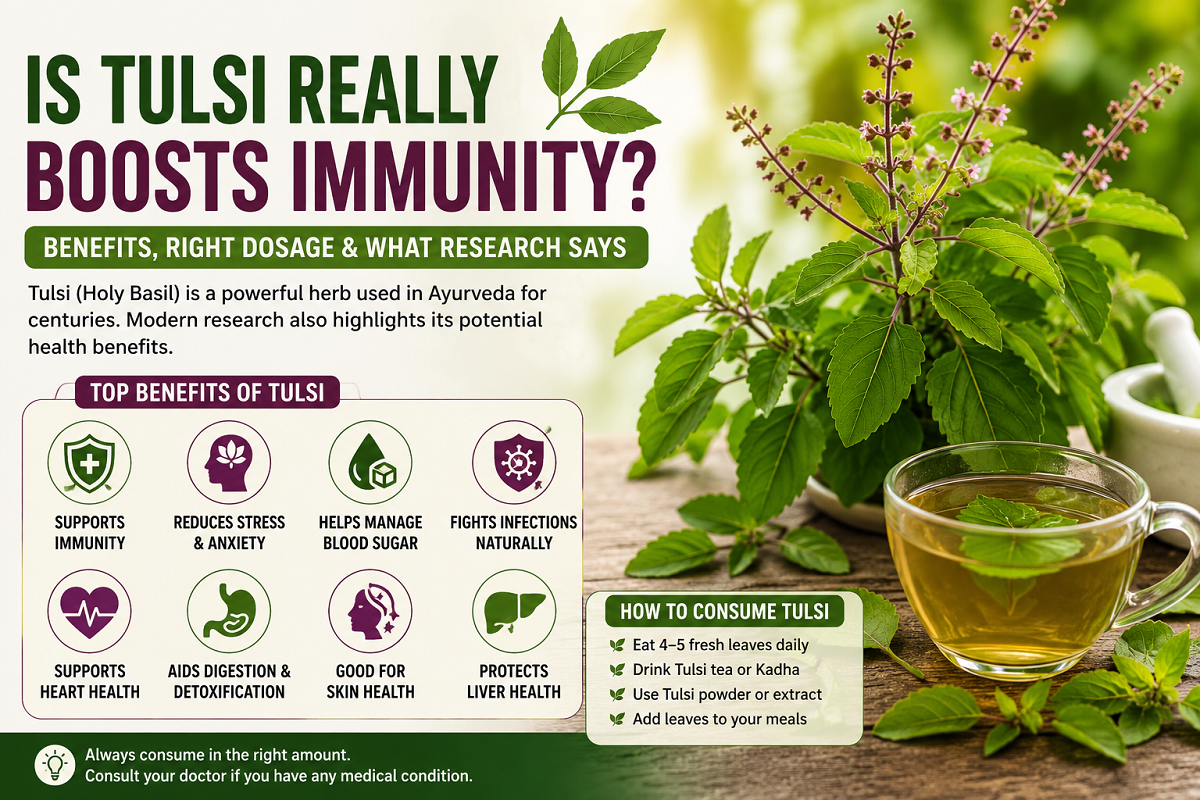
Tulsi Benefits: Tulsi, also known as Holy Basil (Ocimum tenuiflorum), has been an important medicinal herb in Ayurveda for centuries. Rich in bioactive compounds like eugenol, ursolic acid, rosmarinic acid, and flavonoids, Tulsi is widely consumed as fresh leaves, herbal tea, or kadha. While many people consider it an immunity booster, experts say its health benefits are promising but should not be exaggerated.
Why is Tulsi considered beneficial?
Tulsi contains several natural compounds with antioxidant, anti-inflammatory, antimicrobial, and adaptogenic properties. According to published research, these compounds may help protect cells from oxidative stress, support the body's natural immune response, and reduce inflammation. However, scientists note that more large-scale human studies are needed to confirm many of these benefits.
Health benefits of Tulsi
1. May support the immune system
Tulsi contains polyphenols and other bioactive compounds that may help support the normal functioning of the immune system. Experts describe Tulsi as an immunomodulator, meaning it may help regulate immune responses rather than dramatically "boost" immunity.
2. Rich in antioxidants
Compounds such as eugenol and rosmarinic acid help fight oxidative stress by neutralizing free radicals. This may contribute to overall cellular health and reduce damage caused by oxidative stress.
3. May help reduce inflammation
Tulsi contains ursolic acid, orientin, and other plant compounds that possess anti-inflammatory properties. These compounds may help lower inflammation in the body, although stronger clinical evidence is still required.
4. May support heart health
Some research suggests that Tulsi may help improve cardiovascular health by reducing oxidative stress and supporting healthy cholesterol levels. However, it should not be considered a treatment for heart disease.
5. May help manage blood sugar
Several small studies indicate that Tulsi extract may help improve blood sugar control in some individuals. People with diabetes should consult their healthcare provider before using Tulsi regularly, especially if they are already taking diabetes medication.
6. May help reduce stress
Tulsi is also regarded as an adaptogenic herb, meaning it may help the body cope with stress and anxiety. Some studies suggest it can support mental well-being, although further research is needed.
What does scientific research say?
Research published in scientific and medical literature suggests that Tulsi may:
- Support normal immune function
- Help reduce oxidative stress
- Promote heart health
- Assist in blood sugar management
- Reduce inflammation
- Help the body adapt to stress
However, researchers emphasize that current evidence is still limited, and Tulsi should not be considered a replacement for prescribed medicines or medical treatment.
How much Tulsi can you consume?
According to Ayurvedic experts, the recommended number of fresh Tulsi leaves may vary depending on an individual's body constitution:
| Body Type | Suggested Daily Intake |
|---|---|
| Kapha | 10–12 leaves |
| Vata | 4–5 leaves |
| Pitta | 2–3 leaves |
A healthy adult can generally consume 4–5 fresh Tulsi leaves daily in moderation.
Ways to consume Tulsi
Tulsi can be included in your routine in several ways:
- Chew fresh Tulsi leaves
- Drink Tulsi tea
- Prepare Tulsi kadha
- Add fresh leaves to meals
- Use Tulsi powder or extract only under medical guidance
Experts advise against taking herbal supplements without consulting a healthcare professional.
Who should be cautious?
Health experts recommend consulting a doctor before consuming Tulsi regularly if you:
- Are pregnant or breastfeeding
- Take blood-thinning medications
- Have diabetes or high blood pressure and are on medication
- Are scheduled for surgery
- Experience allergies, skin rashes, or breathing problems after consuming Tulsi
People taking prescription medicines should seek medical advice before adding Tulsi to their daily routine because it may interact with certain medications.
Can Tulsi cure diseases?
Doctors stress that Tulsi is not a cure for diseases such as diabetes, hypertension, cancer, or chronic infections. While it may support overall health, it should never replace prescribed medicines or medical treatment. Anyone experiencing persistent symptoms should consult a qualified healthcare professional instead of relying solely on home remedies.
Final takeaway
Tulsi is a nutrient-rich medicinal herb with promising health benefits supported by traditional Ayurvedic use and emerging scientific research. It may help support immunity, reduce stress, fight oxidative damage, and promote overall wellness when consumed in moderation. However, calling it a miracle cure or guaranteed immunity booster would not be scientifically accurate. The best approach is to use Tulsi as part of a balanced diet and healthy lifestyle while continuing appropriate medical care whenever needed.