Technology
Digital Ration Services 2026: Government Focuses on Easier Access and Greater Transparency in Food Distribution
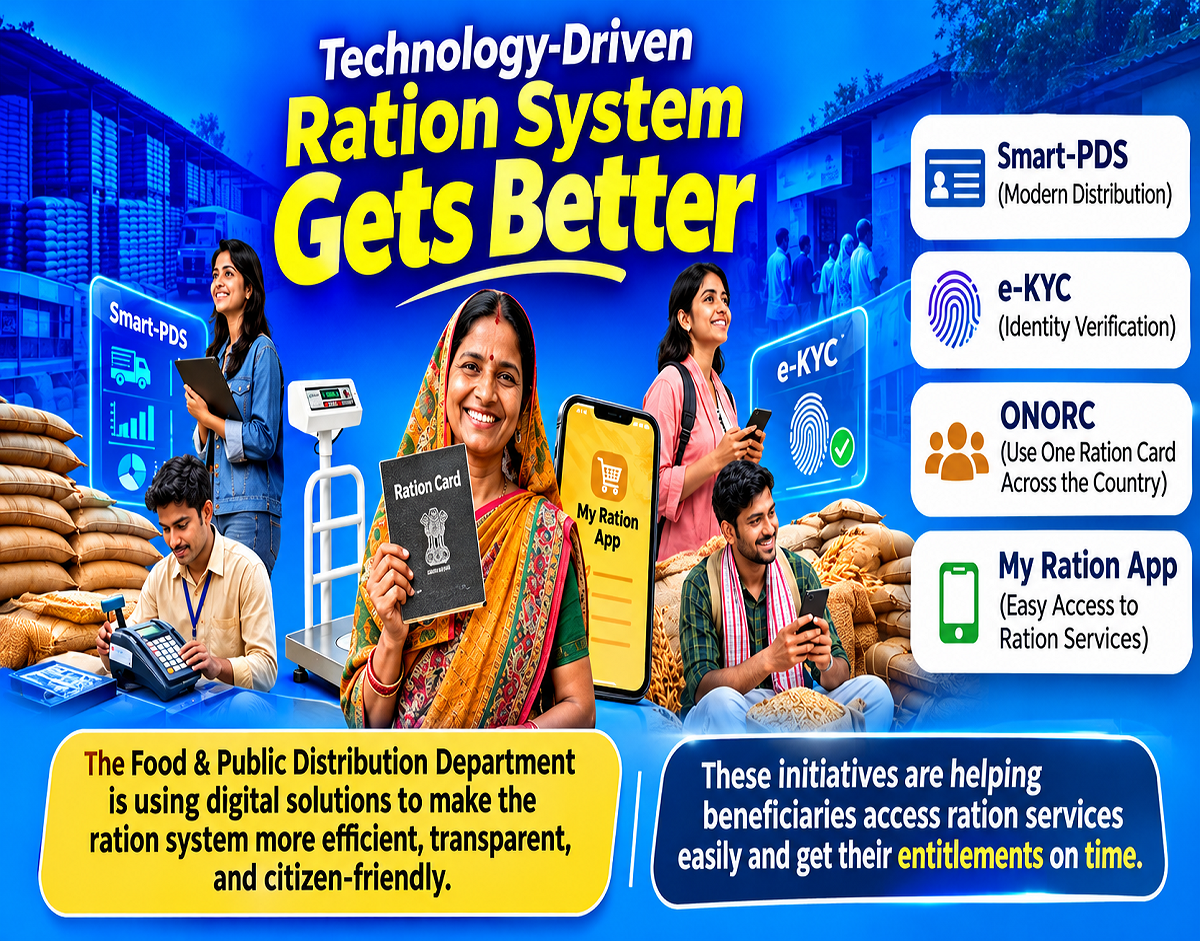
Digital Ration Services 2026: The Central Government is focusing on digital technology to make ration-related services more accessible, transparent and efficient for millions of beneficiaries across India. The Department of Food and Public Distribution has highlighted the importance of digital facilities in improving the delivery of foodgrains and strengthening the country's Public Distribution System (PDS).
In an official social media communication shared on November 4, 2026, the department explained that efforts are being made to simplify access to ration services through digital solutions. The initiative reflects the government's broader objective of using technology to improve public service delivery and strengthen food security.
Digital systems can help authorities manage beneficiary information, monitor foodgrain supplies and improve coordination between different levels of the distribution network.
Government Emphasises Digital Transformation of Ration Services
The Department of Food and Public Distribution has underlined the role of technology in making ration services more convenient for citizens.
India's Public Distribution System supports eligible households by providing foodgrains under government food security programmes. Managing this extensive network requires coordination among government agencies, storage facilities, transport operators and Fair Price Shops.
Digital technology can simplify several administrative processes involved in foodgrain distribution.
Electronic records, computerized supply management and digital monitoring facilities can help authorities maintain accurate information and identify potential irregularities.
The department's latest message focuses on improving the overall effectiveness of foodgrain supply and distribution through better use of technology.
How Digital Technology Can Improve Ration Distribution
Technology is increasingly important in managing large public welfare programmes. In the ration distribution system, digital facilities can support both beneficiaries and government authorities.
Some major benefits of digital ration services include:
- Easier access to information: Beneficiaries can use available official digital platforms to obtain information about ration-related services.
- Improved transparency: Digital records can help authorities monitor foodgrain allocation and distribution.
- Better supply management: Computerized systems can support the movement of foodgrains from storage facilities to distribution points.
- Accurate beneficiary records: Electronic databases can help maintain updated household and ration card information.
- Greater accountability: Digital monitoring can assist authorities in identifying discrepancies and improving service delivery.
The availability of individual services may vary depending on the state government and its digital infrastructure.
Digital Ration Card Services: What Facilities Are Available?
Several states already provide online facilities related to ration cards and food distribution.
Depending on the state, beneficiaries may be able to access services such as checking ration card details, viewing beneficiary information, tracking application status or locating nearby Fair Price Shops.
Some government platforms also provide information about foodgrain entitlements and grievance redressal mechanisms.
These services can reduce the need for repeated visits to government offices, particularly when information is available through official websites or mobile applications.
However, not every digital facility is available in every state. Citizens should verify the services offered by their respective food and civil supplies departments.
Role of Technology in the Public Distribution System
The Public Distribution System is one of India's major food security mechanisms.
It facilitates the distribution of foodgrains to eligible households through a nationwide network of Fair Price Shops.
Under the National Food Security Act (NFSA), eligible beneficiaries receive foodgrain entitlements according to the applicable provisions of the law and government schemes.
Managing this system involves several stages, including procurement, storage, transportation, allocation and distribution.
Digital monitoring tools can help authorities track these processes more effectively.
For example, electronic Point of Sale (ePoS) devices are used at many ration shops to record distribution transactions and support beneficiary authentication.
Similarly, computerized records can assist government departments in monitoring foodgrain stocks and allocations.
These technologies are intended to improve efficiency while helping authorities maintain reliable distribution records.
One Nation One Ration Card Supports Beneficiary Mobility
Another important digital initiative associated with India's food distribution network is the One Nation One Ration Card (ONORC) system.
This facility enables eligible beneficiaries covered under the National Food Security Act to access their entitled foodgrains from participating Fair Price Shops outside their home location, subject to applicable authentication and portability procedures.
The system is particularly useful for migrant workers and families who temporarily move to another city or state for employment.
Technology plays an essential role in supporting portability by connecting beneficiary information across participating distribution systems.
The department's November 4 communication does not announce any new ONORC rule, but the existing programme illustrates how digital infrastructure can improve access to food security benefits.
How Can Ration Cardholders Access Official Digital Services?
Citizens seeking ration-related information should use authorized government platforms.
The National Food Security Portal provides information about food security programmes, ration card services and links to state-level systems.
Beneficiaries can follow these general steps:
- Visit the official National Food Security Portal at https://nfsa.gov.in/.
- Look for the relevant ration card or state food department section.
- Select the appropriate state or Union Territory.
- Open the available service related to ration card information, beneficiary records or other facilities.
- Follow the instructions provided on the official state portal.
Users should remember that online services, login requirements and verification procedures differ between states.
They should also avoid sharing Aadhaar OTPs, passwords or other sensitive information with unauthorized websites or individuals.
Digital Facilities Can Strengthen Food Security
The wider use of technology can improve coordination between government departments and food distribution agencies.
Digital records may also help identify supply-related issues and support timely administrative action.
For beneficiaries, easier access to information can make ration services more convenient and reduce uncertainty about available facilities.
However, effective implementation also requires reliable connectivity, functioning equipment and assistance for people who may not be comfortable using digital platforms.
Maintaining accessible offline support remains important, particularly for elderly beneficiaries and residents of areas with limited internet connectivity.
What Is the Latest Government Update for Ration Cardholders?
The Department of Food and Public Distribution's November 4, 2026, message highlights ongoing efforts to improve ration services through digital facilities and transparent administration.
Importantly, the communication does not announce a new ration card application process, a nationwide deadline or changes to existing foodgrain entitlements.
Instead, it emphasizes the importance of technology in strengthening the foodgrain supply and distribution network.
Ration cardholders should continue checking official government platforms for state-specific service updates and instructions.
The government's broader focus is on making ration services easier to access while improving transparency, accountability and efficiency in the Public Distribution System.
Source Credit: Department of Food & Public Distribution, Government of India — Official X (Twitter) Post, November 4, 2026.
Original Source: https://x.com/fooddeptgoi/status/2117880429533696032
Tighten the article’s repeated sections