Business
Car vs Investment 2026: Buy a ₹10 Lakh Car or Invest the Money? See the 5-Year Financial Comparison
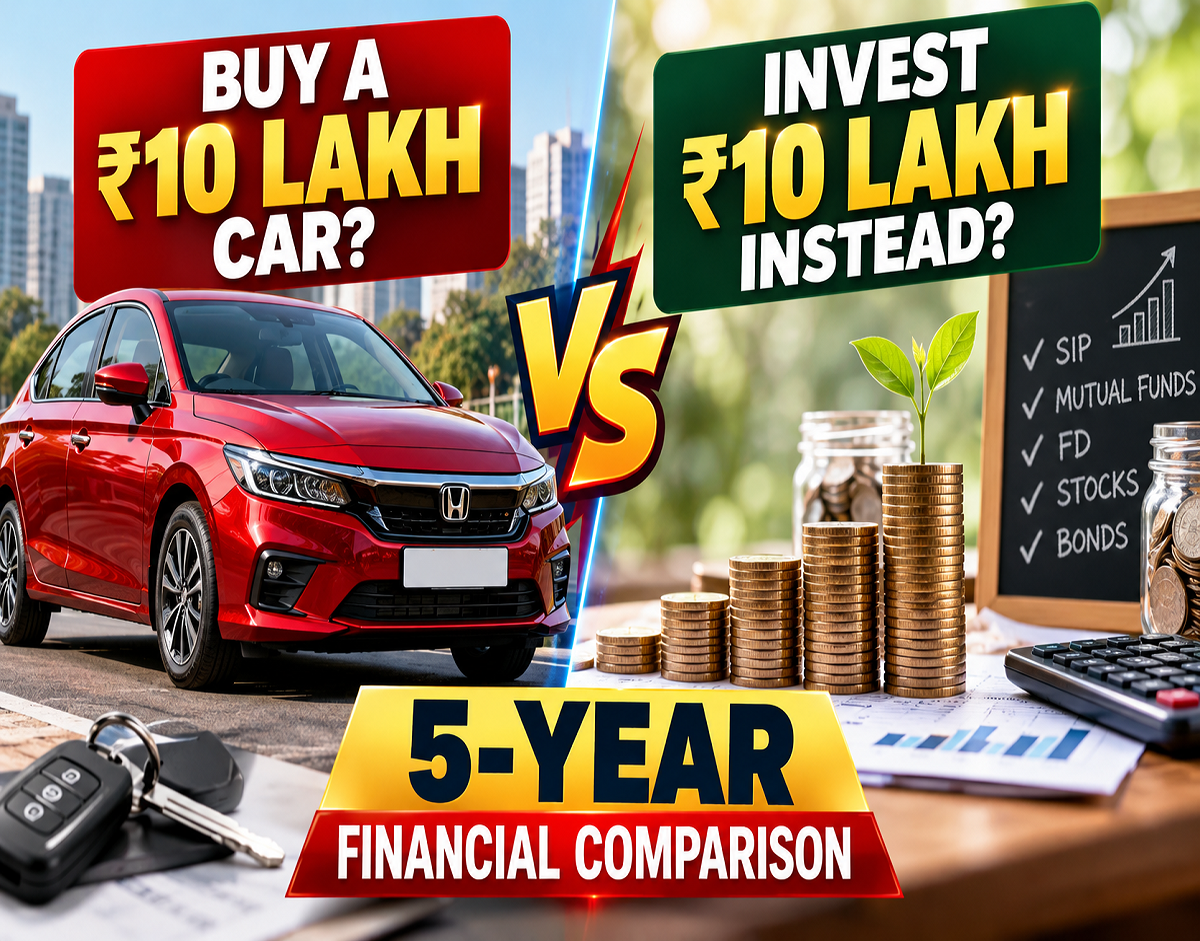
Car vs Investment Calculator 2026: Buying a new car is an important financial decision for many Indian families. While owning a vehicle offers convenience, independence and comfort, it also involves expenses that continue long after the initial purchase. On the other hand, investing the same money could help build wealth over time.
Suppose you have ₹10 lakh available today. Should you use the entire amount to purchase a car, invest it for five years, or take a car loan while keeping your savings invested?
The answer depends on your financial priorities, transportation needs, investment returns and borrowing costs. A five-year calculation can help illustrate the potential financial impact of each decision.
₹10 Lakh Investment Calculator: How Much Could Your Money Grow in 5 Years?
If you invest ₹10 lakh instead of purchasing a vehicle, the future value will depend on the annual return earned.
For illustration, consider three hypothetical annual returns: 8%, 10% and 12%.
Assuming annual compounding, the investment could grow to approximately ₹14.69 lakh, ₹16.11 lakh or ₹17.62 lakh, respectively, after five years.
| Annual Return | Initial Investment | Value After 5 Years | Estimated Gain |
|---|---|---|---|
| 8% | ₹10,00,000 | ₹14,69,328 | ₹4,69,328 |
| 10% | ₹10,00,000 | ₹16,10,510 | ₹6,10,510 |
| 12% | ₹10,00,000 | ₹17,62,342 | ₹7,62,342 |
These figures assume a constant annual return, with no withdrawals, taxes or investment-related expenses.
Mutual funds and equity investments do not provide guaranteed returns. Actual outcomes may be higher or lower, including the possibility of losing money.
Interactive Calculator: Estimate Your Investment Value After Five Years
Starting investment
₹5 lakh
₹10 lakh
Assumed annual return
10%
Investment duration
5 years
Estimated future value
₹16,10,510
Estimated investment gain
₹6,10,510
Initial investment
Projected gain
Illustrative annual compounding only. Returns are not guaranteed; taxes, fees and inflation are excluded.
Buying a ₹10 Lakh Car: What Will It Cost Over Five Years?
A vehicle is generally a depreciating asset, meaning its resale value tends to decline as it gets older.
Apart from depreciation, car owners must also budget for insurance, maintenance, repairs, fuel and other operating expenses.
Consider an example in which a person purchases a car for ₹10 lakh and uses it for five years.
Assume the vehicle's resale value falls to ₹5 lakh after that period.
This represents depreciation of ₹5 lakh.
Now add estimated insurance expenses of ₹1 lakh and servicing and maintenance costs of ₹75,000 over five years.
| Expense Category | Estimated Amount |
|---|---|
| Initial car purchase | ₹10,00,000 |
| Resale value after 5 years | ₹5,00,000 |
| Depreciation | ₹5,00,000 |
| Insurance over 5 years | ₹1,00,000 |
| Servicing and maintenance | ₹75,000 |
| Total 5-year ownership cost | ₹6,75,000 |
The estimated five-year ownership cost comes to ₹6.75 lakh before fuel, parking, tolls, financing charges and other expenses.
Actual depreciation depends on the vehicle model, condition, mileage, market demand and resale trends.
Car vs Investment: How Big Could the Financial Difference Be?
Consider two hypothetical choices.
In the first scenario, a person invests ₹10 lakh for five years and earns an annual compounded return of 10%.
The investment grows to approximately ₹16.11 lakh.
In the second scenario, the person purchases a ₹10 lakh car outright. After five years, the vehicle has an estimated resale value of ₹5 lakh.
Illustrative value comparison after five years
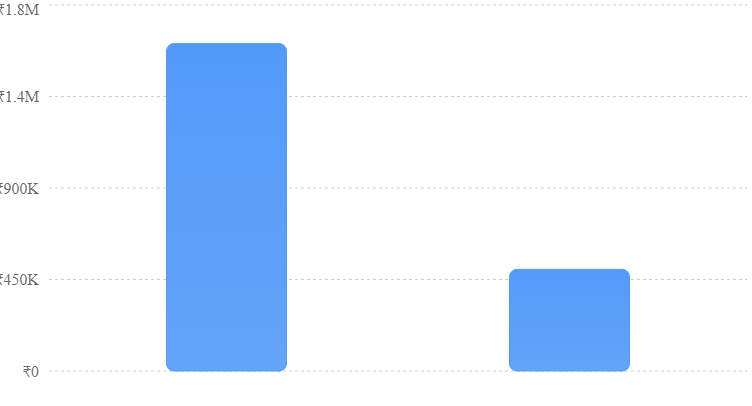
The comparison excludes the transport costs of the investor and the usage benefits of the car owner.
The difference between the two asset values is approximately ₹11.11 lakh.
If the car owner's additional insurance and maintenance expenses of ₹1.75 lakh are considered, the illustrative financial gap increases to approximately ₹12.86 lakh.
However, this is not a like-for-like comparison of total financial outcomes.
The person who invests the money still needs transportation and may spend money on taxis, public transport or vehicle rentals.
Meanwhile, the car owner receives five years of personal transportation, convenience and time savings.
These benefits and alternative travel expenses must be included for a fair comparison.
Should You Take a Car Loan and Invest ₹10 Lakh Instead?
Another possibility is to invest the available ₹10 lakh while financing the car through a bank loan.
This approach allows the investor to retain capital, but it also creates a monthly repayment obligation.
For example, consider a ₹10 lakh car loan with an assumed annual interest rate of 9% and a five-year repayment period.
The approximate EMI would be ₹20,758 per month.
Over 60 months, the borrower would repay approximately ₹12.45 lakh, including around ₹2.45 lakh in interest.
The actual EMI will depend on the lender's interest rate, loan structure, processing charges and repayment terms.
Importantly, the borrower must have sufficient monthly income to service the loan. The investment return is uncertain, while loan repayments are contractual obligations.
A comparison must also account for the opportunity cost of using monthly income for EMIs rather than investing it.
When Does Buying a Car Make Financial Sense?
A car should not be evaluated solely as an investment because its primary purpose is transportation.
For someone who travels frequently for work, has family responsibilities or lives in an area with limited public transport, owning a car may provide meaningful practical benefits.
A personal vehicle can reduce dependence on external transportation, improve convenience and save time.
In such situations, the financial cost may be justified by the value received from regular use.
However, buying an expensive vehicle may create financial pressure if it consumes emergency savings or prevents progress towards other important goals.
When Might Investing Be the Better Choice?
Investing may be more suitable when purchasing a car is optional rather than essential.
If existing transportation arrangements are adequate, delaying a vehicle purchase could allow savings to grow.
The decision may be particularly relevant for individuals working towards long-term goals such as retirement, children's education or home ownership.
Another possible approach is to purchase a less expensive car and invest the remaining funds.
For example, someone with ₹10 lakh could consider a ₹6 lakh vehicle and retain ₹4 lakh for savings or investments, depending on their financial situation.
This offers a compromise between mobility and wealth creation.
Car Purchase vs Investment: Five Important Factors to Consider
Before deciding, buyers should evaluate the following:
- Transportation requirements: Is a personal vehicle necessary for daily life?
- Emergency savings: Will purchasing the car leave enough money for unexpected expenses?
- Monthly affordability: Can the household comfortably manage fuel, insurance, maintenance and possible EMIs?
- Investment horizon: Can the money remain invested for at least five years without being needed?
- Financial goals: Will the purchase affect retirement planning, education savings or other priorities?
Considering these factors can lead to a more balanced decision than comparing projected investment returns with car depreciation alone.
Final Verdict: Buy a ₹10 Lakh Car or Invest the Money?
The five-year calculations demonstrate that investing ₹10 lakh at a hypothetical 10% annual return could grow the amount to approximately ₹16.11 lakh.
Meanwhile, a ₹10 lakh car may have a resale value of around ₹5 lakh after five years, with additional insurance and maintenance expenses.
However, investment returns are uncertain, while a vehicle provides practical benefits that cannot be captured through resale value alone.
If a car is essential and affordable, purchasing one may be reasonable. If the purchase is discretionary and long-term financial goals are more important, investing or choosing a lower-priced vehicle may deserve consideration.
The most appropriate choice is the one that balances transportation needs, financial security and long-term wealth creation.
Disclaimer: All calculations are illustrative estimates, not guaranteed outcomes. Investment returns, car resale values, interest rates and ownership expenses may vary. This article is for educational purposes and does not constitute personalised financial advice.