Business
Bike Parcel by Train: How to Send Your Motorcycle by Rail, Documents, Packing and Fuel Rules Explained
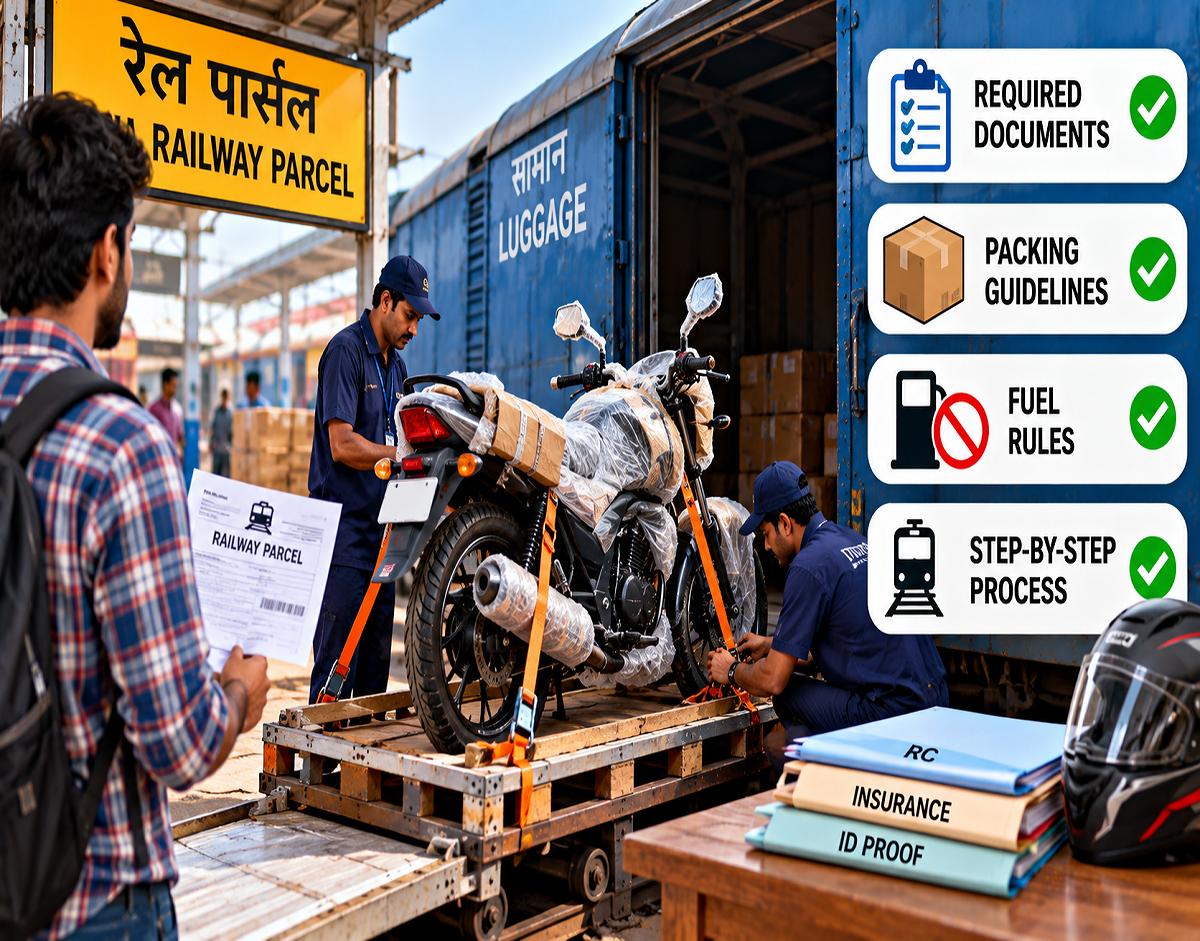
Moving a motorcycle or scooter from one city to another can become expensive, particularly when relocating for a job, education or a permanent change of residence. For many people, transporting a two-wheeler through Indian Railways' parcel or luggage service can be a practical alternative to hiring a private vehicle transporter.
However, sending a bike by train involves more than simply taking the vehicle to a railway station. Passengers need to follow rules relating to booking, documents, packing, fuel and vehicle details.
Failing to meet the applicable requirements can delay the booking or create problems during inspection. Understanding the process beforehand can also help customers avoid unnecessary payments to unofficial agents or packing vendors.
Here is a detailed look at what you should know before transporting your bike by train.
Bike Can Be Sent as Parcel or Luggage
Indian Railways provides different ways to transport a two-wheeler depending on whether the owner is also travelling.
A bike can generally be booked as parcel when the vehicle needs to be transported independently.
If the owner is travelling on the same train or in connection with their journey, the vehicle may be booked as luggage, subject to railway rules and availability.
The booking conditions, documentation and charges can differ between parcel and luggage, so customers should confirm the appropriate category at the railway parcel office.
Pack Your Bike Properly Before Booking
Packing is an important part of the bike-transport process because the vehicle needs protection while being loaded, transported and unloaded.
The source article notes that private packing vendors near some railway parcel offices may ask for around ₹400 to ₹500 for packing.
This should not be treated as a standard Indian Railways packing fee. Charges demanded by private vendors can vary by station, location, vehicle and type of packing material.
One way to reduce expenses is to arrange suitable packing yourself where permitted.
Materials such as jute, cardboard and protective wrapping can be used to cover vulnerable areas of the motorcycle. Special attention should be given to the fuel tank, headlamp, indicators and other parts that can be damaged during handling.
The registration and destination details may also need to remain clearly identifiable as required during booking.
Petrol Tank Must Be Empty
One of the most important safety requirements when transporting a petrol-powered motorcycle is the fuel condition.
The vehicle should be presented in accordance with Indian Railways' safety requirements regarding inflammable fuel.
Passengers should drain petrol from the tank before handing over the bike for transportation.
Petrol is highly inflammable, and carrying a fuel-filled motorcycle in a railway parcel or luggage van can create a serious fire hazard.
If fuel is found during inspection, railway staff may refuse to accept the vehicle or take action under the applicable rules.
Therefore, riders should not arrive at the parcel office with a recently filled fuel tank.
Don't Assume You Can Leave a Small Amount of Petrol
A common mistake is assuming that leaving a small quantity of petrol in the tank will not matter.
For railway transportation, customers should follow the applicable fuel-safety requirements strictly rather than estimating how much petrol might be acceptable.
Plan the trip to the station accordingly. If the bike needs to be ridden to the railway station, make arrangements to drain the remaining fuel safely before handing over the vehicle.
Likewise, after reaching the destination, the owner may need to arrange fuel before riding the motorcycle away.
Documents Needed to Send a Bike by Train
Customers should carry the required vehicle and identity documents when booking a motorcycle.
Documents commonly required include:
| Document | Why It May Be Required |
|---|---|
| Registration Certificate (RC) | Establishes vehicle registration and ownership details |
| Valid Insurance | Confirms required vehicle insurance |
| Government ID | Establishes the identity of the person booking the vehicle |
| Aadhaar/PAN or Accepted ID | May be used for identity/KYC purposes as applicable |
| Authorisation/NOC | May be needed if the vehicle belongs to someone else |
| Journey Ticket | Relevant where the bike is booked as luggage with the passenger |
Requirements can differ depending on whether the motorcycle is being booked as luggage or parcel and on the circumstances of the booking.
Customers should check the exact documentation requirements at the originating parcel office before arriving with the vehicle.
What If the Bike Is Not Registered in Your Name?
Additional documentation may be necessary if the person booking the motorcycle is not its registered owner.
The supplied information advises carrying a No Objection Certificate or authorisation from the registered owner.
The booking person should also keep the original or accepted vehicle documents and identity proof available as required.
This helps establish that the vehicle is being transported with the owner's permission.
Instead of relying solely on a handwritten authorisation, customers should confirm the exact documentation accepted by the railway parcel office before the booking date.
Reach the Parcel Office Well Before Departure
Do not plan to reach the station just a few minutes before the train leaves.
The supplied guidance recommends reaching the railway parcel office approximately three to four hours before the train's scheduled departure.
This provides time for documentation, inspection, weighing or assessment, packing verification, preparation of booking paperwork and other formalities.
Actual cut-off times and booking procedures can vary by station and service, so passengers should confirm the requirements in advance.
During festivals or other high-demand periods, allowing additional time can be particularly useful.
How Are Bike Parcel Charges Calculated?
There is no single nationwide flat amount such as ₹500 or ₹1,000 for transporting every motorcycle.
The transportation charge can depend on factors including the distance, vehicle weight, declared value and applicable railway tariff or booking category.
Packing expenses may be separate, particularly if a private vendor is used.
This is why someone transporting a lightweight scooter for a relatively short distance may pay a different amount from a customer sending a heavier motorcycle across several states.
Passengers should obtain the official booking receipt and check the amount charged by the railway.
Don't Confuse Packing Charges With Railway Freight
This distinction can help passengers avoid unnecessary expenses.
The amount charged by a private person to wrap or pack the motorcycle is not necessarily part of the official railway transportation charge.
Railway freight or luggage charges should be reflected in the official booking process and receipt.
If someone outside the authorised booking counter demands an unusually high amount, customers should first determine whether the charge is an official railway fee or an optional third-party service.
Declare the Bike's Value Carefully
Vehicle-value declaration can be relevant when booking a motorcycle for transportation.
The declared value may affect railway liability and applicable charges under the rules.
Owners should provide accurate information instead of arbitrarily declaring a lower value merely to reduce charges.
They should also understand the railway's liability conditions in the event of loss or damage and retain all booking documents until the vehicle has been collected at the destination.
Check the Bike Before Handing It Over
Before the vehicle is booked, take a few minutes to inspect it.
Photographs of the motorcycle from different angles can provide a record of its condition before transportation.
Loose accessories should be removed or secured where possible. Mirrors, indicators and other protruding components deserve additional protection during packing.
Do not leave valuable personal belongings, documents or accessories unsecured on the motorcycle.
Keep Your Parcel Receipt Safe
Once the booking process has been completed, the railway provides the relevant receipt or booking documentation.
Keep this document safe throughout the transportation period.
It can be required when tracking or collecting the motorcycle at the destination.
Customers should also verify that important details—including the vehicle registration number and destination—are correctly recorded before leaving the booking counter.
Collecting Your Motorcycle at the Destination
After the bike reaches the destination station, the owner or authorised person should complete the prescribed delivery process.
Carry the required booking receipt and identification.
It is advisable to collect the motorcycle within the permitted period because storage or other charges may become applicable if a parcel remains uncollected beyond the allowed time.
Before leaving the station, inspect the vehicle and check its condition.
Simple Ways to Avoid Unnecessary Bike Transport Costs
Several precautions can make railway bike transportation smoother and potentially cheaper:
- Arrange suitable packing yourself where permitted instead of automatically accepting the first private vendor's price.
- Drain the fuel as required before handing over the motorcycle.
- Carry complete RC, insurance and identification documents.
- Keep proper authorisation if the bike belongs to another person.
- Reach the parcel office well before the required booking cut-off.
- Pay official railway charges through the authorised booking process and retain the receipt.
- Avoid paying unofficial intermediaries merely to complete standard paperwork.
Bike Parcel by Train: What You Should Remember
Sending a motorcycle by train can be an economical option for people relocating between cities, but preparation is essential.
The bike needs to comply with railway safety requirements, particularly those concerning petrol or other inflammable fuel. Customers should also arrange appropriate packing and carry the required RC, insurance and identity documents.
If the vehicle is registered in someone else's name, additional authorisation may be required.
Most importantly, passengers should distinguish between official railway transportation charges and fees demanded by private packing vendors or intermediaries.
Arriving at the parcel office several hours in advance, completing the paperwork through authorised channels and keeping the booking receipt safe can make the entire process—from handing over the bike to collecting it at the destination—much smoother.