Technology
UPI ₹2,000 Rule Explained: Will You Pay a Fee for Sending ₹5,000 to a Friend? Here’s What Users Should Know
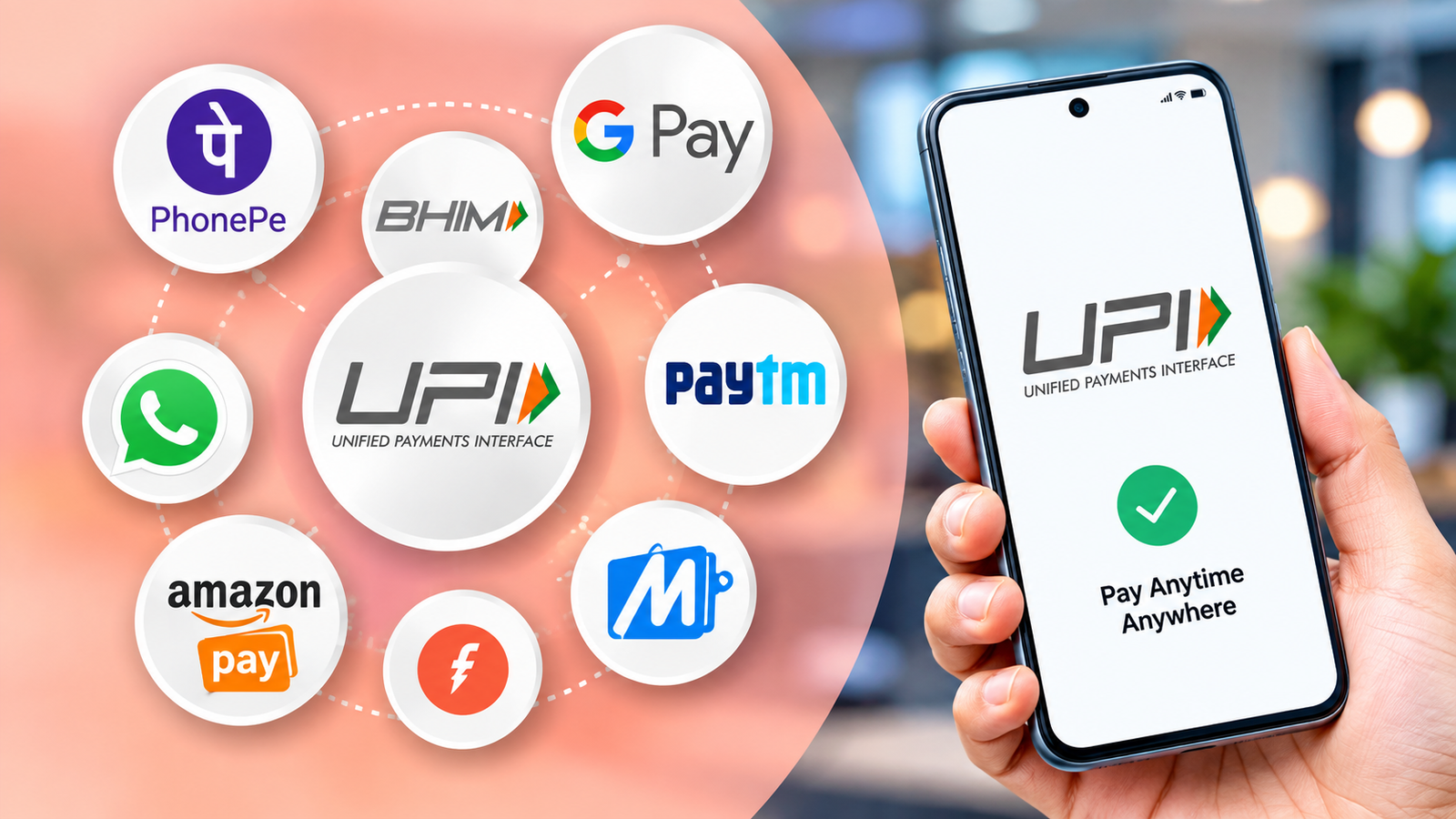
A fresh discussion around the ₹2,000 threshold for UPI payments has left many digital-payment users wondering whether larger transactions are about to become expensive. One common question is whether sending ₹5,000, ₹10,000 or another higher amount to a friend or family member through UPI will now attract an additional charge.
For ordinary consumers, the most important point is that crossing ₹2,000 does not automatically make a UPI transaction chargeable. The ₹2,000 figure being discussed needs to be understood in the context of merchant payments and Merchant Discount Rate (MDR), rather than as a universal fee threshold for every UPI transfer.
This distinction is particularly important because UPI is used for two very different purposes: transferring money between individuals and making payments to businesses.
Will Sending ₹5,000 to a Friend Attract a UPI Fee?
Suppose you use a UPI-enabled app to transfer ₹5,000 directly from your bank account to a friend's bank account.
The fact that the transaction exceeds ₹2,000 does not, by itself, mean an MDR will be added simply because of the amount.
Such a transfer is generally classified as a person-to-person, or P2P, transaction. This is different from paying a business or merchant for goods and services.
Therefore, consumers should not assume that every transaction above ₹2,000 will suddenly become chargeable.
Then Why Is Everyone Talking About ₹2,000?
The confusion arises from discussions concerning the treatment of certain merchant transactions.
The ₹2,000 threshold is relevant in the context of the regulatory framework around merchant payments and the possibility of how MDR could be structured if changes are introduced.
That does not mean ₹2,001 is a point at which an automatic consumer fee suddenly appears.
The nature of the transaction—particularly whether money is being transferred to another individual or paid to a merchant—is crucial.
What Exactly Is MDR?
MDR stands for Merchant Discount Rate. It is associated with the cost of accepting digital payments and can involve participants in the payment-processing ecosystem.
Despite the word "discount" in its name, MDR is not a discount given to the customer. It is a payment-processing charge associated with merchant transactions under applicable payment arrangements.
This is why reports about the possible return or restructuring of MDR should not automatically be interpreted as reports of a new UPI fee that every customer will have to pay.
If any future MDR framework is introduced for UPI, its impact would depend on the final rules, including the transactions covered, merchant categories involved and who bears the cost.
P2P and P2M Transactions Are Not the Same
Understanding these two categories makes the issue much easier.
A P2P transaction is generally a transfer from one individual to another. For example, sending ₹5,000 to a friend, transferring money to a family member or repaying someone for a shared expense can fall into this category.
A P2M transaction involves a person paying a merchant. This could include paying a shop, restaurant or another registered business through UPI.
The current debate around MDR and the ₹2,000 threshold is relevant primarily to the merchant side of the payment ecosystem, rather than simply being based on the amount sent between two individuals.
Does Paying a Shop More Than ₹2,000 Automatically Cost Extra?
Again, consumers should not assume that a payment automatically becomes chargeable the moment it exceeds ₹2,000.
If you make a ₹3,000 or ₹5,000 UPI payment to a merchant, the transaction amount alone does not establish that an additional consumer fee must be paid.
Any future changes involving MDR would depend on the rules formally introduced and the categories of transactions to which they apply.
Until such provisions are clearly notified and implemented, claims that every merchant payment above ₹2,000 will carry an automatic extra charge can be misleading.
Could UPI Charges Change in the Future?
Payment policies can evolve, and there has been discussion around the economics of processing digital transactions.
Banks, payment companies and other participants incur costs while operating the infrastructure required for a massive payment network. This has contributed to periodic discussions over whether certain categories of larger merchant transactions should have a different cost structure.
But a discussion, recommendation or possible future policy should not be confused with a charge that consumers are already paying.
If the government or relevant authorities introduce any significant change, users should check the final notification to understand exactly which transactions are covered.
Don't Confuse UPI Transaction Limits With MDR
Another source of confusion is the difference between a transaction limit and a charge threshold.
UPI platforms and banks can have transaction limits depending on the type of payment, bank, beneficiary and applicable regulatory rules.
Those limits determine how much money can be transferred in a particular situation. They do not necessarily determine whether MDR is charged.
Therefore, the ₹2,000 figure being discussed should not be interpreted as a new maximum amount consumers are allowed to send through UPI.
Google Pay, PhonePe or Another App: Does It Change the Rule?
The basic nature of a bank-to-bank UPI transaction does not change merely because a consumer uses a particular UPI application.
Whether a payment is made through Google Pay, PhonePe, BHIM or another supported UPI app, users should focus on the transaction category and applicable payment rules rather than assuming the app itself creates an MDR because the amount exceeds ₹2,000.
Individual apps may have their own terms for separate services, but those should not be confused with the general UPI MDR issue.
What Should UPI Users Remember?
The simplest way to understand the ₹2,000 discussion is to avoid treating it as a blanket UPI charging rule.
Sending ₹5,000 to a friend through a normal bank-to-bank UPI transfer does not become chargeable merely because the amount is above ₹2,000. Similarly, crossing ₹2,000 does not automatically create an MDR payable by the customer on every transaction.
The debate is more relevant to how certain merchant transactions could potentially be treated if the payment framework changes in the future.
For consumers, the best approach is to rely on official notifications and clearly distinguish between person-to-person transfers, merchant payments, transaction limits and MDR.
Until an applicable rule specifically introduces a fee, users should be cautious about viral messages claiming that all UPI transactions above ₹2,000 now attract charges.