Business
UPI MDR From October 15: 0.4% Charge on Select Merchant Payments Above ₹2,000, Government Rules Out Rollback
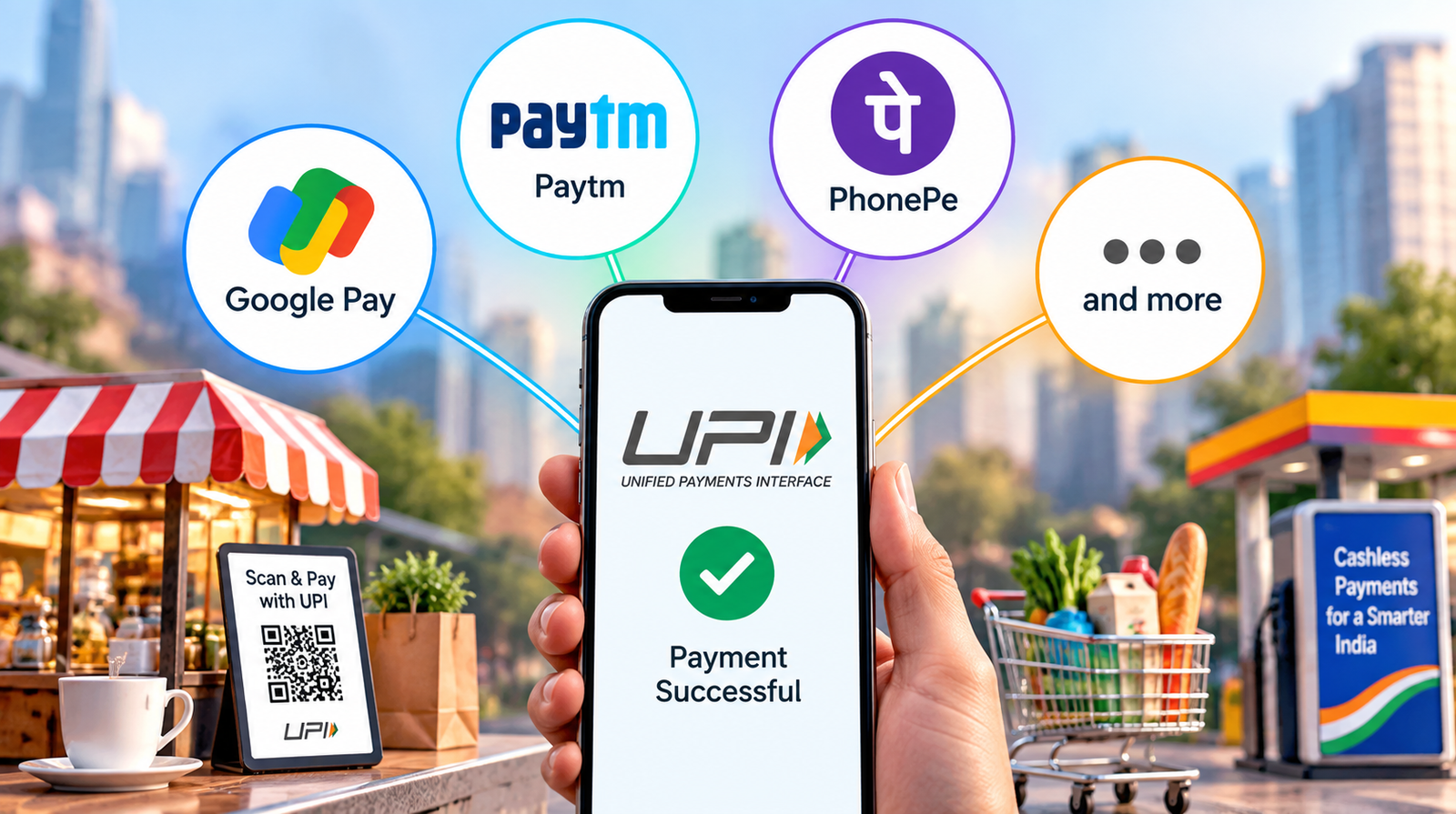
A new Merchant Discount Rate (MDR) structure for certain UPI transactions is set to come into effect from October 15, 2026, according to the supplied report. Under the new framework, select merchant payments exceeding ₹2,000 will attract an MDR of 0.4%.
For ordinary UPI users, however, there is an important distinction to understand. The report states that the MDR will be payable by the merchant rather than being directly charged to the customer making the payment.
The government has also reportedly made its position clear that the decision has been finalised and there is no plan to roll it back.
The development is important for businesses processing large numbers of UPI payments, as even a relatively small percentage charge can translate into a meaningful cost when applied across a high transaction volume.
What Changes From October 15?
According to the supplied information, the new UPI MDR structure will take effect on October 15, 2026.
A 0.4% MDR will apply to select merchant transactions where the payment amount exceeds ₹2,000.
This means the rule described in the report should not be interpreted as a blanket 0.4% charge on every UPI transaction.
The ₹2,000 threshold and the type of merchant transaction involved are important conditions.
Most importantly, the report states that the customer will not directly pay this MDR. The liability rests with the merchant accepting the eligible UPI payment.
How Much Is 0.4% MDR?
A 0.4% charge means ₹4 for every ₹1,000 of transaction value.
Here is a simple calculation:
| UPI Merchant Payment | MDR at 0.4% |
|---|---|
| ₹2,500 | ₹10 |
| ₹5,000 | ₹20 |
| ₹10,000 | ₹40 |
| ₹25,000 | ₹100 |
| ₹50,000 | ₹200 |
| ₹75,000 | ₹300 |
For example, if an eligible merchant transaction is worth ₹10,000, a 0.4% calculation comes to ₹40.
Similarly, on ₹50,000, the mathematical amount would be ₹200.
These calculations illustrate the percentage rate. The supplied report states that the MDR is payable by the merchant rather than being separately collected from the customer as a direct UPI fee.
Will Customers Pay Extra for Using UPI?
Based on the supplied information, customers are not the party directly liable for the MDR.
If a consumer makes an eligible UPI payment to a merchant, the merchant would bear the applicable charge under the framework described in the report.
This distinction is important because the introduction of an MDR does not automatically mean that a consumer will see an additional 0.4% UPI fee on the payment screen.
However, a merchant-side processing cost can still become commercially significant for businesses handling a large number of digital transactions.
Why MDR Matters for Merchants
Merchant Discount Rate is essentially a payment-processing charge associated with accepting eligible digital transactions.
For a small number of transactions, the individual amount may appear manageable. But businesses processing lakhs or crores of rupees through eligible UPI merchant payments could face a much larger aggregate cost.
For example, purely as a mathematical illustration, 0.4% of ₹10 lakh is ₹4,000.
At ₹1 crore, 0.4% works out to ₹40,000.
The actual charge payable by a particular business would depend on which transactions fall within the applicable framework.
What Happens to Payments of ₹2,000 or Less?
The supplied report specifically describes the 0.4% MDR in relation to select merchant payments above ₹2,000.
Therefore, the information provided should not be interpreted as establishing a 0.4% MDR on every small UPI payment.
Consumers should also distinguish between merchant payments and other types of UPI transactions.
The supplied information concerns the specified category of merchant payments rather than stating that all UPI transfers are covered.
Will Person-to-Person UPI Transfers Be Charged?
The information provided in the report is specifically about merchant payments.
It does not establish a new 0.4% customer charge on ordinary person-to-person transfers, such as sending money through UPI to a friend or family member.
Therefore, it would be misleading to describe the development simply as “UPI will become chargeable from October 15.”
The more accurate description, based on the supplied information, is that a 0.4% MDR is being introduced for select merchant payments above ₹2,000, with the merchant responsible for paying the charge.
Can Merchants Pass the Cost to Customers?
The supplied summary does not state that merchants have been authorised to impose the 0.4% MDR directly on customers as a separate UPI surcharge.
It therefore should not be assumed that a ₹10,000 purchase will automatically become ₹10,040 merely because the customer chooses UPI.
Any indirect effect on pricing would depend on how businesses respond to their payment-processing costs and the rules applicable to merchant pricing and surcharges.
Government Reportedly Rules Out Rollback
Another significant point in the supplied report concerns the government's position on the decision.
According to the report, the government has indicated that the decision has already been taken and that a rollback is not under consideration.
That means businesses potentially covered by the new structure may need to prepare for the change ahead of the October 15 implementation date.
What UPI Users Should Remember
The biggest takeaway for consumers is that the new MDR should not be confused with a direct fee on every UPI payment.
According to the supplied report, the framework applies a 0.4% MDR to select merchant payments above ₹2,000 from October 15, 2026, and the charge is to be borne by the merchant.
For a ₹5,000 eligible transaction, 0.4% works out to ₹20; for ₹10,000, it is ₹40; and for ₹50,000, it is ₹200.
But these amounts represent the merchant-side MDR calculation described in the report—not an automatic additional charge payable by the customer.
Consumers should therefore be cautious about claims suggesting that all UPI transactions will become chargeable from October 15. The supplied information describes a more specific merchant-payment framework with a defined transaction threshold.