Business
Traders Cancel October 2 ‘No UPI Day’ Protest After Meeting Finance Minister Over Proposed Payment Fee
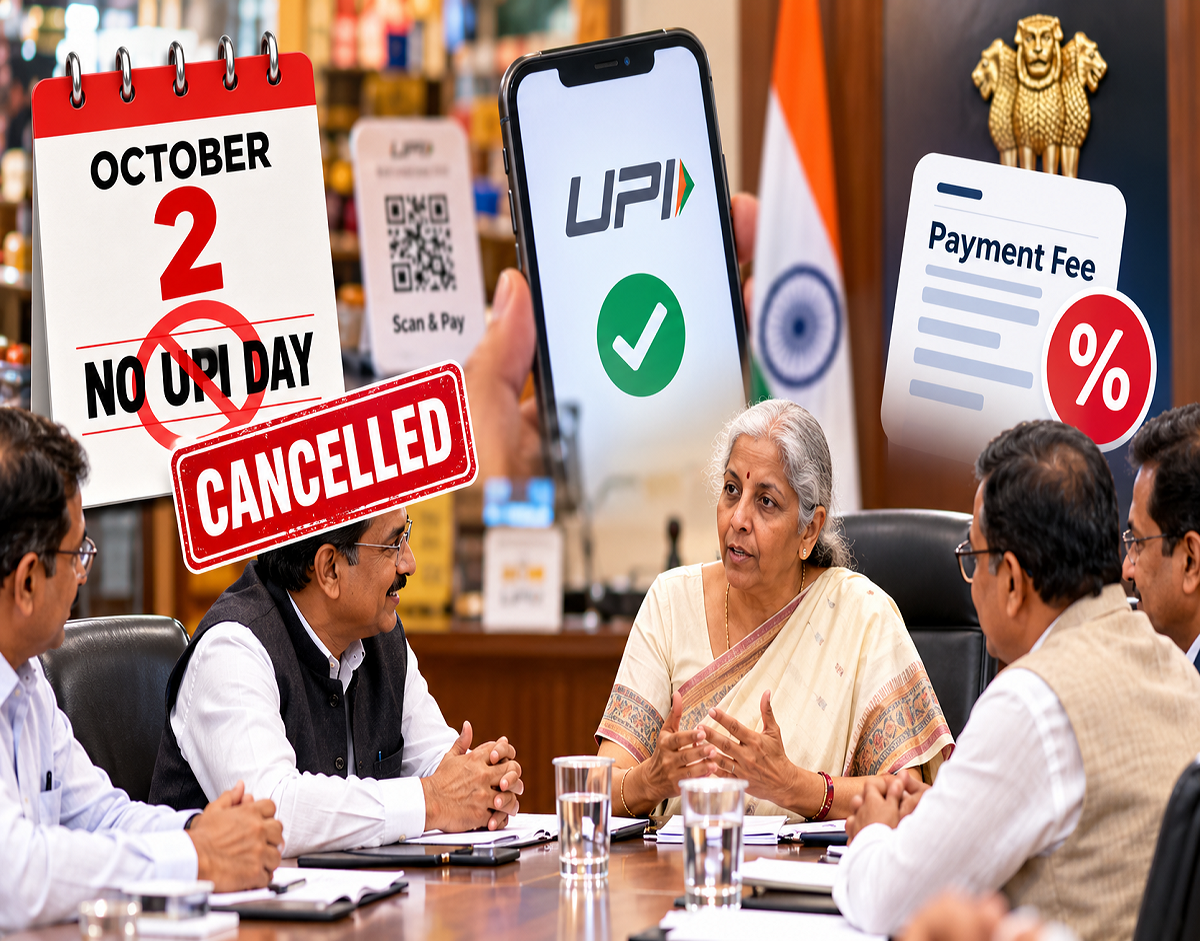
Indian trader groups have withdrawn their plan to observe October 2 as a “No UPI Day” following discussions with Finance Minister Nirmala Sitharaman in New Delhi. The decision means merchants associated with the protesting organisations will no longer be called upon to avoid UPI transactions on October 2.
The withdrawal came after a delegation of senior trade representatives met the Finance Minister on Wednesday and raised concerns over the proposed fee structure for certain merchant UPI payments.
While the planned protest has been called off, the issue that triggered it has not been fully resolved. According to the proposal cited by the trader groups, a 0.4% fee on merchant UPI payments above ₹2,000 is scheduled to take effect from October 15, 2026.
Trade organisations have requested the government to reconsider or postpone the proposed charge, particularly with the festive shopping season approaching.
Around 20 Trade Representatives Attend Meeting
Nearly 20 senior trade leaders representing different states participated in the meeting with the Finance Minister.
The delegation highlighted concerns about the possible financial impact of the proposed payment fee on small and medium-sized businesses, particularly merchants processing a large number of digital transactions.
The delegation was led by Chandni Chowk MP and Confederation of All India Traders (CAIT) general secretary Praveen Khandelwal.
Following the discussions, Khandelwal described the interaction with the Finance Minister as positive and said the government had assured the representatives that their concerns would be considered.
After the meeting, the organisations involved decided not to proceed with the October 2 protest.
Which Organisations Had Announced ‘No UPI Day’?
The All India Consumer Products Federation and the All India Mobile Retailers Association had earlier announced plans to observe October 2 as “No UPI Day.”
The proposed action was intended to highlight merchant concerns surrounding the planned fee on certain UPI transactions.
Both organisations have now withdrawn the protest call following the meeting with the Finance Minister.
Importantly, traders have clarified that their objections are related to the proposed charging mechanism rather than opposition to UPI or digital payments themselves.
Traders Seek Delay in Proposed UPI Fee
One of the key requests made by the trade representatives is to postpone the implementation of the proposed merchant fee.
The groups have argued that introducing an additional transaction-related cost during the festive period could increase expenses for businesses at a time when transaction volumes generally rise.
With the festive shopping season approaching, merchants expect a substantial increase in customer purchases and digital payments. Trade representatives therefore want the government to defer the proposed fee while their concerns are examined.
The proposal cited by the associations involves a 0.4% charge on merchant UPI payments exceeding ₹2,000, with implementation currently expected from October 15.
The trade bodies have requested that the proposed Merchant Discount Rate (MDR) arrangement be put on hold for the time being.
Demand to Increase ₹1 Lakh Threshold to ₹5 Lakh
The delegation also sought a review of the proposed ₹1 lakh transaction threshold associated with the new framework.
Trade representatives suggested increasing this threshold to ₹5 lakh, arguing that the higher limit could reduce the impact on businesses handling larger transactions.
Another demand concerns merchant-to-merchant (M2M) payments. Trader groups have requested that transactions between merchants be kept outside the proposed MDR framework.
They have also proposed setting up a dedicated committee to examine the concerns of retailers, traders and MSMEs before changes to the payment fee structure are implemented.
Small Businesses at Centre of Traders’ Concerns
The trade bodies said their primary concern is the possible effect of additional payment costs on small and medium-sized businesses.
UPI has become an important payment channel for merchants ranging from small neighbourhood shops to larger retailers. Businesses increasingly accept digital payments for everyday purchases, reducing dependence on cash transactions.
Trade representatives have argued that any new charging framework should be structured carefully so that it does not discourage merchants from accepting digital payments or create an excessive financial burden for smaller businesses.
Their position is that the payment ecosystem should remain sustainable for banks and payment service providers while also remaining affordable for merchants.
Traders Reaffirm Support for UPI and Digital India
Despite their concerns about the proposed fee, trade representatives stressed that they are not opposed to UPI or digital payments.
They reiterated their support for the government's Digital India initiative and acknowledged the role UPI has played in expanding digital transactions across the country.
Their demand, they said, is for a balanced framework that takes into account the interests of consumers, merchants, MSMEs and other participants in the digital payments ecosystem.
The cancellation of the October 2 “No UPI Day” protest indicates that trade bodies have chosen to continue discussions with the government instead of proceeding with the planned action.
However, the proposed fee remains the central issue. Traders are now looking for further discussions before its stated October 15, 2026 implementation date.
For UPI users, the immediate takeaway is that the planned October 2 protest has been withdrawn. Merchants involved in the campaign are therefore not expected to stop accepting UPI payments on October 2 because of the previously announced “No UPI Day” call.
Attention will now turn to whether the government makes any changes to the proposed merchant payment fee, its implementation date, transaction thresholds or exemptions following the representations made by trade organisations.