Business
Ration Card Rule: Family Members Living Apart Can Collect Their Share From Different Shops—Know ONORC
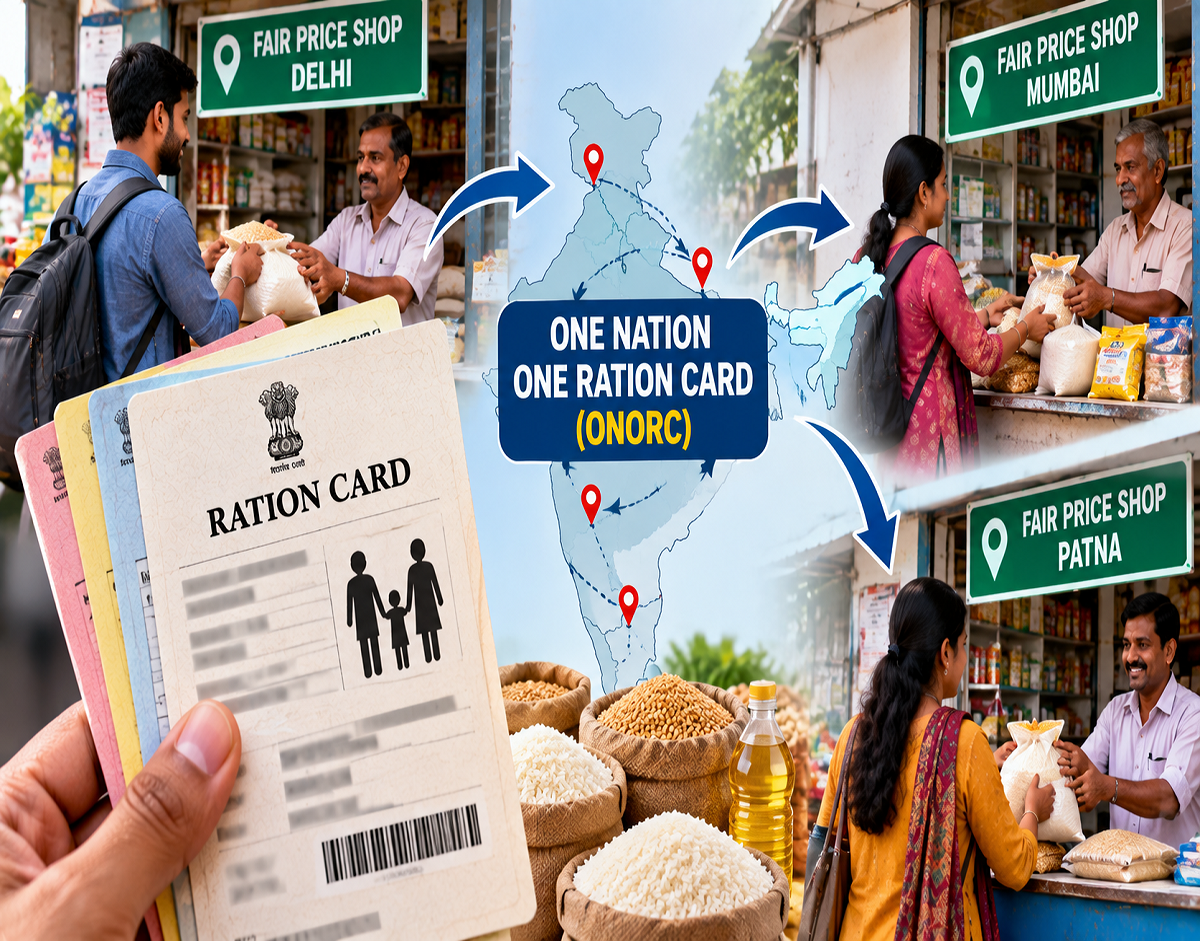
Ration Card ONORC Rules: What happens when members of the same ration-card household live in different cities or states because of work, education or other reasons? Do they all have to return to their home town to collect subsidised foodgrains from the same Fair Price Shop?
Under the One Nation One Ration Card (ONORC) portability system, eligible beneficiaries can access their foodgrain entitlement away from their original location. The facility is particularly useful for migrant workers, students and families whose members live separately.
The Department of Food and Public Distribution (DFPD) has clarified that eligible family members living in different places can obtain their respective entitlement through different ration shops under the portability framework, subject to authentication and the available household entitlement.
This means the entire family does not necessarily have to collect its ration from one shop.
What Is One Nation One Ration Card?
One Nation One Ration Card is a portability facility under the National Food Security Act framework.
Its purpose is to allow eligible beneficiaries to obtain their entitled foodgrains from Fair Price Shops beyond the shop to which their ration card was originally linked.
This is particularly important in India because millions of people move from their home districts or states for employment.
Earlier, a migrant worker could face difficulty accessing subsidised foodgrains after moving away from the place where the household ration card was registered.
ONORC was designed to address this problem through technology-based portability.
Can Family Members Collect Ration From Different Locations?
Yes, eligible beneficiaries covered under the portability framework can use split transactions.
Suppose a family has several members on the same eligible ration card. One member moves to another state for employment while the remaining family stays in the home state.
The migrant family member can obtain the eligible portion of foodgrains from a Fair Price Shop at the destination, while the remaining members can collect the balance entitlement at their home location.
The important point is that the family's total entitlement does not multiply simply because different members are using different shops.
Each withdrawal is adjusted against the available household entitlement.
Which Ration Cards Are Covered?
The facility is relevant to beneficiaries covered under National Food Security Act categories such as Priority Household (PHH) and Antyodaya Anna Yojana (AAY), subject to the applicable portability and authentication framework.
Beneficiaries should ensure that their details are correctly recorded in the ration-card database.
The exact quantity available to a household depends on its entitlement category and applicable government foodgrain scheme.
Do You Need to Carry the Physical Ration Card?
A major convenience of the system is that a beneficiary does not necessarily need to carry the original physical ration card simply because another family member has it.
At the Fair Price Shop, the beneficiary can provide the required ration-card or Aadhaar-linked identification details according to the authentication process.
The transaction is then processed through the electronic Point of Sale or ePoS system.
This helps verify the beneficiary and determine the entitlement available for withdrawal.
How Does Authentication Work?
Fair Price Shops equipped with ePoS devices can authenticate beneficiaries through the approved identification mechanism.
Depending on the system and available facilities, Aadhaar-based biometric authentication may be used.
After successful verification, the system can identify the ration card, household members and the quantity of foodgrains available for withdrawal.
The transaction is then recorded electronically so that the same entitlement cannot simply be collected again from another location.
Example: Family Members Living in Two States
Consider a household registered under an eligible ration card in Bihar.
Suppose some family members continue living in Bihar while another member moves to Delhi for employment.
The member living in Delhi may be able to obtain the applicable portion of the household entitlement from an eligible Fair Price Shop there using ONORC portability.
The family members remaining in Bihar can then collect the balance entitlement locally.
They do not necessarily need to wait for the migrant member to return home.
This is one of the primary benefits of ration-card portability.
Can Two Family Members Collect the Full Ration Separately?
No. Portability should not be interpreted as providing every family member with a duplicate full-household entitlement.
The total foodgrain benefit remains linked to the eligible household and its prescribed entitlement.
If one member collects a portion through a portability transaction, that quantity is reflected in the system.
The remaining members can then access the balance available to the household.
This prevents the same entitlement from being claimed multiple times at different shops.
Why Is Split Ration Useful for Migrant Families?
Migration can divide a household geographically without changing its family structure.
For example, parents may live in their home village while an adult child works in another state. A student may temporarily live in another city. A worker may spend most of the year near an industrial or construction site.
Without portability, these people could have to choose between leaving their foodgrain entitlement with the household or travelling back to their registered location.
ONORC reduces this dependence on a single Fair Price Shop.
What If the Original Ration Card Is With Your Family?
Having the physical card with another family member does not automatically prevent an eligible beneficiary from using portability.
The beneficiary can approach an eligible Fair Price Shop and provide the identification details required by the system.
However, the beneficiary's name and details must be correctly recorded against the ration-card household.
If a person's name is missing from the official family record, simply knowing the ration-card number will not automatically create eligibility.
What Information Should You Keep Ready?
A beneficiary using portability should know the ration-card details and ensure that the relevant identity information is correctly linked in government records.
It can also be useful to check the household's available entitlement before attempting a transaction, particularly if another family member has already collected part of the month's ration.
This reduces confusion about how much foodgrain remains available.
What If Biometric Authentication Fails?
Biometric authentication can occasionally fail.
Fingerprints may not be captured properly because of age, manual work or device-related issues. Connectivity problems can also interrupt an ePoS transaction.
A failed biometric attempt should not automatically be interpreted as cancellation of ration-card eligibility.
Beneficiaries facing repeated problems should ask the Fair Price Shop dealer or the concerned food and civil supplies authority about the alternative authentication or grievance mechanism available under applicable rules.
Does ONORC Mean You Need a New Ration Card After Moving?
Generally, the purpose of ONORC portability is precisely to reduce the need to obtain a completely separate ration card merely because an eligible beneficiary has temporarily moved elsewhere.
A migrant beneficiary can use the existing eligible ration-card identity to access benefits through portability.
However, permanent changes to household composition, residence or beneficiary details may still require updates according to state and central rules.
Can You Use Any Ration Shop?
ONORC portability is intended to allow beneficiaries to access foodgrains through Fair Price Shops integrated with the electronic portability system.
That does not mean ration can be collected from an ordinary grocery shop.
The transaction must take place through an authorised Fair Price Shop capable of processing the applicable ration-card portability transaction.
Beneficiaries can check nearby authorised shops through government-supported ration-card and food-distribution services.
Why ONORC Matters for Migrant Workers
The portability system separates food-security access from a beneficiary's immediate physical location.
For migrant workers, this can be particularly important.
A worker from Bihar, Uttar Pradesh, Rajasthan or another state who moves elsewhere for employment does not necessarily have to surrender access to subsidised foodgrains simply because the ration card originated in the home state.
The system allows benefits to follow eligible beneficiaries across participating locations while keeping the household entitlement digitally accounted for.
Keep Household Details Updated
Portability works best when beneficiary records are accurate.
Families should check that eligible members are correctly listed on the ration card and that required identification information is updated.
If a family member has died, a new eligible member needs to be added or other household details have changed, the prescribed update procedure should be followed.
Incorrect records can create difficulties during authentication or entitlement calculation.
Don't Pay Extra for Portability
Beneficiaries should also be cautious if anyone claims that a special private fee is required merely to "activate" One Nation One Ration Card portability.
ONORC is a government food-security portability framework.
If a Fair Price Shop refuses an eligible transaction, provides less foodgrain than the system shows, demands an unauthorised payment or claims that portability is unavailable without an unofficial fee, beneficiaries can approach the relevant food and civil supplies grievance mechanism.
Family Members Living Apart Can Still Access Their Ration
The key takeaway is straightforward: eligible members of the same ration-card household do not necessarily have to collect their entire entitlement from a single Fair Price Shop.
Under the One Nation One Ration Card portability framework, family members living in different locations can access their applicable share through different eligible Fair Price Shops, subject to authentication and the household's remaining entitlement.
A physical ration card is also not necessarily required in hand for every portability transaction if the beneficiary can be authenticated through the prescribed system.
Most importantly, split transactions do not increase the family's total ration. Whatever one member collects is adjusted against the household entitlement, leaving the remaining quantity available to other eligible family members.
Disclaimer: This article provides general information about the One Nation One Ration Card portability system. Entitlements, authentication methods, beneficiary categories and operational procedures may vary according to applicable NFSA, central and state government rules. Beneficiaries facing transaction or authentication problems should contact the concerned Food and Civil Supplies Department or authorised ration authority.