Business
Ration Card Complaint 2026: Raise Food Supply Issues Directly With Government Officials Through DFPD Webex Public Hearing
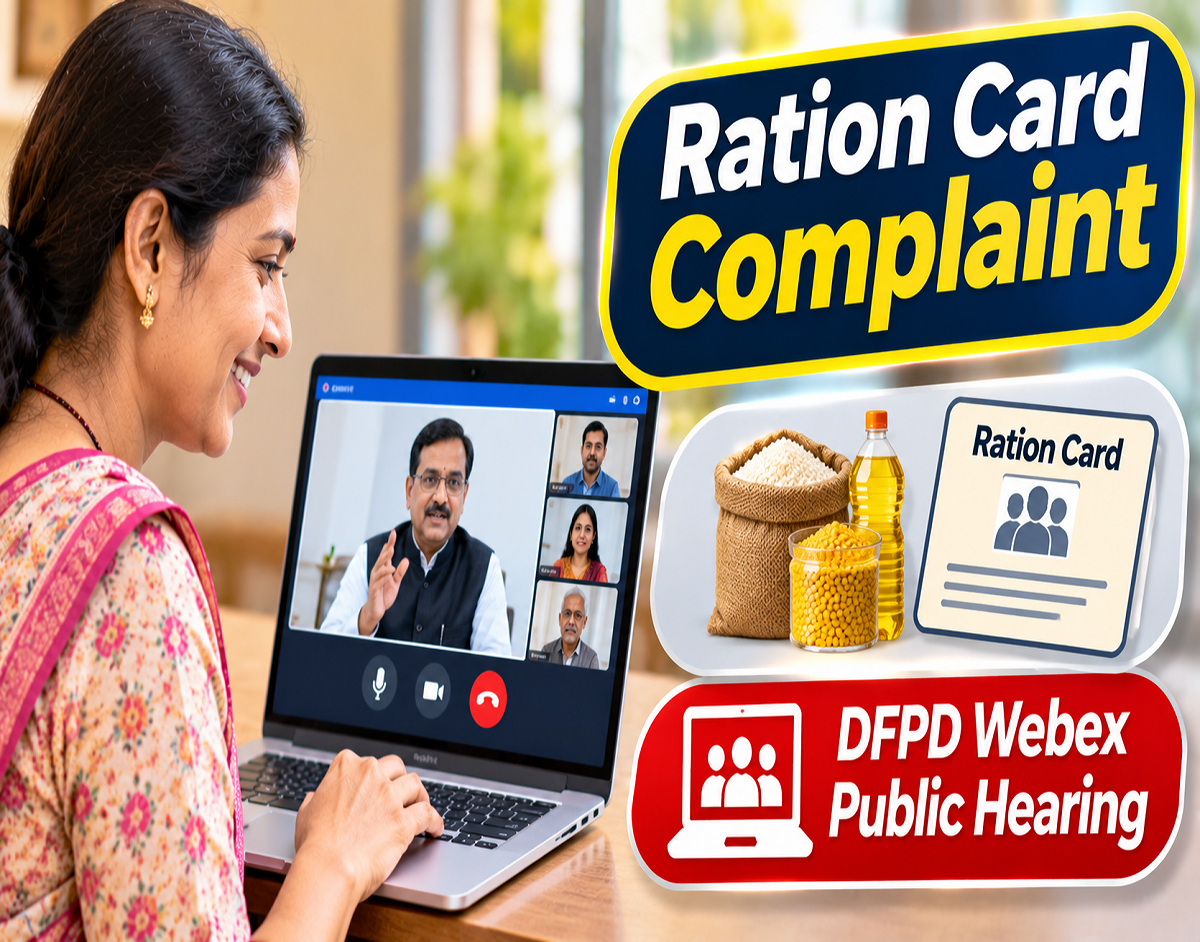
Ration Card Complaint Online 2026: People facing problems with ration distribution or food supplies under the Public Distribution System (PDS) have an opportunity to raise their concerns directly with government officials. The Department of Food and Public Distribution (DFPD) has highlighted a public hearing facility through Webex, allowing citizens to communicate their grievances and seek assistance.
The initiative is intended to make grievance redressal more accessible for ration cardholders and other beneficiaries experiencing difficulties with foodgrain distribution.
Instead of relying exclusively on visits to local ration shops or government offices, affected individuals can use the announced online public hearing to bring their concerns to the department's attention.
However, the announcement does not specify the hearing date, meeting link, registration procedure or participation timings. Citizens should obtain these details through an official DFPD communication before joining.
What Is the DFPD Webex Public Hearing?
The Department of Food and Public Distribution works under the Ministry of Consumer Affairs, Food and Public Distribution, Government of India.
The department is responsible for important aspects of foodgrain management and the public distribution framework.
The announced Webex public hearing offers a digital channel through which people can communicate complaints related to ration supplies.
Webex is an online meeting platform that supports virtual communication between participants.
Through the public hearing, beneficiaries may be able to explain their problems to the concerned officials and request appropriate action.
The facility can be particularly useful for people who face difficulties obtaining ration supplies or receiving assistance through their usual grievance channels.
What Types of Ration Complaints Can Citizens Raise?
Beneficiaries may have several reasons to contact food distribution authorities.
Common ration-related concerns include:
- Non-receipt of ration: Eligible beneficiaries not receiving their expected foodgrain allocation.
- Short supply: A ration dealer providing less than the quantity shown in the beneficiary's entitlement.
- Distribution delays: Foodgrain supplies not being provided according to the announced distribution schedule.
- Quality complaints: Concerns regarding the condition or quality of distributed foodgrains.
- Ration card difficulties: Problems with beneficiary information or access to ration services.
- Dealer-related grievances: Complaints involving irregularities at fair price shops.
These are examples of issues commonly associated with ration distribution. The exact scope of complaints accepted during the announced hearing should be confirmed with DFPD.
How to Participate in the DFPD Webex Public Hearing
Citizens interested in participating should first check the department's official announcement for the relevant meeting details.
The following process can help beneficiaries prepare.
- Visit the official Department of Food and Public Distribution website or its verified communication channels.
- Look for the announcement regarding the Webex public hearing.
- Check whether advance registration is required.
- Obtain the authorised meeting link, meeting ID or joining instructions.
- Keep the relevant ration card and complaint details ready.
- Join the hearing at the officially announced time.
- Explain the problem clearly to the concerned officials.
- Record any complaint acknowledgement or reference number provided.
These are general participation guidelines, not a confirmed registration procedure for a particular hearing.
Beneficiaries should avoid joining meetings through unverified links circulated by unknown individuals.
Keep These Details Ready Before Raising a Complaint
Providing accurate information can help officials understand the problem and identify the relevant records.
| Information | Why It May Be Useful |
|---|---|
| Ration Card Number | Identifies the beneficiary record |
| State and District | Helps identify the responsible jurisdiction |
| Fair Price Shop Details | Identifies the ration distribution outlet |
| Month of Complaint | Clarifies the affected distribution period |
| Description of Problem | Explains the grievance |
| Previous Complaint Reference | Helps with follow-up, if available |
| Supporting Documents | May help substantiate the issue |
Beneficiaries should share personal documents only through authorised channels and avoid disclosing Aadhaar OTPs, banking passwords or other confidential credentials.
Why Is an Online Public Hearing Important?
Access to an effective grievance redressal mechanism is important for beneficiaries who depend on subsidised foodgrain distribution.
When ration supplies are delayed, reduced or unavailable, affected households may face additional financial pressure.
A digital public hearing can provide another way for citizens to communicate their concerns without necessarily travelling to a government office.
It can also help officials understand recurring problems in ration distribution.
However, participation in a public hearing does not guarantee immediate resolution. Complaints may require verification, referral to the responsible authority or further administrative action.
Can Ration Complaints Be Registered Through Other Channels?
Yes. Apart from the announced public hearing, beneficiaries can explore other official grievance redressal mechanisms.
These may include state food and civil supplies departments, designated ration helplines and government grievance portals.
The Centralised Public Grievance Redress and Monitoring System (CPGRAMS) is one government platform through which citizens can submit grievances to the appropriate authorities.
Beneficiaries can access it through the official CPGRAMS portal.
For ration distribution issues, state-specific complaint systems may also be relevant because the operational responsibilities of the Public Distribution System involve state and Union Territory administrations.
What Should You Do After Filing a Ration Complaint?
Once a grievance has been submitted, beneficiaries should retain any acknowledgement number, complaint reference or written confirmation received.
If officials request additional information, provide the necessary details through authorised channels.
Citizens can also check the status of their complaints through the relevant grievance portal, where tracking facilities are available.
If the issue remains unresolved, they may follow up using the same complaint reference rather than repeatedly submitting identical grievances without context.
DFPD Ration Complaint 2026: Important Information
| Particulars | Details |
|---|---|
| Department | Department of Food and Public Distribution |
| Ministry | Ministry of Consumer Affairs, Food and Public Distribution |
| Facility Announced | Online Public Hearing |
| Platform | Webex |
| Purpose | Raising complaints about ration supplies |
| Eligible Participants | Citizens with relevant food distribution grievances |
| Hearing Date | Not specified in the supplied announcement |
| Registration Link | Not provided in the supplied announcement |
| Official Website | dfpd.gov.in |
Ration Supply Complaints: Key Takeaway
The Department of Food and Public Distribution's announcement of a Webex-based public hearing provides an additional opportunity for citizens to communicate problems related to ration supplies.
Beneficiaries facing difficulties with ration distribution can prepare their complaint details and look for the department's official meeting instructions.
Before participating, confirm the hearing schedule, joining link and registration requirements through the official DFPD website or verified government communication channels.
Citizens who cannot attend the hearing can also explore established government grievance mechanisms for submitting their complaints.
Source Credit: Department of Food and Public Distribution, Government of India — public hearing announcement supplied in the source text. Official references: DFPD and CPGRAMS.