Business
PM-RAHAT Yojana 2026: Road Accident Victims Can Get Cashless Hospital Treatment Up to ₹1.5 Lakh
PM-RAHAT Yojana 2026: Road accidents can happen unexpectedly, leaving victims and their families facing medical emergencies and financial difficulties. During such situations, arranging immediate hospital treatment is essential, but concerns about medical expenses can become an additional burden.
To address this challenge, the Central Government's PM-RAHAT initiative aims to ensure that eligible road accident victims receive timely medical care without having to make upfront payments for covered treatment.
Under the scheme, eligible victims can receive cashless medical treatment of up to ₹1.5 lakh for a maximum period of seven days following a road accident, subject to the prescribed guidelines.
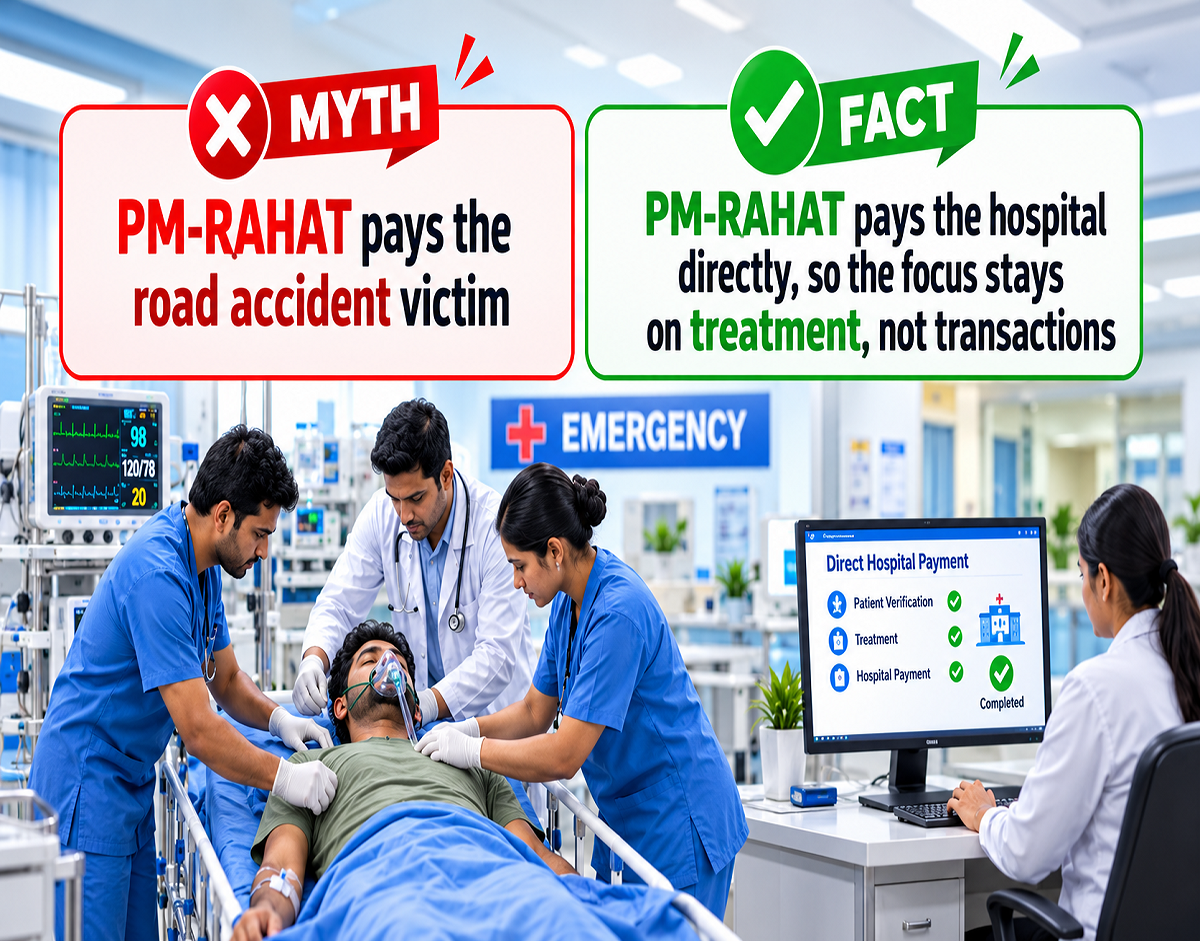
An important feature is that approved treatment expenses are settled directly with the hospital through the designated payment mechanism.
The initiative focuses on making emergency healthcare more accessible and reducing delays caused by financial concerns.
What Is PM-RAHAT Yojana?
PM-RAHAT is a government-supported cashless treatment initiative for eligible victims of road accidents involving motor vehicles.
The scheme is designed to help injured people obtain necessary medical assistance during the critical period immediately following an accident.
Instead of requiring the victim's family to arrange money for covered hospital expenses, the scheme provides a mechanism for settling approved treatment costs directly with participating healthcare facilities.
However, PM-RAHAT is not an unlimited health insurance programme. Its benefits are subject to eligibility conditions, treatment limits and prescribed verification procedures.
PM-RAHAT Scheme 2026: Key Details
| Particulars | Details |
|---|---|
| Scheme | PM-RAHAT Yojana |
| Beneficiaries | Eligible road accident victims |
| Maximum financial coverage | ₹1.5 lakh per eligible victim |
| Treatment duration | Up to seven days from the accident |
| Benefit | Cashless hospital treatment |
| Payment method | Approved expenses settled directly with the hospital |
| Funding arrangement | Motor Vehicle Accident Fund, under applicable provisions |
| Main objective | Timely treatment without upfront payment for eligible expenses |
How Does Cashless Treatment Work?
Cashless treatment means that eligible hospital expenses are processed through the authorised payment system rather than being collected upfront from the patient or family.
For example, suppose a person is injured in a road accident and requires emergency hospitalisation.
If the accident and treatment qualify under PM-RAHAT, the hospital can process the case according to the scheme's requirements.
The eligible treatment expenses are then settled through the designated mechanism after the required verification and approval.
This arrangement is intended to reduce the immediate financial pressure on families.
However, the patient does not receive ₹1.5 lakh as a direct cash benefit.
The amount is a maximum limit for eligible medical treatment expenses.
How Much Treatment Coverage Is Available?
The scheme provides coverage of up to ₹1.5 lakh for an eligible accident victim.
The actual amount covered depends on the medical treatment provided and the applicable rules.
For instance, if eligible hospital expenses total ₹60,000, the scheme may cover the approved amount.
If eligible expenses reach ₹1.5 lakh, the maximum financial limit may be exhausted.
Treatment costs exceeding the prescribed ceiling are not automatically covered.
Families should confirm the scope of eligible services with the participating hospital.
What Is the Seven-Day Rule?
PM-RAHAT provides eligible cashless treatment for up to seven days from the date of the road accident.
This period is particularly important because accident victims may require urgent medical intervention, diagnostic tests, hospitalisation or other essential care.
The seven-day limit does not mean that every patient will necessarily require or receive seven days of hospitalisation.
Treatment depends on medical necessity and the scheme's prescribed conditions.
If medical care continues beyond the covered period, additional expenses may need to be addressed through other applicable arrangements.
Who Can Benefit From PM-RAHAT?
The initiative is intended for eligible victims of motor vehicle road accidents.
It is not limited solely to people travelling on motorcycles or scooters.
However, eligibility depends on the circumstances of the accident and the prescribed administrative and medical requirements.
The relevant hospital and authorities must determine whether a particular case qualifies.
Families should avoid assuming that every accident-related medical expense will automatically be covered.
How to Avail Cashless Treatment Under PM-RAHAT
People seeking assistance should follow the applicable hospital and government procedures.
The general process includes:
- Arrange immediate medical assistance for the injured person.
- Take the patient to an appropriate hospital as quickly and safely as possible.
- Inform hospital staff that the injury resulted from a road accident.
- Ask whether the hospital can process treatment under PM-RAHAT.
- Provide available accident-related and identification details required for verification.
- Allow the hospital to complete the prescribed eligibility and claim procedures.
- Obtain eligible treatment through the cashless arrangement, subject to approval and scheme limits.
Emergency medical attention should never be delayed while arranging documents or checking financial benefits.
Will the Government Pay Money Directly to the Patient?
No. PM-RAHAT is primarily a cashless medical treatment arrangement.
The approved payment is made through the prescribed settlement mechanism to the hospital providing eligible treatment.
The victim or family does not automatically receive the maximum benefit amount in a bank account.
This distinction is important because misleading messages may incorrectly describe the scheme as a direct cash assistance programme.
Why Is the Scheme Important?
Road accident injuries can require urgent treatment, and delays in receiving medical care may have serious consequences.
Financial uncertainty can create additional stress for families already dealing with an emergency.
A cashless hospital treatment system aims to reduce this burden by making eligible medical care available without requiring immediate payment for covered expenses.
The scheme also provides a structured arrangement for processing approved treatment costs.
Its effectiveness depends on the availability of participating hospitals, accurate reporting and timely implementation of the prescribed procedures.
Important Precautions for Accident Victims and Families
Families should obtain information about PM-RAHAT through official government channels or the treating hospital.
They should avoid paying unknown individuals who promise guaranteed approval or claim to arrange the full ₹1.5 lakh as a cash transfer.
Medical records, hospital documents and available accident details should be preserved.
If additional treatment is needed beyond the scheme's limits, the family should discuss available payment arrangements and other eligible benefits with the hospital.
Final Update
PM-RAHAT Yojana aims to ensure that eligible road accident victims receive timely medical assistance without the immediate burden of paying for covered hospital treatment.
The scheme provides cashless treatment of up to ₹1.5 lakh for a maximum of seven days, with approved expenses settled directly with the hospital.
The initiative is designed to support accident victims during medical emergencies and reduce financial barriers to essential healthcare.
In a road accident, getting the injured person medical attention quickly is the first priority. Financial assistance should support timely treatment, not delay it.
Disclaimer: Benefits are subject to official eligibility rules, participating hospital arrangements, treatment limits and claim verification. Families should confirm the applicable procedure with the hospital or relevant authorities.