Business
Aadhaar Authentication: Rajasthan Highlights How Digital Identity Verification Simplifies Access to Government Services
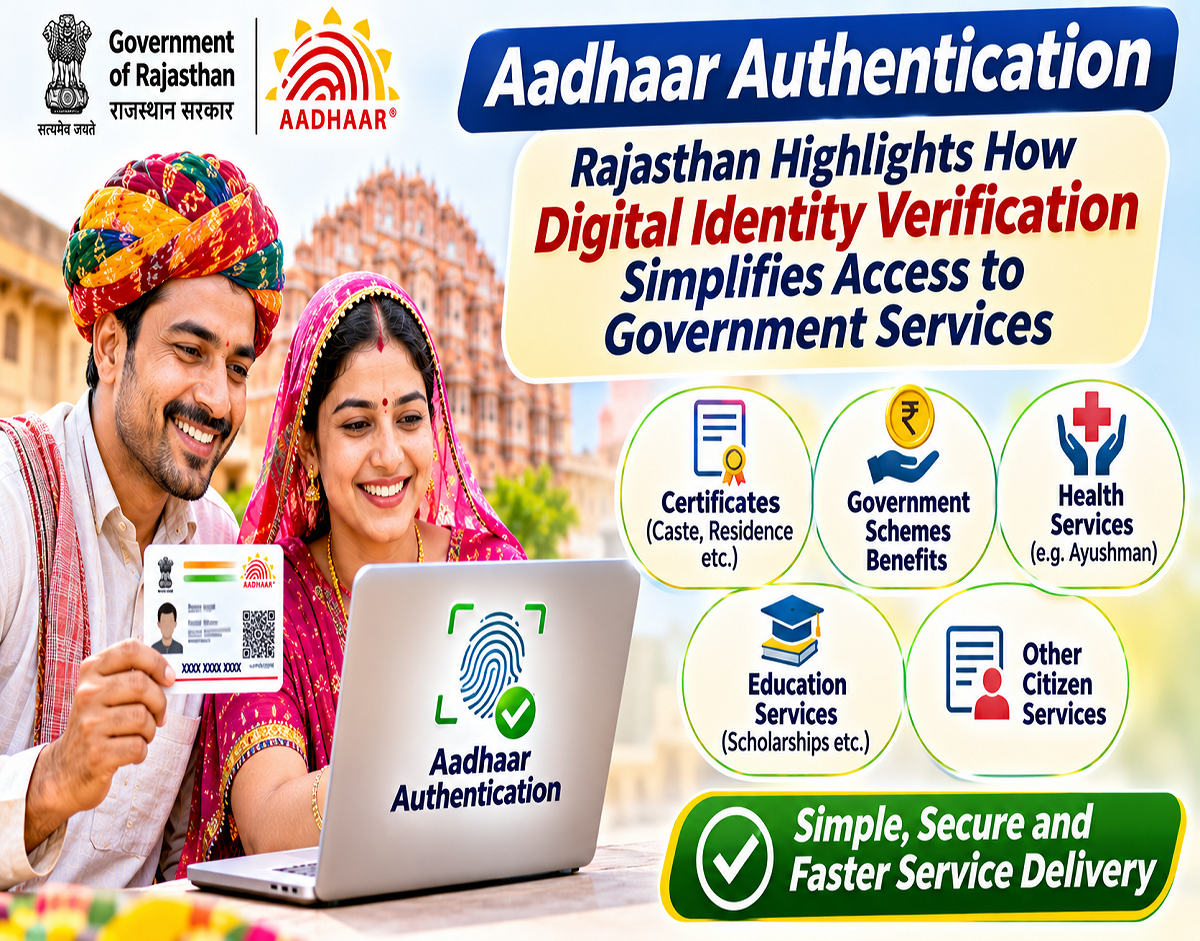
Aadhaar Authentication System: Digital identity verification has become an important component of public service delivery in India. From accessing government welfare programmes to completing identity-related formalities, Aadhaar-based authentication supports several digital services by helping authorities verify the identity of beneficiaries.
The Department of Information Technology and Communication (DoIT&C), Rajasthan, has highlighted the significance of the Aadhaar Authentication Ecosystem through an official awareness message shared on November 24, 2026.
The department emphasised that Aadhaar-based authentication, wherever applicable, can facilitate identity verification across government services and support more convenient digital service delivery.
The initiative aligns with the broader objectives of Digital India, which seeks to make public services more accessible through technology.
What Is the Aadhaar Authentication Ecosystem?
Aadhaar authentication is a digital identity verification process that enables authorised entities to verify an individual's identity against information maintained by the Unique Identification Authority of India (UIDAI).
During authentication, the Aadhaar number or another supported identifier is submitted along with the required authentication information for verification.
Depending on the service and applicable regulations, authentication may involve fingerprints, iris scans, facial recognition, demographic information or a One-Time Password (OTP).
The system helps government departments and other authorised organisations establish whether the identity information provided by an individual matches the corresponding Aadhaar records.
Different Types of Aadhaar Authentication
UIDAI supports multiple authentication methods to accommodate different service requirements and technological capabilities.
| Authentication Method | How It Works |
|---|---|
| Fingerprint Authentication | Verifies identity using registered fingerprints |
| Iris Authentication | Matches the individual's iris biometric information |
| Face Authentication | Verifies identity using facial biometric information |
| OTP Authentication | Uses a verification code sent to the registered mobile number |
| Demographic Authentication | Matches submitted personal information with Aadhaar records |
| Multi-Factor Authentication | Combines supported authentication methods for identity verification |
The authentication method available to citizens depends on the concerned service provider, applicable regulations and technical infrastructure.
How Aadhaar Authentication Supports Government Services
Digital identity verification can help government departments simplify administrative procedures and reduce dependence on repeated physical document verification.
Aadhaar authentication may be used in various authorised services, including:
- Public Distribution System and ration-related services.
- Direct Benefit Transfer (DBT) programmes.
- Pension and social security schemes.
- Government scholarship programmes.
- Employment-related welfare initiatives.
- Healthcare and eligible insurance schemes.
- Digital Life Certificate services.
- Other authorised citizen service platforms.
Aadhaar authentication requirements vary across government programmes. Successful authentication does not automatically establish eligibility for a particular scheme or financial benefit.
Benefits of Aadhaar-Based Digital Identity Verification
The Aadhaar Authentication Ecosystem can offer several advantages to citizens and government departments.
Digital verification can reduce the time required to complete certain identity-related formalities. It may also help authorities identify duplicate records and improve the accuracy of beneficiary databases.
For citizens, authentication-enabled services can reduce the need to repeatedly submit physical identity documents wherever digital verification is accepted.
The system can also support greater administrative efficiency, transparency and accountability in public service delivery.
However, reliable connectivity, accurate Aadhaar records and appropriate alternative verification arrangements remain important for ensuring that eligible citizens can access essential services.
Rajasthan's Digital Governance Initiatives
Rajasthan has developed several digital platforms to improve access to government services across urban and rural areas.
Through initiatives such as e-Mitra, citizens can access numerous government facilities, submit applications and complete service-related formalities through authorised centres.
Where legally applicable, Aadhaar-based authentication can complement these digital services by supporting identity verification.
Such facilities can be particularly beneficial for residents of rural areas who may otherwise need to travel considerable distances to access government offices.
How to Check Your Aadhaar Authentication History Online
UIDAI provides a facility through which Aadhaar holders can review their available authentication history.
Citizens can follow these steps:
- Visit the official myAadhaar portal.
- Locate the Aadhaar Authentication History service.
- Enter the required Aadhaar details.
- Complete OTP verification using your registered mobile number.
- Select the relevant authentication type and date range.
- Review the available authentication records.
Checking authentication history periodically can help individuals identify unfamiliar verification activities and seek assistance if necessary.
How to Protect Your Aadhaar Information From Misuse
While digital authentication offers convenience, citizens should remain cautious when sharing personal information.
Never disclose Aadhaar OTPs to unknown callers or individuals claiming to represent government departments. Avoid submitting Aadhaar details through suspicious websites, unofficial mobile applications or unverified links.
UIDAI also provides biometric locking and unlocking facilities, allowing Aadhaar holders to restrict biometric authentication when it is not required.
Citizens should keep their registered mobile numbers and relevant Aadhaar information updated to facilitate secure access to supported services.
For Aadhaar-related assistance, individuals can contact UIDAI's official toll-free helpline at 1947.
What Happens if Aadhaar Authentication Fails?
Authentication may occasionally fail because of biometric mismatches, connectivity problems, outdated records or technical difficulties.
Citizens experiencing repeated authentication failures should contact the concerned service provider or visit an authorised Aadhaar centre if their biometric information requires updating.
Where applicable, government departments should provide alternative identity verification mechanisms in accordance with relevant rules to prevent eligible beneficiaries from being denied essential services solely because of authentication difficulties.
Digital Identity Verification Supports More Accessible Governance
The Rajasthan Department of Information Technology and Communication's awareness message highlights the growing role of digital identity infrastructure in public administration.
By facilitating identity verification wherever authorised, the Aadhaar Authentication Ecosystem can help simplify government service delivery and reduce administrative complexities.
Citizens should use official platforms, maintain accurate identity records and follow recommended privacy practices while accessing Aadhaar-enabled services.
The department's announcement is an awareness initiative and does not introduce any new mandatory Aadhaar authentication rule, registration requirement or financial benefit.
Source Credit: Department of Information Technology and Communication (DoIT&C), Government of Rajasthan — Official X Announcement, November 24, 2026, and UIDAI Official Website.